Identify the switch by voltage, arrangement and service
Begin with records already available: equipment schedules, purchase documents, nameplate photographs taken from a safely accessible exterior position, and any commissioning or maintenance files. Record the voltage rating separately from the ampere rating. One does not establish the other, and a page title, asset tag, or verbal description such as “480-volt switch” is not verified equipment data without supporting documentation.
For a pump station, describe the switching arrangement in practical terms: which sources it connects, whether transfer is open or closed transition if documented, and whether operation is automatic or manual. If the records are incomplete, say so rather than guessing. For example, a hypothetical station might have utility and generator sources with automatic control; that description is useful only if drawings or labels support it.
Use control drawings to explain how the switch fits the station
Control drawings can distinguish a transfer switch from a similar-looking disconnect or bypass assembly and show the intended control interface. Gather available elementary diagrams, wiring diagrams, sequence descriptions, and control-device schedules. Note drawing revisions when visible, and identify known accessories or bypass-isolation features from paperwork rather than opening an enclosure or handling internal components.
A transfer switch may have been specified around a station’s generator start signal, alarm contacts, or supervisory controls. Those interfaces matter to a buyer assessing the equipment as a configuration, not just a cabinet. If a hypothetical drawing set shows a remote-start circuit but the associated generator has been removed, explain that context; do not imply the switch has been tested or that the controls remain functional.
Describe condition without testing or disturbing equipment
Offer a factual account of what is already known: whether the switch was in service when the station shut down, whether maintenance records exist, and whether visible exterior damage or missing documentation has been noted. “Unknown” is a useful answer when operating history is unavailable. No seller testing is required for an offer, and no one should be asked to operate the switch, open its enclosure, measure it, or approach energized apparatus.
Photographs can help if they are taken only from a safe, accessible location and do not require touching equipment or entering a restricted area. Existing nameplate images, exterior cabinet views, and paperwork scans may clarify identification. Avoid presenting a seller’s label or old work order as proof of present condition; send it as supporting information for review, with limitations stated plainly.
Confirm ownership and coordinate a public-asset disposition
If the pump station or switch belongs to a municipality, utility, district, or other public body, establish who has authority to approve its sale before arranging a transaction. The responsible owner may need an internal surplus declaration, governing approval, procurement or auction review, or a record of asset disposal. Requirements differ by organization, so confirm the applicable process with its authorized staff rather than assuming a site operator can sell the equipment.
When contacting the buyer, share the authorized seller’s role, the asset’s ownership status, and any conditions on removal or transfer. A hypothetical switch removed from a station under a public decommissioning plan may still require a signed release or completed disposal approval. The buyer can review the equipment details and proposed transaction, but the seller remains responsible for confirming its authority to convey the asset.
Plan removal around station access and equipment configuration
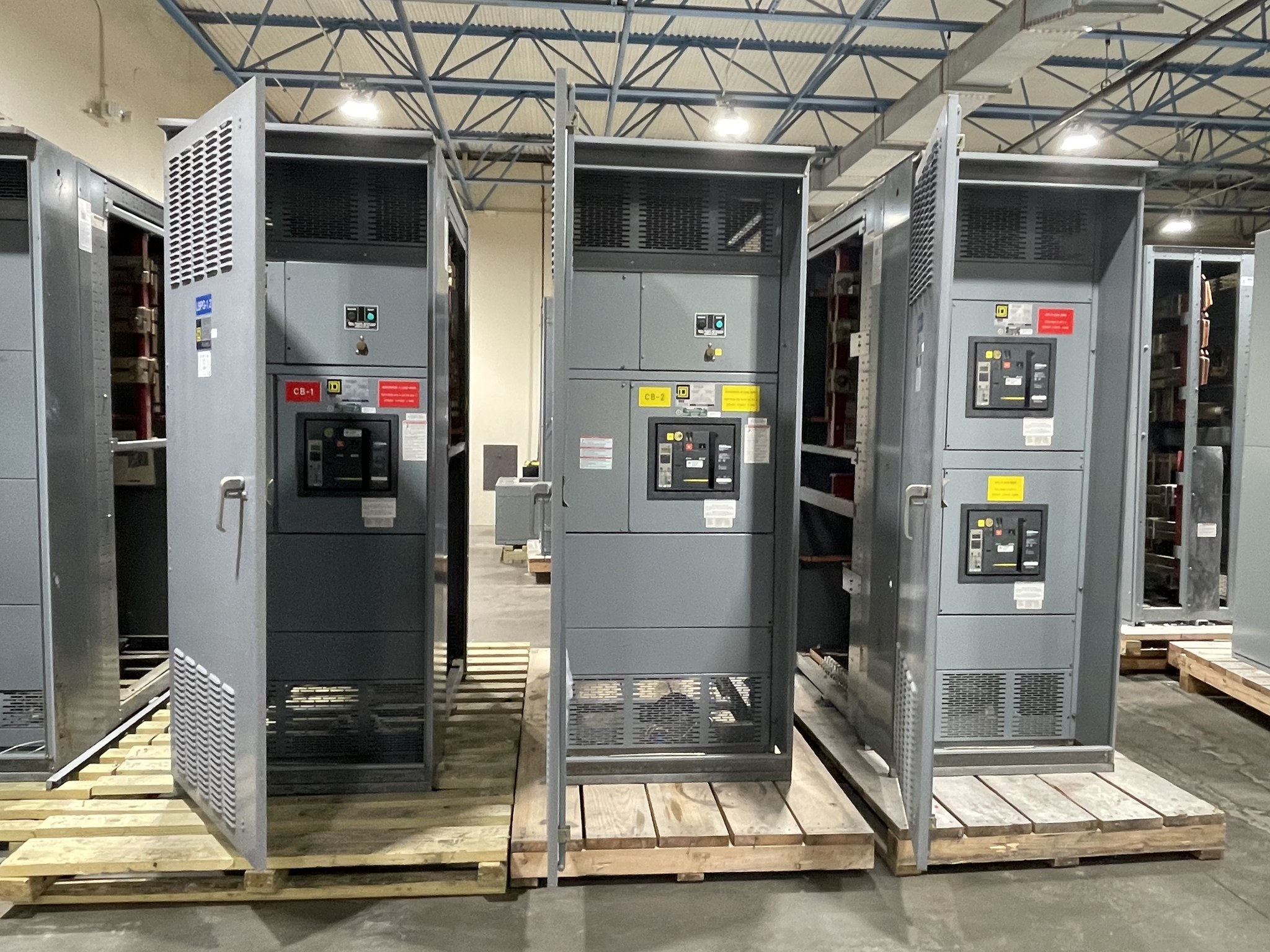
A transfer switch may be part of a larger lineup, mounted independently, or connected to bypass equipment and nearby switchgear. Explain what is included in the sale and what must remain, using existing drawings or asset records where possible. Share known dimensions, approximate weight if documented, doorway or loading constraints, site access rules, and any scheduled shutdown or decommissioning milestones.
The Illinois buyer purchases switchgear, switchboards, MCCs, panelboards, busway, transfer switches, breakers, and unit substations across voltage classes, including equipment from decommissioned data centers and shut-down power plants. For an agreed purchase, it covers freight and coordinates appropriate disconnects, crane or rigging work, loading, hauling, and transport. Qualified professionals perform electrical work as appropriate; the seller need not dismantle, rig, test, or move the switch.
Common questions
What should I send if the transfer switch nameplate is hard to read?
Send available schedules, drawings, purchase records, and safely obtained exterior photographs, noting what is uncertain. Do not open the cabinet or guess at voltage or amperage; the buyer can review the documentation.
Can a public water district sell a switch before removal is scheduled?
It can discuss the equipment, but an authorized representative should confirm the district’s disposal and approval requirements before committing to a sale. Share any release conditions or restrictions during the buyer’s review.
When does the seller receive payment, and who handles pickup work?
Payment is upfront, not after pickup. For a reviewed and agreed purchase, the buyer covers freight and coordinates appropriate disconnects, rigging, loading, and hauling, so the seller does not have to move the equipment.