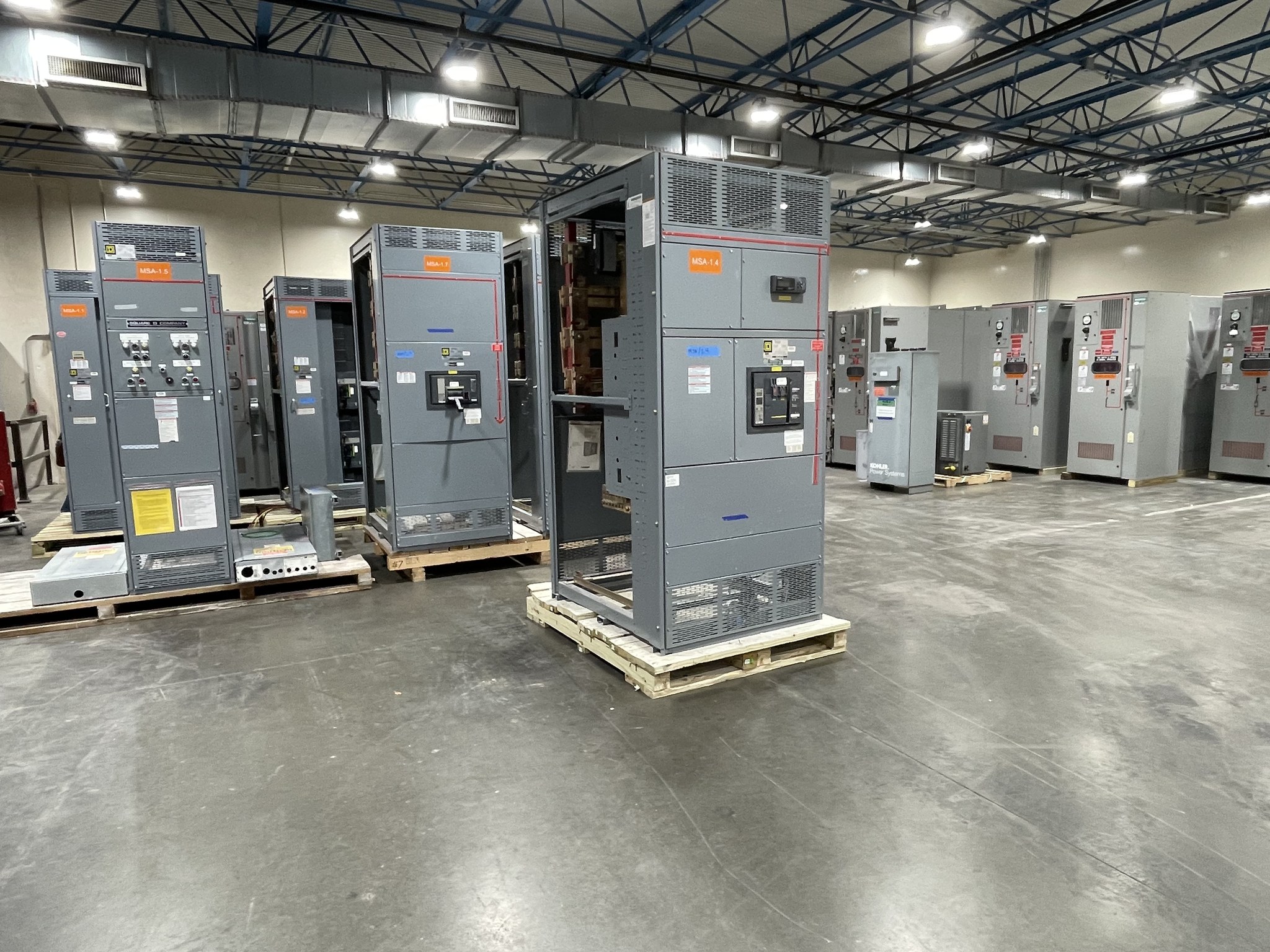
Start with the switchboard, not the charger inventory
A garage electrification project may replace or reconfigure the equipment distributing power to EV charging circuits. The service switchboard is a separate asset from the chargers, pedestals, network controls, and cabling. If you are preparing a surplus list, identify the board by its existing nameplate and project records rather than treating the number or rating of chargers as a proxy for the switchboard’s capabilities.
Useful records may include drawings, equipment schedules, prior submittals, and the upgrade’s demolition or turnover documents. A hypothetical example: a garage removes several charging branches but retains the upstream service board for other building loads. The board’s sale description should explain that configuration, not suggest that every EV-related component is included. List included sections and accessories separately where documentation supports that distinction.
Document service capacity and feeder schedules carefully
Record the switchboard’s voltage and ampere ratings as separate values, using legible nameplate information or reliable equipment documents. Do not derive one from the other, and do not treat a project title, panel schedule, or seller-entered asset label as verified equipment rating. If a value is unclear or records conflict, flag the uncertainty for review instead of estimating or relabeling the board.
Feeder schedules can make a surplus board easier to understand: note documented feeder identifiers, destinations, protective-device information, and which circuits were associated with EV charging. Distinguish original schedules from revisions made during the upgrade. A hypothetical schedule showing EV branches alongside garage lighting and ventilation helps a buyer understand the board’s former role, but does not by itself confirm present condition or operating status.
Describe configuration, condition, and what is included
A useful listing describes the assembly as it stands: manufacturer and model if readable, section count, approximate dimensions if already documented, and whether the offer concerns a complete lineup or selected sections. Identify known breakers, metering, distribution sections, or bus connections from existing records. Manufacturers serve as equipment identifiers only; naming one does not imply an endorsement, partnership, or guarantee of compatibility.
Report observable history without asking anyone to inspect inside the enclosure. For example, note that paperwork identifies a modified feeder arrangement, or that exterior labels are incomplete. Do not have staff open covers, operate devices, touch conductors, test, or measure equipment. Do not assume the board is de-energized or that electrical work is complete; qualified professionals should address electrical work as appropriate.
Coordinate ownership, removal planning, and garage access
Before requesting review, confirm that the seller has authority to transfer the switchboard and identify any facility or project approvals still needed. If a contractor, landlord, or equipment owner controls different parts of the asset, clarify who can authorize the sale and coordinate release. Share any known restrictions on removal windows, loading areas, security procedures, or access routes so logistics can be considered with the offer.
The buyer handles crane, rigging, disconnects, loading, freight, and hauling; the seller is not expected to dismantle, rig, test, or move the equipment. Access and removal details still matter for planning, especially where the board is within a garage or connected to other building systems. Qualified professionals perform electrical work as appropriate. Do not represent the equipment as safe to handle or ready for removal without site-specific confirmation.
Send a focused package for a realistic offer
A practical first submission can include the Cook County site location, contact for the authorized seller, existing nameplate information, available drawings and feeder schedules, photographs limited to safely accessible exterior views, and a concise account of the EV upgrade. State what is included, what is excluded, and any known modifications or missing records. This gives the buyer a basis to ask focused follow-up questions rather than rely on assumptions.
The Illinois buyer purchases used, surplus, and decommissioned electrical equipment, including switchboards and related distribution equipment across voltage classes. Offers and logistics are subject to review of the specific equipment and circumstances; not every item is necessarily a fit. For accepted purchases, payment is upfront, not after pickup, and freight is covered. No seller testing is required. The buyer reviews the information, discusses the proposed scope and site coordination, and provides offer details for consideration.
Common questions
Should I include EV chargers in a switchboard sale inquiry?
Only if they are part of the proposed sale. Identify chargers separately from the service switchboard, and state clearly whether feeder devices, controls, or other distribution components are included or excluded.
What if the feeder schedule changed during the garage upgrade?
Provide available original and revised schedules, label which is which, and flag unresolved differences. A schedule is useful context, but it does not independently verify the switchboard’s ratings or present condition.
Does the seller need to test or move the board before an offer?
No seller testing is required, and the seller is not expected to dismantle, rig, load, or transport it. The buyer covers freight and handles removal logistics, subject to review and coordination.