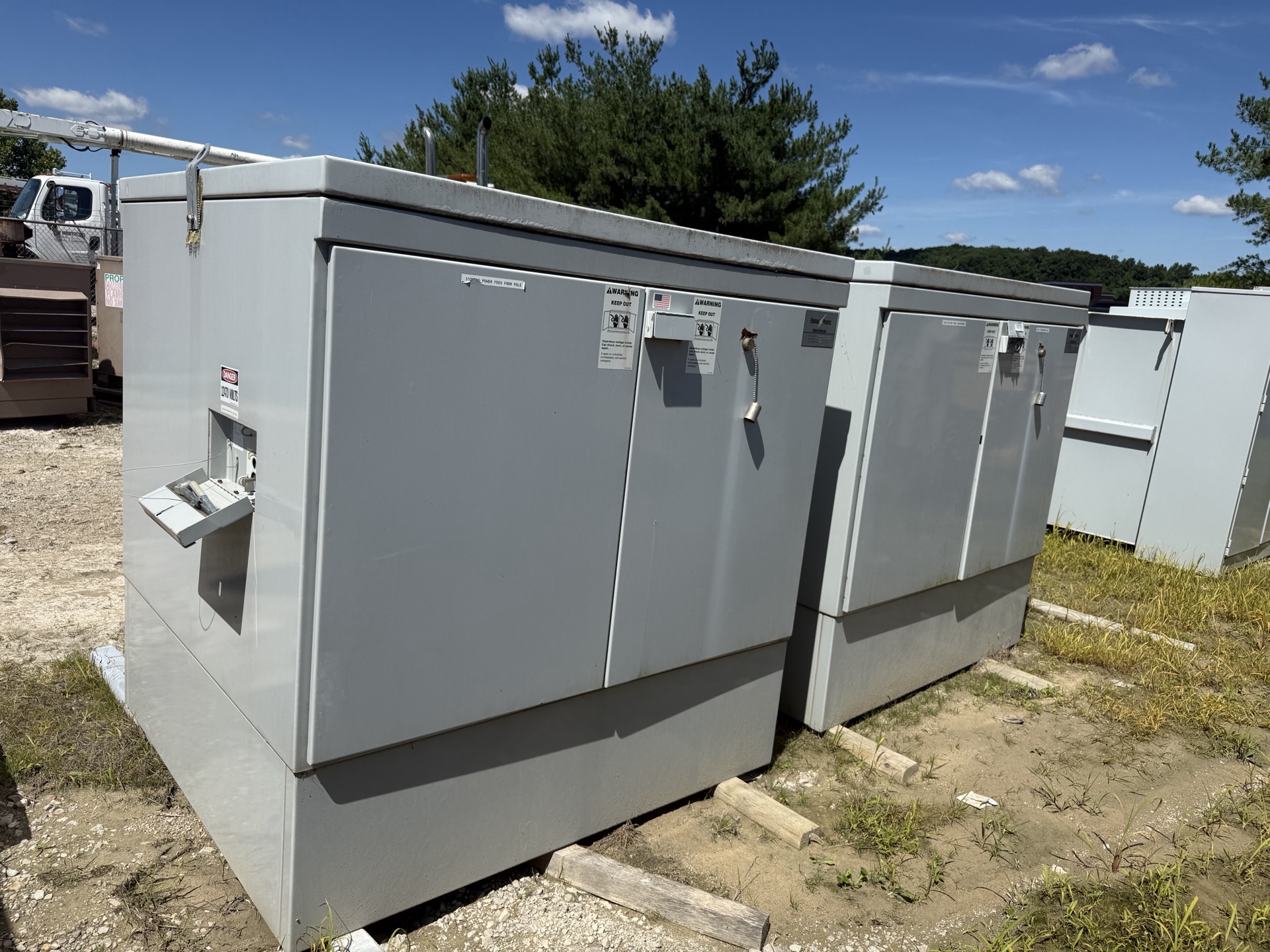
Trace the feeder path without disturbing operating equipment
Start with existing one-lines, panel schedules, equipment lists, and project markups to identify which lineup serves each crane or crane group. A feeder-switchgear lineup may include incoming sections, bus connections, feeder cubicles, protective devices, control power, and metering. Record what documents say; do not open enclosures, operate equipment, touch conductors, test, or approach energized apparatus to confirm a label.
The key distinction is between the crane’s continued ability to lift and the electrical path being offered for sale. For example, a hypothetical terminal could retain its cranes but move their feeders to a revised distribution lineup. In that case, the old sections may be surplus only after the project team establishes their boundary and applicable work is handled by qualified professionals.
Separate feeder protection from crane interlocks and controls
Crane interlocks can connect electrical distribution decisions to operating sequences, permissives, or control interfaces. They may be housed in a switchgear section, located in a separate control cabinet, or represented through wiring and logic elsewhere. Existing drawings and component schedules can help distinguish the power equipment from associated controls; avoid assuming that every cabinet near a feeder lineup belongs to the same sale lot.
A hypothetical arrangement might have feeder breakers in a lineup while crane-specific interlock logic remains in a separate panel scheduled for reuse. The sale description should identify that separation and note any known interface cables, auxiliary contacts, or control-power components shown in records. This lets a buyer review what is included without asking the seller to prove operation or alter an interlock.
Define the asset boundary, ownership, and included components
Before requesting review, reconcile equipment tags and project documents with ownership records. A lineup can include sections owned by different entities, leased equipment, utility-owned components, or items reserved for another project. Clarify which sections, breakers, bus links, and accessories are available, and identify exclusions plainly. If the boundary is uncertain, flag the question rather than presenting adjacent equipment as a confirmed asset.
Configuration matters as much as cabinet count. Describe the lineup’s known manufacturer, model or type, voltage rating, ampere rating, section arrangement, feeder count, and any available nameplate or drawing references. Voltage and amperage describe different ratings; one cannot establish the other. Share information from existing paperwork or safely accessible exterior markings, not from opening equipment or taking measurements.
Describe condition and project timing with useful limits
Give a factual account of what records show and what is unknown: whether the gear was operating before a planned change, whether components are reported missing, whether there is visible exterior damage, and whether documentation is available. Do not represent unverified condition as a test result. No seller testing is required for an initial discussion, and the buyer reviews the particular equipment and details before making an offer.
Coordinate the potential sale with the terminal’s electrical and lifting-equipment plans. A hypothetical project may remove one feeder lineup in stages while cranes continue working from a replacement source. The buyer needs to understand the intended asset boundary and project sequence, but the seller is not expected to disconnect, dismantle, rig, or move the switchgear. Qualified professionals handle electrical work as appropriate.
Plan the transaction around access and removal responsibility
Useful early information includes the site’s general access constraints, known loading or crane considerations, equipment location, and any project rules that affect scheduling. Share these details through the communication process rather than arranging removal assumptions independently. The buyer handles crane, rigging, disconnects, loading, freight, and hauling, with all freight covered; the seller’s role is to provide accurate information and coordinate appropriate site access.
The Illinois buyer considers used, surplus, and decommissioned electrical equipment, including switchgear, switchboards, MCCs, panelboards, busway, transfer switches, breakers, and unit substations across voltage classes. For a Will County intermodal-terminal opportunity, send the available equipment list, relevant records, photos of safely accessible exteriors, and the proposed inclusion boundary. Any offer and transaction details remain subject to review. Payment is upfront, never after pickup.
Common questions
Can feeder switchgear be offered when the cranes will remain in service?
Potentially, if the equipment being offered is clearly separated from the retained distribution and controls. Existing drawings and project markups help explain that boundary; the buyer reviews the specific configuration and details.
Should we include crane interlock cabinets with the feeder lineup?
Only when ownership and project scope show they are part of the available assets. Identify separate control cabinets, interfaces, and reserved components explicitly; do not assume proximity means they belong in the same sale.
Do we need to disconnect or test the switchgear before contacting the buyer?
No seller testing is required, and the seller should not perform electrical work for the sale. Qualified professionals handle applicable work; the buyer coordinates disconnects and removal, with payment upfront before pickup.