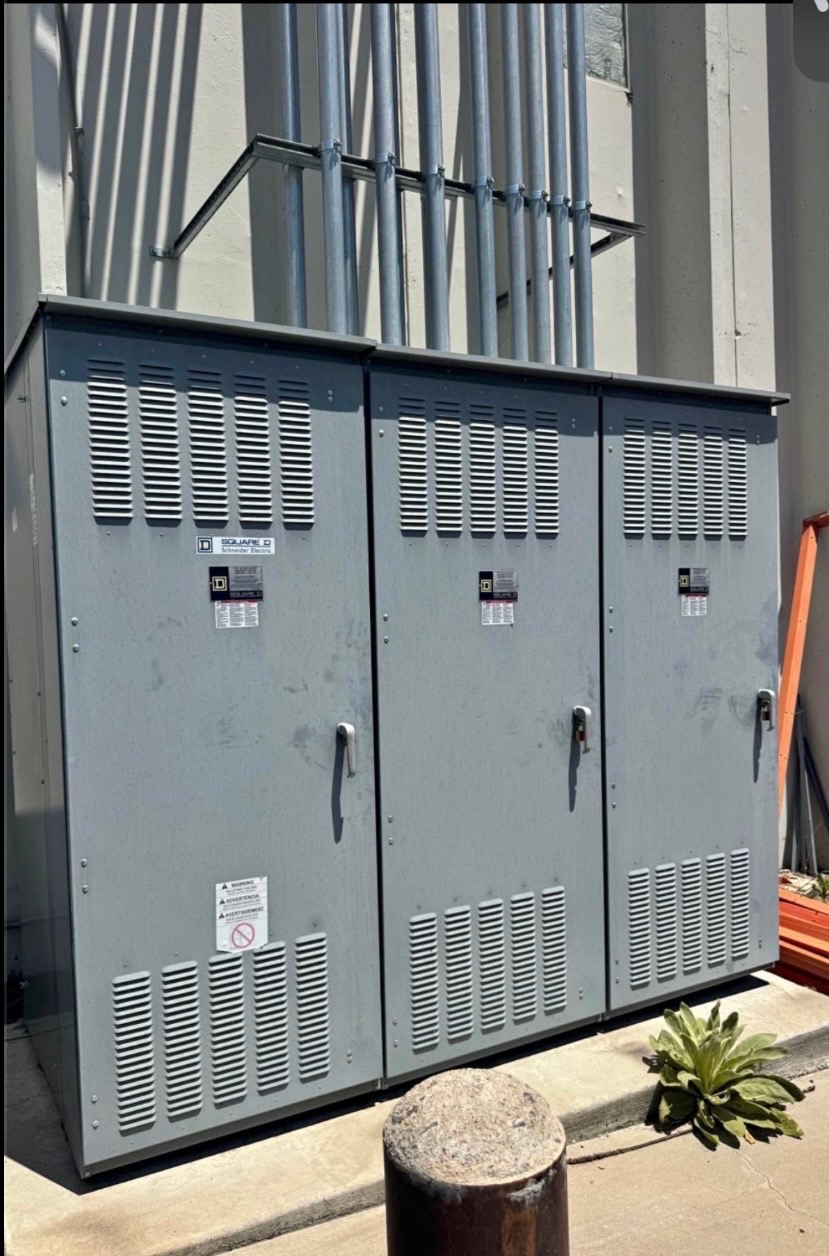
Define the panelboard lot, not the whole lighting system
A lighting distribution panelboard is the assembly that distributes power to branch circuits; it is different from the grow-light fixtures those circuits supply. Depending on the installation, a lighting system may also include separate drivers, ballasts, timers, contactors, sensors or a central lighting controller. Those components are not automatically part of the panelboard just because the lights are connected to it. Identify each panel by the designation used in existing plans or records and explain which panelboards and associated breakers you intend to offer. The buyer purchases panelboards and other specified electrical distribution equipment, not standalone light fixtures or lighting-control systems.
Make the boundary especially clear where controls are attached to or installed beside a panel. For example, in a hypothetical greenhouse retrofit, the grower may own a lighting panel while a tenant owns an adjacent timer cabinet and keeps the fixtures. An equipment list can identify the panel and its associated breakers as the proposed lot, note that the timer and fixtures stay, and flag any ownership question for resolution before a sale. Do not assume a control belongs in the sale merely because it shares an enclosure, wiring or a mounting surface with the distribution equipment.
Use circuit schedules and separate electrical ratings
An existing circuit schedule or panel directory helps the buyer understand how a lighting panel was arranged. Send a copy from your files if available, identifying the panel designation, listed circuit or pole positions, the number of circuits shown, and the descriptions of the loads. Note whether the directory is believed to be current or whether fixtures were added, removed or rearranged after it was prepared. If several boards are offered, keep each schedule paired with the right panel; a single total circuit count for the greenhouse can conceal which breakers are associated with which board.
Record ratings separately rather than treating them as interchangeable. Existing nameplate information or drawings may list panelboard bus amperes, system voltage and phase, while the main breaker and individual branch breakers may have their own ampere ratings. Label each figure by what it describes, and report volts separately from amps. Do not infer the panel voltage from the grow lights, add breaker ratings as a substitute for the panel rating, or guess at missing information. Share manufacturer and model identifiers when already documented; a partial record is more useful than a confident but unsupported number.
Describe humidity and enclosure history accurately
Greenhouse conditions can matter to a buyer's review even when a panel looks orderly in an old photograph. Explain where the board was installed, such as in a growing area, an adjacent service room or another location, and describe known exposure to high humidity, condensation, irrigation spray or cleaning. If records mention fertilizer, treatment chemicals or other contamination near the enclosure, include that history and any available documentation. Distinguish an observed event from an assumption: a humid growing space does not by itself establish what happened inside a closed panel.
Existing maintenance records and exterior photographs may show corrosion, staining, damaged seals or enclosure markings. Identify any visible damage as something reported in those records rather than diagnosing internal condition. An enclosure marking, when recorded, can help identify what was supplied, but it does not prove the enclosure remains suitable or that a used panel is fit for another installation. There is no need for the seller to remove covers, inspect internal parts, clean corrosion or test equipment for the buyer. Unknown moisture history can simply be listed as unknown.
Confirm ownership and share safe exterior photos
Before seeking an offer, determine who has authority to sell each panel and associated breaker. A greenhouse operator, property owner, tenant, lender or contractor may have different interests in equipment, so check the available lease, project records and asset list instead of assuming that the party operating the lights owns everything. State which attached controls or neighboring cabinets are retained, owned by someone else, or still unresolved. If a facility is being renovated, identify the person authorized to approve both the sale and access for the removal team.
Previously taken exterior photographs are useful if they show the closed enclosure, its surroundings and any readable external nameplate without exposing internal components. Use only images taken from a safe location under site rules; never approach energized equipment for a photograph. If no safe exterior image exists, send the records you already have and explain the limitation. Do not open, touch, operate, test or dismantle equipment, and do not enter a restricted electrical area to obtain information. The buyer can coordinate any further documentation with qualified personnel when appropriate.
Plan access, payment and professional removal
A panel inside a working McHenry County greenhouse may have a different removal route from one in an accessible service room. Describe the known location and the proposed path to a loading area using existing site information: door and aisle clearances if documented, floor conditions or weight restrictions, gates, overhead obstructions, and truck access. Mention crop protection rules, sanitation procedures, tenant coordination, restricted work areas and any periods when lighting service must remain available. Do not measure near energized equipment or move plants, barriers or electrical items for a preliminary quote; unknown dimensions can be addressed during planning.
After reviewing the equipment, records, ownership and access, the buyer may make a cash offer. Payment is upfront under the accepted sale terms, before removal, and the seller is not asked to test the panelboards. The buyer covers all freight and coordinates crane services, rigging, electrical disconnects, loading, freight and hauling as appropriate to the job. Qualified professionals perform electrical work as appropriate, including addressing isolation from all relevant sources before removal. Discuss outage and access arrangements with the buyer and facility personnel rather than assuming the panel can be removed while connected or promising a particular pickup time.
Common questions
Can I offer a greenhouse panelboard that is still connected?
You can describe it using existing records, but do not operate, open, touch, test or approach energized equipment. The buyer coordinates the disconnect and removal plan, with qualified professionals performing electrical work as appropriate. The facility and buyer must agree on access and any necessary outage before work proceeds.
What if the circuit directory or voltage information is missing?
Send whatever existing records identify the panel, its location and the breakers offered, and mark missing ratings or schedules as unknown. Separately identify any recorded panel amps, volts, phase and breaker amps rather than estimating them from the lighting fixtures. Missing information may affect the buyer's review.
Are greenhouse lights, controls and freight included in the sale?
The proposed sale concerns the panelboards and associated distribution equipment, not separate fixtures or lighting-control systems. Identify attached controls and who owns them so the parties can establish the lot boundaries. The buyer covers all freight, coordinates the removal logistics and provides upfront payment under accepted terms after a cash offer is reviewed.