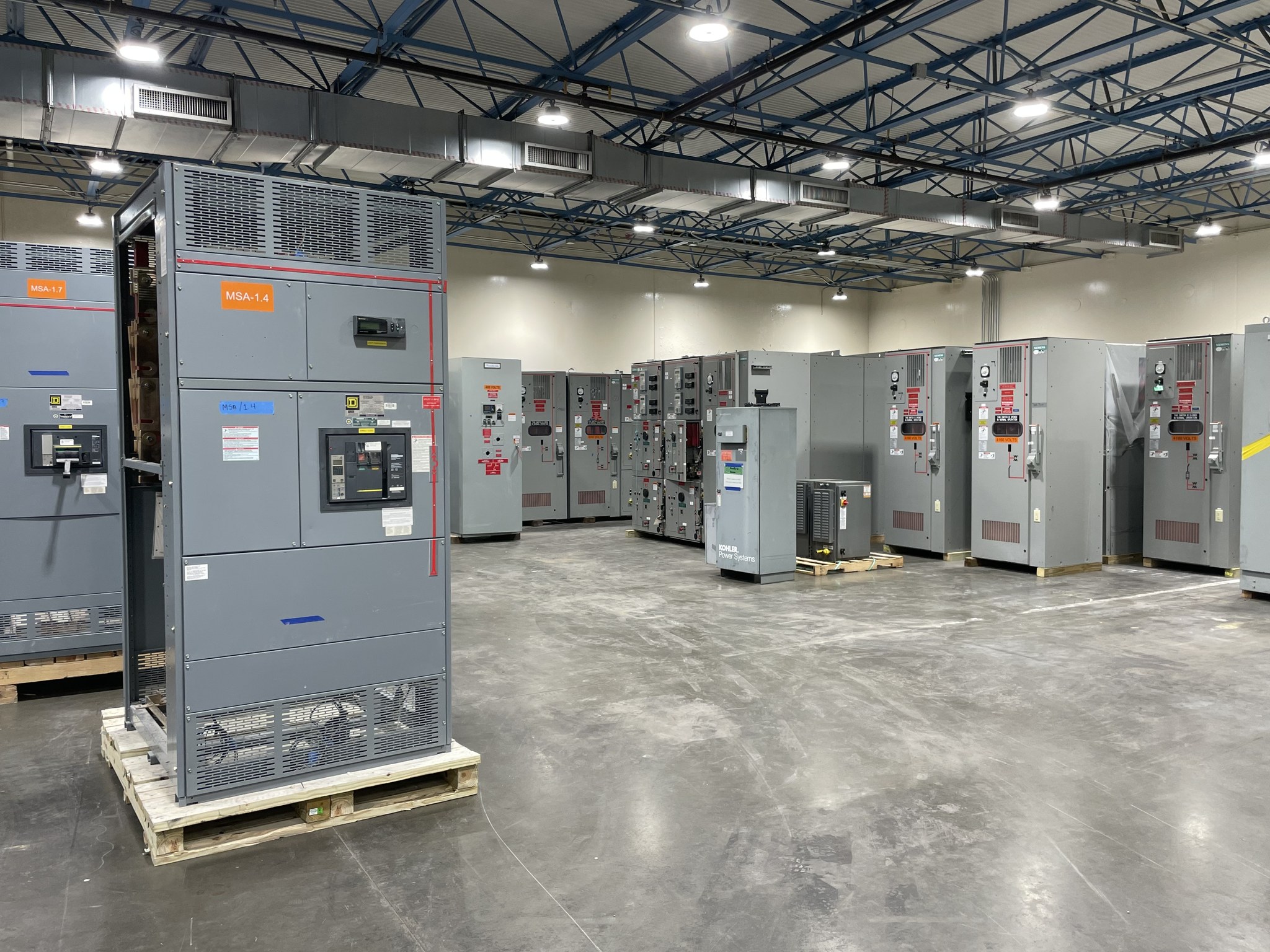
Build an identification record before the line comes apart
Begin with the information already available: purchase records, maintenance files, equipment schedules, and safely accessible exterior nameplates. Record the manufacturer and busway series or family exactly as shown, along with catalog or type numbers when legible. A page heading, handwritten shorthand, or seller’s description can help organize the inquiry, but it is not verified evidence of an electrical rating or compatible system.
For a hypothetical line with several busway runs, make a simple location list such as “press area, north run” and associate each tap-off with its former position if known. Photograph exterior markings without opening enclosures or approaching energized apparatus. If a label is obscured or missing, mark the detail as unknown rather than filling it in from a neighboring unit.
Keep voltage and ampere information distinct
Transcribe voltage and ampere ratings as separate fields, using the label or reliable documentation for each. An ampere value does not establish a voltage rating, and a voltage value does not establish current capacity. Include other marked characteristics, such as poles or protective-device information, only when clearly documented; do not infer a rating from the connected machine or the busway run’s description.
A hypothetical tap-off marked with an ampere figure but lacking readable voltage information should be reported that way. The buyer can review the available records and ask focused follow-up questions, but the seller should not be asked to energize, test, measure, or operate equipment to complete the listing. Equipment details and any particular offer remain subject to review.
Inventory connection hardware without promising a match
Record what is physically present with each tap-off: covers, handles, clamps, fasteners, interlocks, or other associated pieces, when identifiable from existing records or safe exterior observation. Separate loose hardware into labeled groups if that can be done without electrical work. Note whether items appear attached, stored together, or merely believed to belong to a particular unit.
A matching manufacturer name or similar appearance does not prove that a tap-off fits a specific busway series, section, or configuration. In a hypothetical dismantling plan, two units with similar housings might have different connection arrangements. Preserve catalog numbers and photographs so the buyer can assess the relationship; avoid describing parts as interchangeable unless documentation supports that conclusion.
Describe condition and the dismantling boundary plainly
Useful condition notes are factual and limited to what is already known: whether the tap-off is listed in an inventory, whether exterior damage is visible from a safe position, whether labels are legible, and whether the unit’s history is documented. Distinguish observed facts from assumptions. Do not open an enclosure, touch conductors, or operate a device to answer a buyer’s questions.
For a line being dismantled, clarify which equipment is being offered and which electrical work, if any, remains part of the project. Do not represent the gear as de-energized or disconnected unless that status has been established through the appropriate site process. Qualified professionals handle electrical work as appropriate; the seller is not expected to dismantle, rig, or move the tap-offs for the buyer.
Coordinate review, access, and removal in Winnebago County
Send the inventory, available documentation, photographs, approximate quantity, and site contact information through the buyer’s communication process. Include practical access details such as loading restrictions, building entry procedures, known lifting constraints, and the project’s anticipated removal window. These details help the buyer evaluate a specific opportunity; they do not create a promise that every item will be accepted.
The Illinois buyer purchases used, surplus, and decommissioned electrical equipment, including busway, in all voltage classes. For equipment reviewed and covered by an agreed transaction, the buyer’s terms include a cash offer, payment upfront, no seller testing requirement, and covered freight. The buyer coordinates crane, rigging, disconnects, loading, freight, and hauling as needed, so the seller’s role is to provide information and access—not perform the removal.
Common questions
What should I send if a tap-off’s label is unreadable?
Provide any existing schedules, purchase records, catalog references, and safe exterior photographs, and identify which details are unknown. Do not open the unit or test it; the buyer can review the information and request clarification.
Can similar tap-offs be listed as compatible with the same busway?
Not on appearance alone. Record each series, catalog number, rating, and included connection hardware separately. Compatibility requires supporting documentation or review; a shared manufacturer name does not establish interchangeability.
Does the seller need to remove or package tap-offs before pickup?
No seller dismantling, rigging, or moving is required under the described buying arrangement. Discuss site access and equipment status during review; the buyer coordinates removal logistics, with qualified professionals handling electrical work as appropriate.