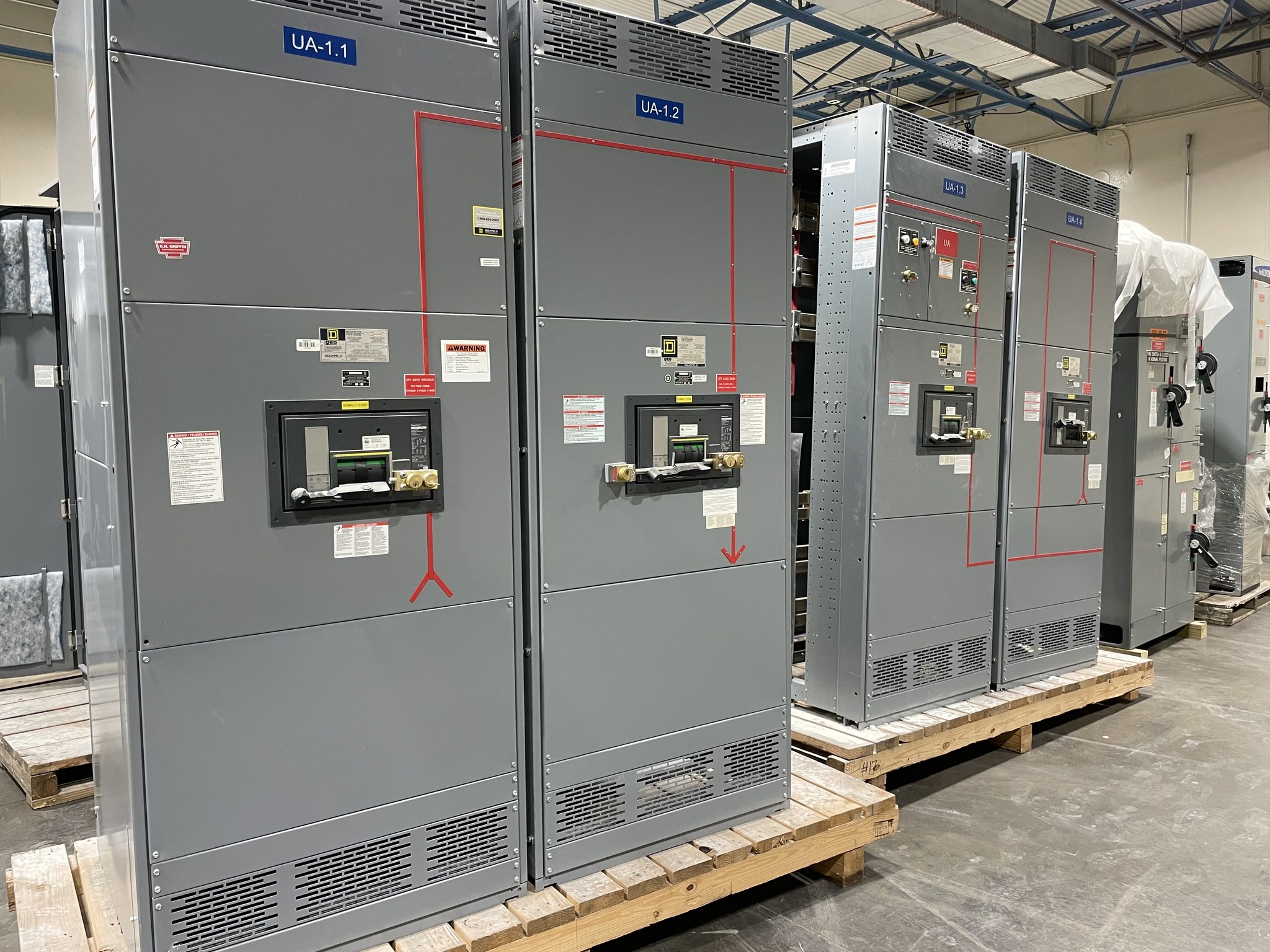
Separate the palletizer’s controls from the MCC being offered
A palletizer installation may include an MCC lineup serving several loads: the palletizer drive, conveyors, case handling equipment, and nearby packaging systems. Some controls may be mounted on the machine, while starters and feeders are housed in MCC buckets. Before describing the sale, distinguish the lineup itself from machine-mounted panels, remote operator stations, cable, and equipment that another buyer or machinery contractor will retain.
For example, hypothetically, a plant might sell the palletizer and conveyor as one machinery package while offering the MCC sections separately. If the lineup also serves a wrapper or other retained production equipment, those buckets may not be part of the available lot. A simple scope sheet identifying included sections and known exclusions is more useful than a broad description such as “palletizer electrical.”
Reconcile bucket schedules with physical lineup sections
Gather existing bucket schedules, one-lines, equipment lists, and project records where available. Compare their section and bucket identifiers with safely accessible exterior labels and lineup nameplates. Records may reflect an earlier production arrangement, replacement buckets, or revised load names; note discrepancies instead of silently treating an old schedule as a current map. The buyer can review the documentation alongside the equipment description.
A hypothetical schedule might list a palletizer starter in section three, while the exterior label now identifies that bucket as a conveyor feeder. That mismatch does not establish which record is correct, but it signals a question to resolve through available plant documentation. Do not open enclosures or operate equipment to investigate. A seller can share existing records and visible information without testing or inspecting energized internals.
Document ratings without turning descriptions into verified specifications
Record manufacturer and model information from existing paperwork or safely accessible exterior markings, along with the number of sections, bucket arrangement, and any listed bus or interrupting information. Keep voltage and ampere ratings distinct: one describes electrical potential and the other current capacity. A page title, sales description, or motor rating does not verify the MCC’s own rating. Identify each figure by its source and context.
If a label is incomplete or its meaning is uncertain, say so rather than inferring a lineup rating from a motor, breaker, or connected machine. Photographs of exterior nameplates and section fronts can help communicate what is present, provided they can be taken safely without approaching energized apparatus. Existing drawings may add context, but no seller testing is required for an initial buyer review.
Make condition and ownership boundaries explicit
Describe condition in terms you can support: whether the lineup is represented as operating before shutdown, whether records identify missing buckets, or whether visible exterior damage is documented. Distinguish firsthand knowledge from older maintenance notes and avoid presenting an unverified condition as a guarantee. The buyer reviews the specific equipment and details; an inquiry does not promise that every component or configuration will be accepted.
Ownership deserves the same care as condition. A plant may own the MCC but lease a machine, or a machinery buyer may claim controls and feeder equipment bundled with the palletizer. Check sale documents, asset lists, and any applicable ownership records before including disputed items. A hypothetical boundary list could identify MCC sections as offered, machine-mounted controls as excluded, and one feeder bucket as pending confirmation.
Coordinate the sale around access and removal responsibilities
When contacting the Illinois buyer, provide the Tazewell County site location, lineup description, available photographs and records, ownership boundaries, and known access constraints. Mention whether the equipment remains installed and what is known about the site’s shutdown and removal schedule. The buyer can discuss the particular scope after reviewing those details; freight and removal planning depend on the equipment and site conditions.
The buyer purchases used, surplus, and decommissioned electrical equipment, including MCCs and related distribution equipment across voltage classes. Terms include a cash offer, payment upfront, no seller testing requirement, and covered freight. The buyer handles crane work, rigging, disconnects, loading, freight, and hauling, so the seller is not expected to dismantle or move the lineup. Qualified professionals perform electrical work as appropriate; payment is upfront, not after pickup.
Common questions
What if the palletizer bucket schedule does not match the MCC labels?
Share both the existing schedule and safely accessible exterior label information, noting the discrepancy and document dates if known. Do not open enclosures or operate equipment to reconcile them; the buyer can review the stated scope and records.
Can I offer the MCC while a separate buyer takes the palletizer?
Potentially, if ownership and included components are clear. Identify MCC sections, buckets, machine-mounted controls, exclusions, and disputed items in writing so the electrical offer can be reviewed separately from the machinery transaction.
Do I need to test or arrange removal before asking for an offer?
No seller testing is required, and the buyer covers freight and handles removal logistics, including crane, rigging, disconnects, loading, and hauling. Share available details first; any specific offer remains subject to review.