Start with the full nameplate, not just “WL”
WL identifies a Siemens power-circuit-breaker family, but it does not by itself establish the exact breaker configuration. Use the complete nameplate information when available: record the manufacturer, model or type designation, catalog or order number, serial number, and any listed electrical ratings. A page title, inventory shorthand, or seller’s recollection is helpful context, not verification of the equipment’s ratings.
Keep voltage and current information distinct. A nameplate may list a voltage rating and an ampere rating, but neither tells you the other. If documentation is incomplete, report what is actually visible and flag the missing fields rather than estimating. For example, a hypothetical inventory entry saying “WL 2000” is ambiguous unless its source clarifies what that number represents.
Frame size and trip unit answer different questions
Frame size describes the breaker’s frame class or physical and current-handling configuration; it is not a substitute for the breaker’s actual ampere rating. Report the frame designation exactly as shown on the nameplate or supporting Siemens documentation, along with any separately stated continuous-current rating. Do not derive a rating from the frame designation, an enclosure, or the appearance of a breaker.
Identify the trip unit by its markings and type, and note visible model or catalog information where legible. WL breakers may have different trip-unit configurations, so “electronic trip” alone can leave important identification gaps. A hypothetical pair of breakers with the same frame marking but different trip units should be listed as distinct configurations, not combined under one assumed description.
Say clearly whether the drawout cradle is included
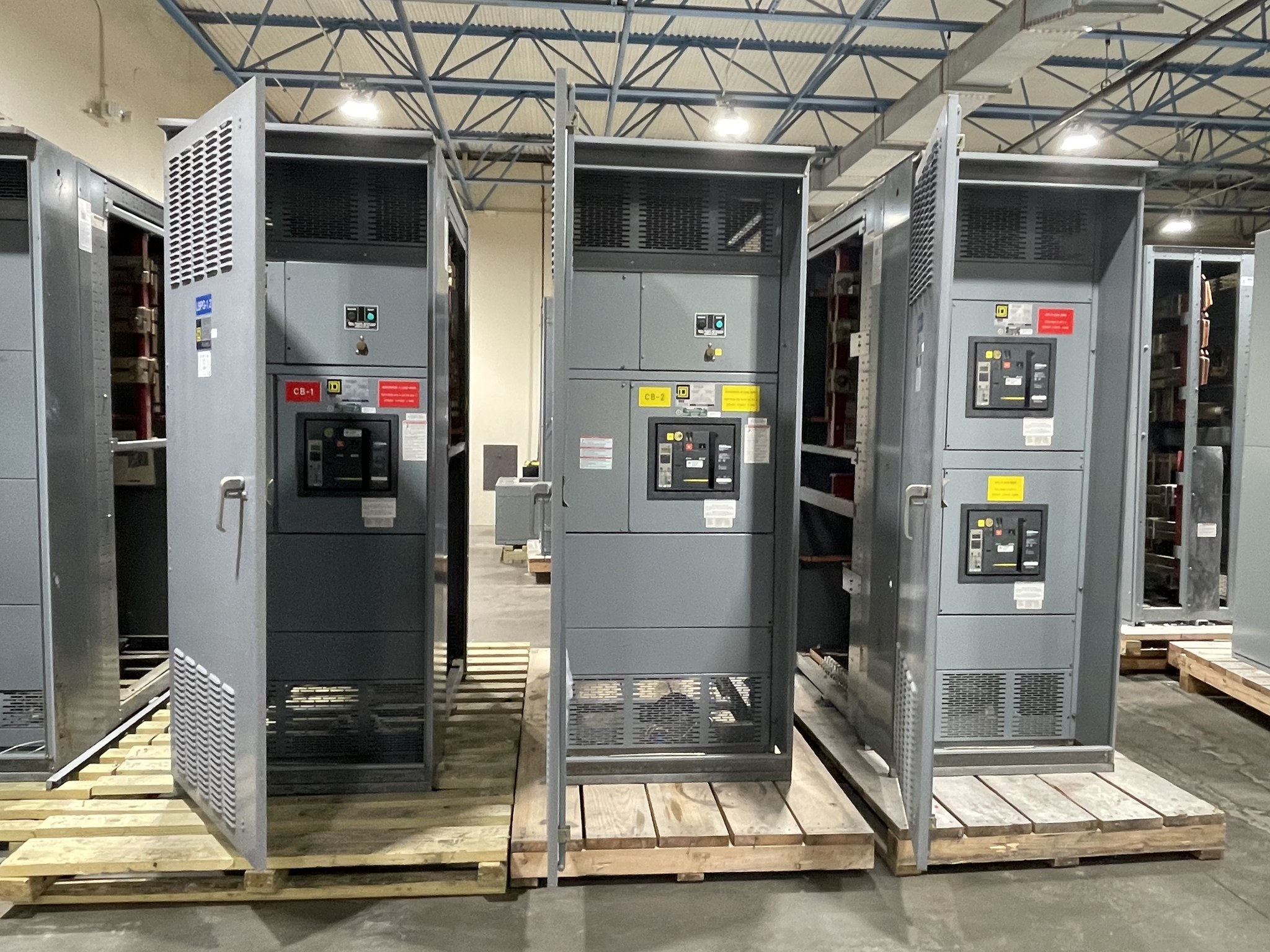
A drawout breaker and its cradle are separate pieces of the overall arrangement. State whether each breaker is being offered alone or with a matching cradle, and identify the cradle’s own visible markings or documentation when available. Do not assume that a breaker fits a cradle because both are Siemens WL equipment; compatibility should be supported by labels, records, or qualified review.
Describe quantities and pairings as specifically as the records allow: for example, “three WL breakers; one documented matching cradle” is more useful than “three complete breakers.” If the site has several cradles, note which breaker each is associated with only when that relationship is documented. A hypothetical lot with mixed or uncertain pairings should be presented as such, rather than represented as a complete set.
Build an accurate picture of condition and lot contents
For an initial discussion, describe what is known about storage, prior service, completeness, and visible condition without opening an enclosure or operating equipment. Existing maintenance records, asset registers, photographs already on file, and safely accessible exterior labels can help establish context. Do not touch conductors, test or measure the breaker, or approach apparatus that may be energized; qualified professionals handle electrical work as appropriate.
List loose accessories separately, including shutters, secondary disconnect components, hardware, or documents, if their identity and association are known. Avoid calling a breaker tested unless valid records support that statement; sellers are not required to test equipment for an offer. An Illinois buyer reviews the described equipment and circumstances, and any specific offer remains subject to that review rather than an assumption that every item will be accepted.
Coordinate removal and payment before the site is cleared
When contacting the buyer, provide the location in Illinois, breaker count, full nameplate details available, trip-unit identification, cradle status, condition notes, and any known site-access constraints. Mention whether the equipment is still installed or already staged, but do not dismantle, rig, or move it for the inquiry. For equipment in a decommissioned data center or shut-down power plant, share relevant project and access information early.
The buyer purchases used, surplus, and decommissioned electrical equipment, including Siemens WL breakers, and can coordinate disconnects, crane and rigging, loading, freight, and hauling. The seller is not expected to test or arrange transport. Offers are cash, with payment upfront—not after pickup—and freight is covered. Details, access planning, and a particular offer are reviewed for the specific lot; qualified professionals perform electrical work as appropriate.
Common questions
What should I send if the WL breaker nameplate is partly unreadable?
Share the legible fields and note what cannot be confirmed. Existing asset records or safely accessible exterior photographs may help. Do not open the breaker or attempt measurements or testing to fill gaps.
Can I offer a Siemens WL breaker without its drawout cradle?
Yes, describe it as a breaker-only lot and state that no cradle is included. If a cradle is present but its match is uncertain, identify that uncertainty rather than claiming compatibility.
Does the trip-unit marking establish the breaker’s ampere or voltage rating?
No. Record trip-unit identification separately from the breaker’s stated ratings. Use the nameplate or supporting documentation for amperes and voltage, and do not infer either from the trip-unit type.