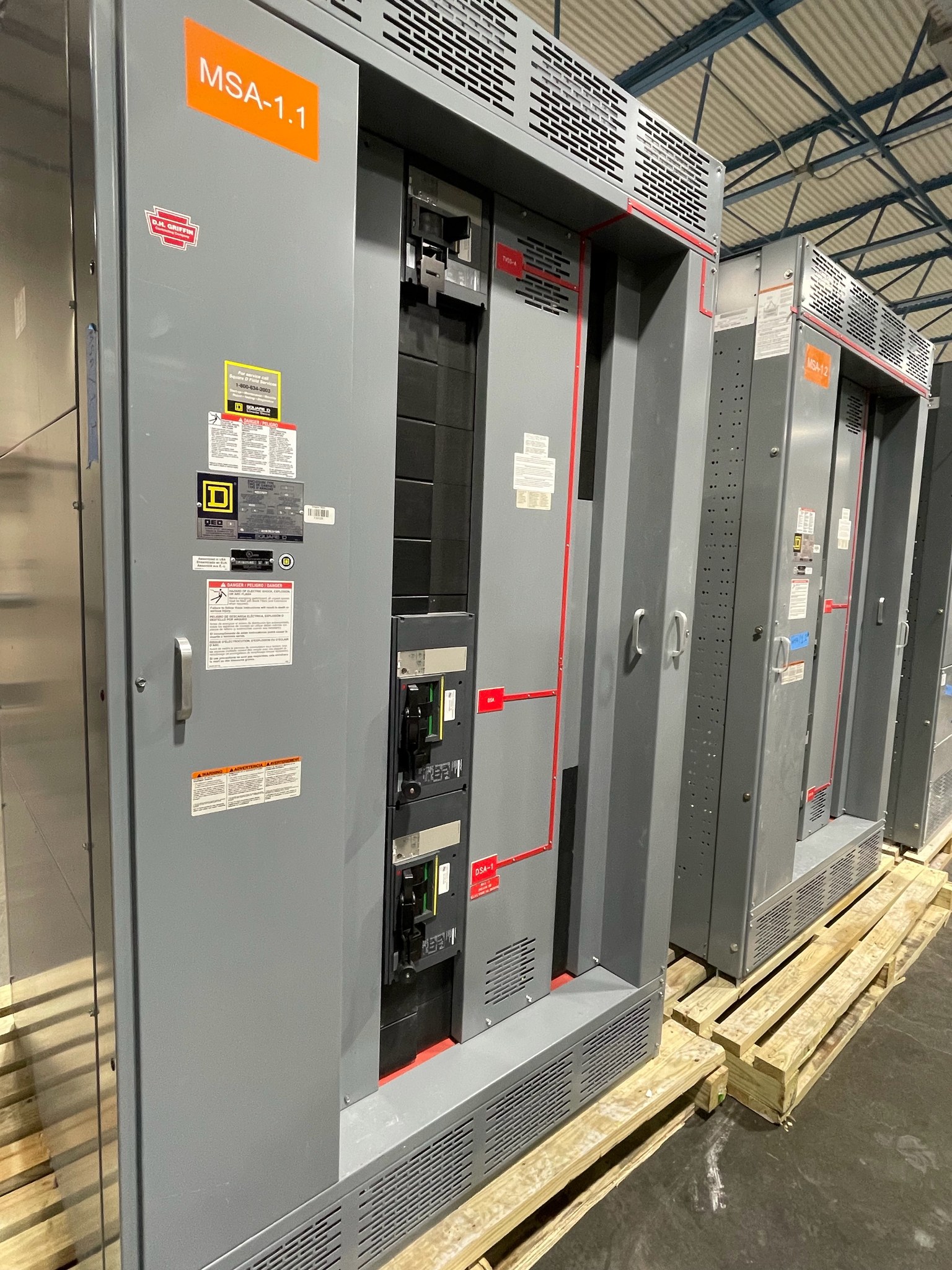
Start with the busway identity, not the family name
I-Line identifies a product family, but it does not establish that two pieces belong to the same series or connect together. Gather any existing bills of material, drawings, equipment schedules, invoices, or manuals that identify the busway. Record manufacturer and catalog or series markings where they are already visible from a safe location. Do not open an enclosure or approach energized equipment to search for a label.
A useful inventory separates each straight length from each fitting and plug-in unit, rather than calling everything “I-Line.” Note whether documentation identifies the series, conductor material, configuration, or other ordering details. If the paperwork is incomplete, say so plainly. A buyer can review the available information, but a family name or similar appearance alone is not a basis for a compatibility claim.
Keep straight-length details distinct from electrical ratings
For straight lengths, list the count and any documented physical description, such as nominal length, orientation, or enclosure style. Note whether sections are still installed, have been removed, or are staged for a project; do not dismantle anything to produce a better inventory. Existing layout drawings can help show how the sections were arranged, especially when several lengths look alike.
Capture ampere rating and voltage rating as separate facts, and only when the source document clearly identifies each one. An ampere value is not a voltage value, and neither should be inferred from the other. A listing title, handwritten shorthand, or seller estimate is not verified equipment rating. If the records disagree, report the discrepancy and let the buyer review it rather than choosing a number.
Describe fittings and plug-in units as their own items
Elbows, tees, offsets, end pieces, flanges, hangers, and other fittings can determine whether a group of straight sections is useful, so count them separately and identify them from existing records when possible. A hypothetical inventory might show twelve straight sections, two elbows, and one end fitting, with series identification confirmed only for some pieces. That is more informative than one total called “busway.”
Plug-in units need their own descriptions: count, documented ampere and voltage ratings, and any visible catalog information already available without opening or operating them. Do not assume a unit fits a particular busway section because the brand or I-Line name matches. Exact series verification is needed before anyone makes a compatibility claim. If a rating or identifier cannot be confirmed, mark it unknown rather than extrapolating from another unit.
Make condition and ownership clear without performing tests
Describe what you know about the equipment’s history and present state: for example, whether it came from a renovation, a decommissioned data center, or a shut-down power plant, and whether sections are complete, visibly damaged, or missing known parts. Photographs of safely accessible exterior markings and staged components can support the description. Do not ask staff to open covers, touch conductors, operate devices, or test equipment for the sale.
No seller testing is required for a review. Share available maintenance records, inspection notes, or removal documentation if you have them, while distinguishing documented findings from assumptions. Ownership and authority to sell matter too: identify the owner or authorized representative and flag any asset-release, site, or contractor approvals that still need coordination. The buyer reviews the specific equipment and circumstances; an inquiry is not a promise to accept every item.
Coordinate a practical Illinois pickup plan
When requesting a review, send the inventory, available documents, approximate location, and a contact who can coordinate site access. Mention whether the busway is installed or already staged, what loading constraints are known, and whether the site has scheduled access windows or clearance requirements. Do not disconnect, rig, or move equipment for the buyer. Qualified professionals handle electrical work as appropriate, and the buyer coordinates crane, rigging, disconnects, loading, freight, and hauling as applicable.
For equipment that is a fit, the buyer’s terms are cash offers, payment upfront, no seller testing, and freight covered. Payment is made upfront, never after pickup. The parties can review the equipment description, offer, scope, and site logistics before committing to a transaction; details remain subject to that review. The seller’s role is to provide accurate information and coordinate access—not to take on dismantling or transport.
Common questions
Can straight lengths and plug-in units be treated as compatible because they both say Square D I-Line?
No. I-Line is not enough to verify an exact match. The buyer needs the series and relevant identification reviewed before making compatibility claims; similar branding or appearance is not proof.
What should I provide if the busway ampere or voltage rating is uncertain?
Share existing documents and safely accessible exterior information, and label uncertain values as unknown. Do not infer voltage from amperage, rely on a page title, or open equipment to find markings.
Do I need to disconnect, test, or arrange freight for a busway sale?
No seller testing is required, and the seller should not dismantle or move the equipment. If the specific equipment is accepted, the buyer coordinates applicable disconnects, rigging, loading, and freight; payment is upfront.