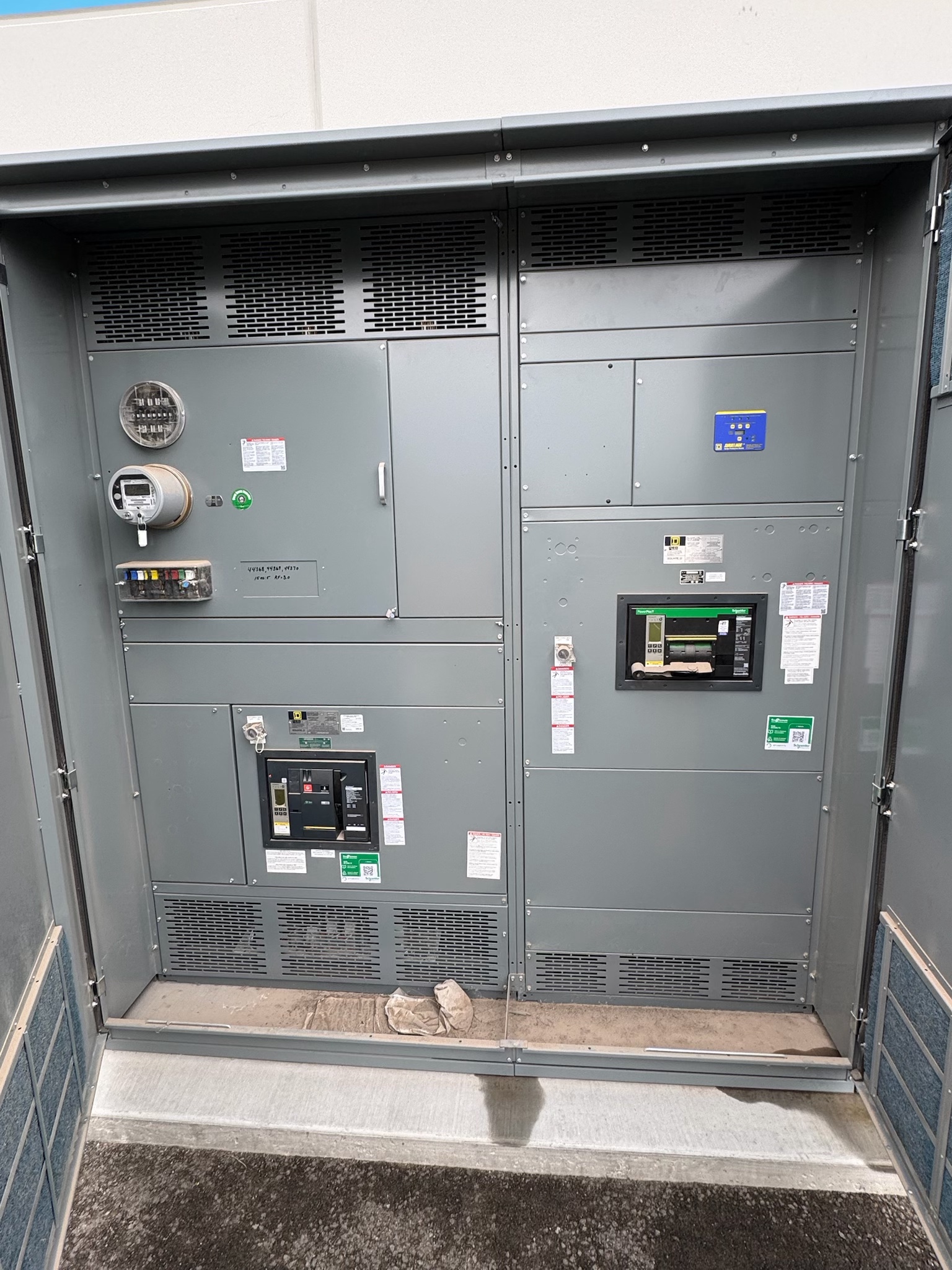
Record the Emax 2 model before describing the breaker
Start with information already available on the breaker’s exterior and in its records. Note the complete model designation and any legible catalog, serial, or nameplate information; preserve punctuation and suffixes rather than shortening the label to “Emax 2.” The family name alone does not establish the exact breaker configuration. If a marking is obscured or unreadable, say so instead of filling the gap with a guess.
The frame, trip unit, and accessories are distinct parts of the identification picture. A hypothetical inventory entry might describe an Emax 2 frame, identify the trip unit separately, then list visible accessories as unverified until records confirm them. That is more informative than calling the whole assembly interchangeable with another breaker. Do not open an enclosure or approach energized apparatus to collect details; use existing paperwork or safely accessible exterior information.
Separate frame rating, voltage, and trip-unit details
The frame designation and ampere rating describe current-related characteristics; voltage is a separate rating. Neither should be inferred from the other. When available from existing documentation or safely accessible markings, record each value as stated, along with the exact model identifier. If documentation lists a rating but the exterior label is difficult to read, distinguish the documented value from what has been visually confirmed.
The trip unit also deserves its own line in the inventory. Record its exact designation and visible settings information only where those details are already documented or safely observable without operating or testing the breaker. Do not assume that a trip unit from a different Emax 2 model is compatible, or that a similar-looking unit has the same functions. A buyer can review the identified combination; compatibility should not be asserted from appearance alone.
Describe accessories as an actual package, not a guess
List accessories individually where possible, using labels from records or safely accessible exterior information. Depending on the equipment, the package may include items such as auxiliary contacts, closing or opening components, a motor operator, or connection-related parts. These are examples, not a checklist of items every breaker contains. State whether each item is present, separately stored, missing, or simply not confirmed.
A hypothetical example makes the distinction clear: a facility record identifies one Emax 2 breaker and a separately boxed accessory, but the box label does not establish that the item belongs to that breaker. Report both pieces and their uncertain association instead of presenting a matched set. Photographs of exterior labels and the separately stored items can support review, provided they can be taken safely without opening equipment or approaching energized apparatus.
Explain condition and provenance without performing tests
Useful condition notes are factual and bounded: whether the breaker is identified as removed from service, whether its storage history is known, whether exterior damage is visible, and whether documents accompany it. Avoid descriptions such as “tested good” unless an existing, legitimate record supports that statement. The buyer’s stated terms do not require the seller to test the equipment, and no one should operate, measure, or touch conductors to prepare an offer.
For equipment from a shut-down power plant or decommissioned data center, note the source and project context if known, along with any available inventory or removal records. Do not treat decommissioning as proof that electrical work is complete or that equipment is de-energized. Qualified professionals handle electrical work as appropriate. Sharing uncertainty plainly is more useful than making a safety or operating claim that the available records cannot support.
Coordinate review, removal, and payment before pickup
An Illinois buyer of used, surplus, and decommissioned electrical equipment can review the breaker details before discussing a specific purchase. Send the exact model information, separate frame and trip-unit identifiers where available, accessory notes, quantity, condition observations, and safe exterior photographs. The buyer can ask follow-up questions and determine whether to make an offer; an offer and its scope remain subject to review rather than automatic acceptance of every item.
The company states that it makes cash offers, pays upfront, requires no seller testing, and covers freight. For accepted equipment, it handles crane work, rigging, disconnects, loading, freight, and hauling, coordinating qualified professionals for electrical work as appropriate. The seller is not expected to dismantle, rig, or move the breaker. Confirm the agreed equipment and site arrangements in advance; payment is upfront, never after pickup.
Common questions
Why does the exact Emax 2 model matter if the frame family is known?
A family name does not identify every configuration. The exact model helps distinguish the offered breaker, while separate trip-unit and accessory details prevent unsupported assumptions about compatibility or what is included.
Should I test the breaker or operate it to confirm its condition?
No. The buyer’s stated terms do not require seller testing. Report known records and safely observable exterior condition; do not operate, open, measure, touch conductors, or approach energized apparatus.
What should I do if the trip unit or accessories cannot be identified?
Record that they are unidentified or unconfirmed, and describe any safely visible labels or existing paperwork. Do not guess compatibility. The buyer can review the available information before considering a specific offer.