Separate frame identification from the breaker’s ratings
A Magnum DS frame designation identifies a breaker family and physical platform; it does not, by itself, establish the breaker’s ampere rating or voltage rating. Record those ratings independently from the nameplate or reliable equipment documentation. If a page title says “Magnum DS” or a handwritten tag gives only a frame reference, treat that as a lead for review, not verified ratings.
A practical inventory can capture manufacturer, complete model or catalog number, frame designation, serial number if legible, and the stated ampere and voltage ratings in separate fields. Include trip-unit identification when it is visible or documented. For example, a hypothetical listing that calls every unit “DS-206” may still need individual nameplate details before a buyer can distinguish configurations. Do not infer missing ratings from the frame or from another breaker nearby.
Describe drawout or fixed mounting—and what remains with it
State whether each breaker is drawout or fixed-mount, based on existing labels, records, or safely accessible exterior features. A drawout breaker may be offered with its matching cradle, without one, or with a cradle whose relationship to the breaker is uncertain. Make that distinction explicit. A cradle is not automatically included simply because the breaker came from a switchgear lineup.
List the cradle as a separate item and provide its identifying information where available, including compatible breaker or lineup references from paperwork. For a hypothetical removal inventory, “one drawout breaker and one cradle, compatibility unconfirmed” is more useful than calling the pair a complete assembly. If a fixed-mounted breaker is offered with hardware or a mounting structure, describe those components separately rather than assuming they are part of the breaker.
Inventory auxiliary contacts and other loose components
Auxiliary contacts can affect how a breaker is identified and what accompanies it, but their presence should not be guessed from the breaker model. Note whether contacts are shown in documentation, visibly present from an already accessible exterior viewpoint, or supplied as a separate loose component. Avoid opening an enclosure or operating equipment to check. If the paperwork is incomplete, say so; uncertainty is preferable to an unsupported claim.
Identify other offered pieces individually, such as secondary disconnect components, trip units, charging handles, or shipping restraints, where known. Clarify whether they are installed, loose, or simply listed on an older inventory. In a hypothetical example, a breaker, cradle, and bag of contacts should be three inventory lines, with quantities and identification notes, rather than one “complete breaker” entry. The buyer can then review the actual scope.
Share condition and site details without performing electrical work
Useful condition notes are factual and limited to what someone can safely observe or find in existing records: storage location, visible exterior damage, missing covers, corrosion noted on an exterior surface, or whether paperwork describes prior service. Do not ask anyone to open equipment, touch conductors, test, measure, operate, or approach energized apparatus. Do not represent a breaker as de-energized or electrically sound unless qualified documentation supports that statement.
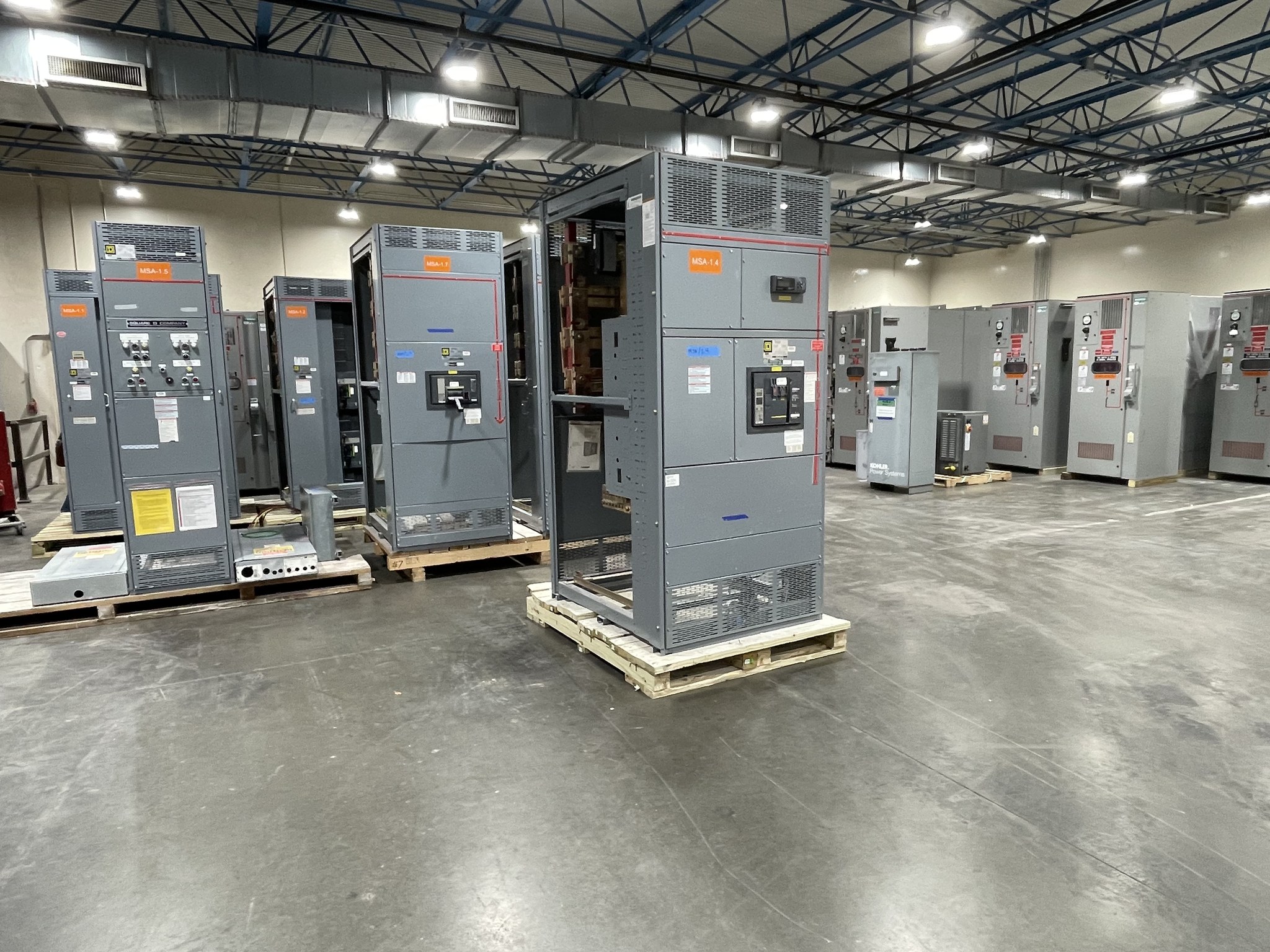
For breakers removed from a decommissioned data center or shut-down power plant, mention the source and whether the units are staged, still associated with a lineup, or stored separately. Describe site access, loading constraints, and any known scheduling requirements. Qualified professionals handle electrical work as appropriate; the seller is not expected to disconnect, dismantle, rig, or move the equipment.
Send a clear offer list and coordinate the transaction
An initial message can include Illinois location, breaker quantities, model and nameplate details, drawout or fixed status, cradle count, auxiliary-contact information, condition notes, photographs limited to safely accessible exterior views, and available records. Identify what is confirmed versus uncertain. The buyer reviews those details and can discuss a specific offer; an inquiry or model number alone does not guarantee acceptance, value, or a particular transaction outcome.
The company buys used, surplus, and decommissioned electrical equipment, including breakers and associated switchgear, across voltage classes. For an agreed purchase, payment is upfront, before pickup—not after it—and the buyer covers freight. It coordinates crane, rigging, disconnects, loading, freight, and hauling as applicable, so the seller’s role is to provide accurate information and access arrangements, not to prepare or transport the breakers.
Common questions
Does a Magnum DS frame designation tell me the breaker’s ampere or voltage rating?
No. Record ampere and voltage ratings separately from the nameplate or reliable documentation. A frame reference, inventory title, or nearby breaker’s label does not verify either rating for the unit being offered.
Should I include the cradle and auxiliary contacts with a drawout breaker?
Describe each item and quantity separately, stating whether it is included and whether compatibility is documented or uncertain. Do not call a breaker-and-cradle combination complete unless records support that description.
Do I need to disconnect, test, or move the breakers before requesting an offer?
No. The seller is not expected to perform electrical work, testing, rigging, or moving. Share available records and safe exterior information; for an agreed purchase, payment is upfront and freight is covered.