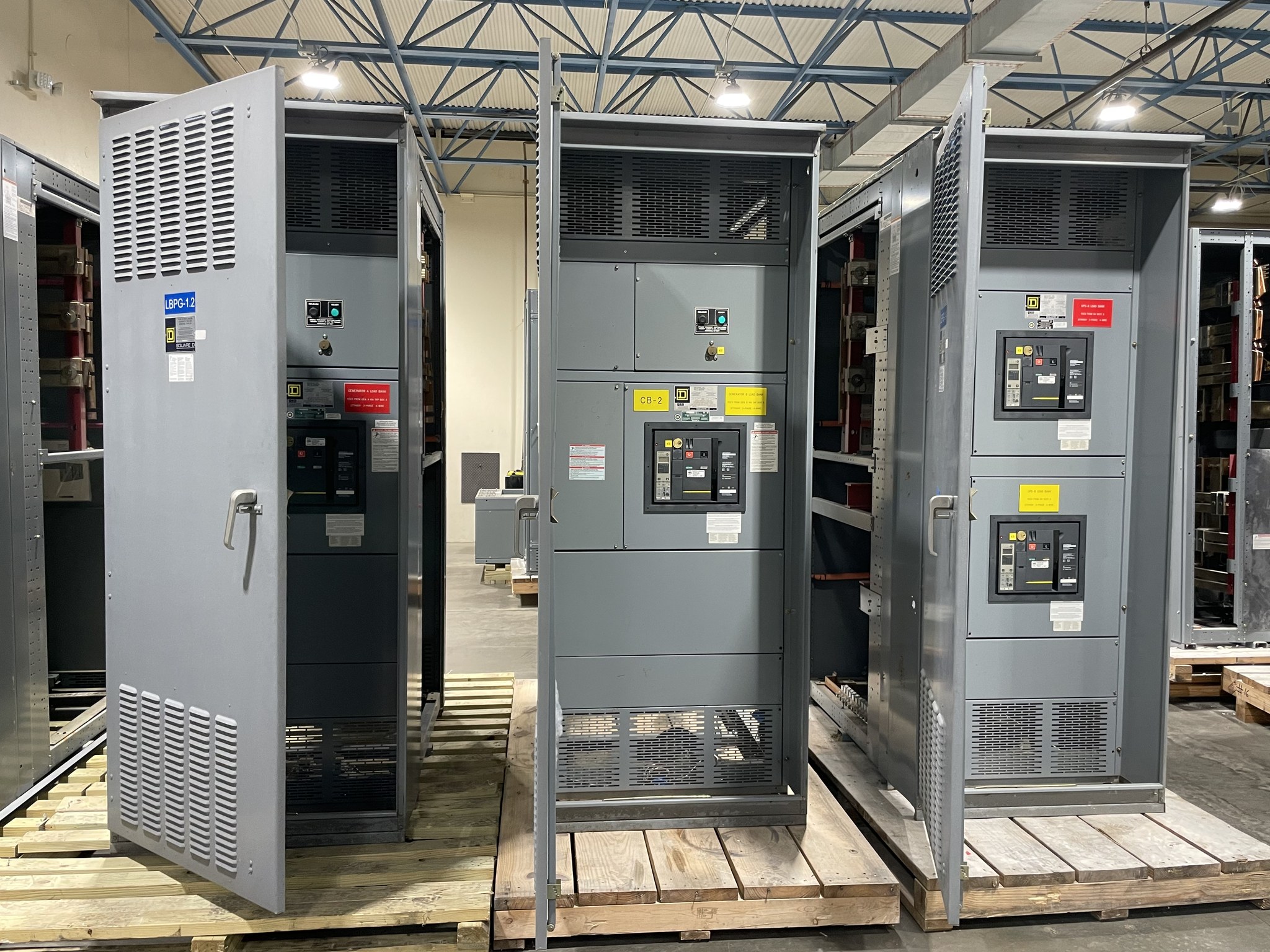
Build a lineup record before naming the generation
Start with a section-by-section inventory. Record the lineup’s overall arrangement as you understand it, the number of sections, their order, and any visible identification labels that can be read safely from the exterior. Existing drawings, equipment schedules, invoices or maintenance records may identify an AKD generation or assembly designation. Transcribe identifiers as printed rather than converting a partial marking into a more specific model claim.
Keep confirmed facts separate from interpretation. For example, a drawing might call the assembly AKD-8 while a surviving label is incomplete; report both observations and note the conflict. Do not treat a listing title, a seller’s shorthand or a breaker’s appearance as verification of the lineup’s rating or compatibility. Voltage and ampere ratings are distinct and should be reported only when supported by documentation.
Inventory breakers by their own markings
For each breaker, capture the manufacturer and model or catalog marking, frame information, trip-unit details if documented, and the section or compartment where it belongs. A lineup may contain breakers that differ in frame, trip functions or vintage. Existing schedules and records can help link devices to positions; if a paper record and a visible exterior label disagree, preserve both details for review rather than choosing one.
Do not assume that every breaker described as an AKD breaker fits every AKD generation or section. As a hypothetical example, an owner may have a lineup drawing naming one assembly generation and a spare breaker with a different catalog family. That is useful information, but not proof of interchangeability. Share the exact markings and any existing parts lists so the buyer can assess the combination without asking you to test or operate equipment.
Describe gaps, alterations and loose components precisely
A missing section can affect how the remaining lineup is understood, so describe its former position if known: left end, middle, or right end, for example. Note whether the gap resulted from a documented project change, whether blanking or transition pieces are shown in available drawings, and whether the surviving equipment has loose components stored separately. Avoid calling an assembly complete when the record is uncertain.
List loose breakers, doors, trim, bus pieces or other components as separate inventory, with any readable identifiers and an estimate of quantity. A hypothetical lineup might have six connected sections, a drawing showing a seventh section, and two loose breakers whose original positions are unknown. That account is more helpful than a simple “seven-section lineup” claim because it distinguishes what is present from what appears to be absent.
Share condition and ownership information without unsafe inspection
Describe condition from existing records and safely accessible exterior observations. You can mention documented service history, known water or fire exposure, prior modifications, storage conditions, or missing covers if those facts are already known. Do not open enclosures, operate breakers, touch conductors, take measurements, or approach equipment that may be energized to improve the description. Qualified professionals handle electrical work when appropriate.
Useful ownership documents may include purchase records, asset lists, decommissioning schedules, drawings and a contact authorized to represent the owner. If the gear came from a shut-down plant or decommissioned data center, explain whether it remains installed, has been disconnected, or is stored, but do not infer its electrical status. A buyer can review the information provided and ask follow-up questions; any specific offer remains subject to that review.
Coordinate an Illinois sale and removal as one plan
Send the inventory, available photographs of safely accessible exterior labels, location details and known access constraints together. Mention section dimensions only if they are already documented, and describe doors, loading routes, site rules, crane access or scheduling limitations that the facility contact knows. These details help frame removal planning; the seller is not expected to dismantle, rig, load, test or transport the switchgear.
The Illinois buyer purchases used, surplus and decommissioned electrical equipment, including GE AKD low-voltage switchgear. The stated terms include cash offers, payment upfront and freight covered, with no seller testing required. For an agreed purchase, the buyer handles coordination for disconnects, crane and rigging, loading, freight and hauling, using qualified professionals for electrical work as appropriate. Payment is upfront, not after pickup; confirm the specific offer and arrangements before proceeding.
Common questions
What should I send if I cannot identify the AKD generation?
Share every readable exterior identifier and relevant existing drawing or equipment schedule, and label uncertainty plainly. The buyer can review those records; do not open equipment or infer a generation from appearance alone.
Can I include breakers that may not match the lineup?
Yes, describe them separately with their readable model and catalog markings, quantity, and known location or storage status. Do not claim compatibility unless documentation establishes it; the buyer can review the combination.
What if the lineup has missing sections or remains installed?
Identify the known gaps and current site status, then disclose access or scheduling constraints. The buyer coordinates removal and freight for an agreed purchase; sellers are not asked to dismantle, rig, test or load the gear.