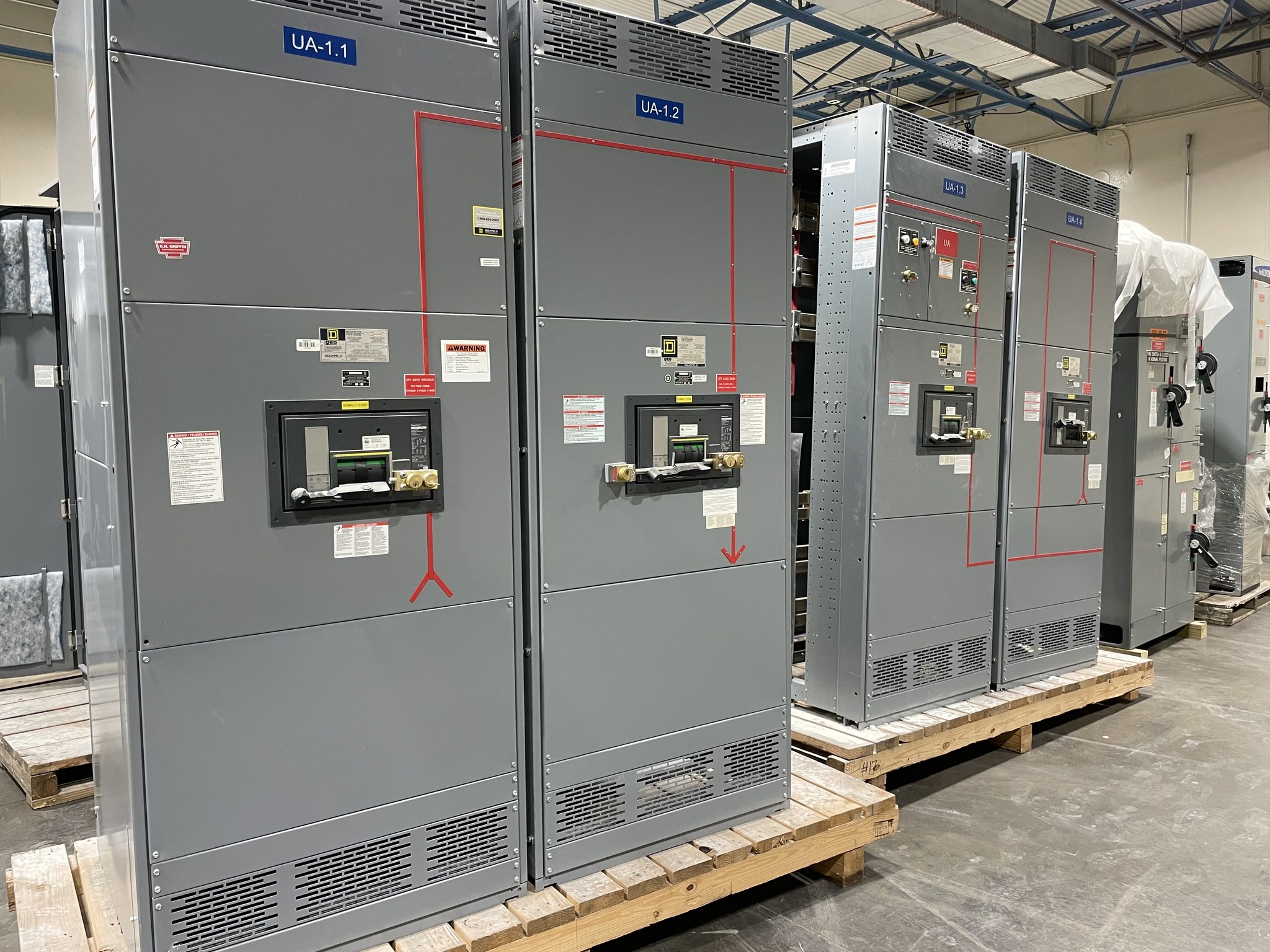
Trace the switchgear’s place in the electrical boundary
A collection substation gathers output from multiple inverter or feeder circuits and routes it toward a larger interconnection point. Switchgear there may protect or control collection feeders, transformers, bus sections, or outgoing circuits. For a first description, note the equipment’s labeled function and position in the single-line diagram, if available. That diagram can help distinguish collection-substation gear from equipment serving a different part of the site.
Ownership does not necessarily follow physical location. A solar project company may own equipment on one side of a defined delivery or interconnection boundary, while a utility owns apparatus beyond it; agreements and asset records determine the actual line. A hypothetical lineup beside a utility yard is not automatically utility-owned—or customer-owned. Confirm ownership from project records and authorized contacts before offering equipment for sale.
Describe voltage class and ampere rating as separate facts
Identify voltage class from existing nameplates, drawings, specifications, or equipment schedules. Separately record the ampere rating, bus rating, and any short-circuit or interrupting ratings shown in documentation. Voltage describes the system level for which equipment is rated; amperes describe current capacity. One rating cannot be inferred from the other, and a high ampere rating does not establish a particular voltage class.
For a hypothetical replacement, a seller might have medium-voltage feeder gear and a different voltage class of equipment at the interconnection boundary. Keep those groups distinct rather than calling everything “solar substation switchgear.” Share manufacturer, model or catalog identifiers, lineup arrangement, and available drawings when known. These details help an equipment buyer evaluate what is being offered; they do not establish acceptance or a specific offer before review.
Separate switchgear from panels and other project assets
Solar panels are generating modules, not switchgear, and they need a separate description and buyer review. Likewise, inverters, transformers, protection and control equipment, bus duct, and auxiliary systems may be part of a replacement scope without being part of the switchgear sale. List the actual equipment included, rather than using “substation” to imply that every nearby asset is available.
Configuration matters as much as the general equipment label. Describe whether the offering is a complete lineup, individual cubicles, breakers, or a combination, and note associated bus sections or control compartments if documented. For example, a hypothetical project may retain one transformer while replacing feeder sections and breakers. An accurate scope prevents confusion about what the buyer is reviewing and what remains with the operating site.
Share condition records without performing tests
Useful information can come from records already in hand: nameplate photographs taken safely, equipment schedules, drawings, maintenance history, replacement scope, and known storage or operating status. Explain whether the gear was in service, removed, or stored, and disclose known missing components or visible damage described by authorized personnel. If records are incomplete, say so; do not fill gaps by guessing at ratings or condition.
No seller testing is required for an initial review. Do not open enclosures, operate equipment, touch conductors, measure, or approach energized apparatus to gather details. Electrical status and any required work must be handled by qualified professionals as appropriate. The buyer reviews the information and may ask follow-up questions; condition, configuration, ownership, and logistics remain subject to that review.
Coordinate access, removal, and a clear offer scope
Before discussing removal, identify who can authorize access and coordinate with the site’s project, facilities, and electrical representatives. A replacement schedule may involve a contractor, owner, and utility, but those roles do not by themselves settle asset ownership or sale authority. Share practical site-access constraints and the planned availability window, without assuming equipment is de-energized or electrical work is complete.
The Illinois buyer purchases used, surplus, and decommissioned electrical equipment, including switchgear and related equipment in all voltage classes. The business offers cash, pays before pickup, covers freight and does not require the seller to test the equipment. It handles crane, rigging, disconnects, loading, freight, and hauling, with qualified professionals performing electrical work as appropriate. Discuss the equipment list and site details first; any offer and arrangements are subject to review. Payment is upfront, never after pickup.
Common questions
How can I tell whether collection-substation gear is ours to sell?
Check project asset records, ownership schedules, interconnection documents, and the defined delivery boundary with authorized representatives. Physical proximity to utility equipment does not prove ownership; confirm authority before presenting gear for sale.
What information helps distinguish voltage class from ampere rating?
Use existing nameplates, drawings, and equipment schedules to report each rating separately. Include lineup or breaker identifiers where available. Never estimate voltage from amperes, or amperes from voltage, when records are missing.
Do we need to test or dismantle the switchgear before requesting an offer?
No seller testing is required, and the buyer handles removal logistics, including crane, rigging, disconnects, loading, and freight. Share available records and coordinate authorized site access; payment is upfront, not after pickup.