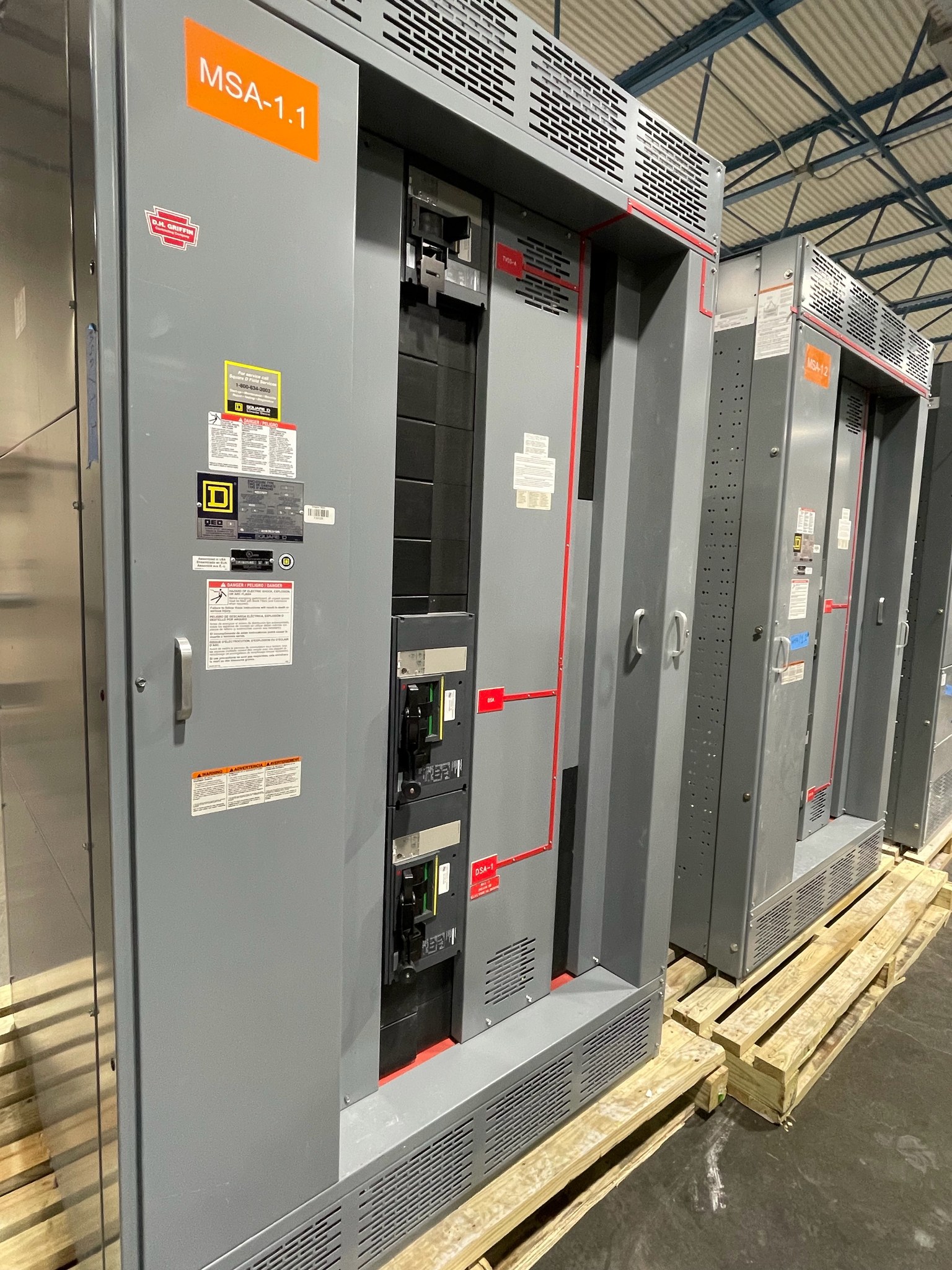
Describe the lineup as a system, not just a switchboard
A tie-breaker lineup may combine incoming sections, bus ties and multiple distribution sections, with arrangements that differ from building to building across a campus. Start an inventory for each offered lineup, identifying its apparent sections and their sequence from left to right. Record visible nameplate information from safely accessible exterior areas, including manufacturer, catalog or type designation, serial number, stated voltage and ampere ratings, and any lineup or section identifiers. Treat these as reported details until documentation confirms them.
Keep voltage and ampere ratings distinct: one describes the electrical system rating and the other the current rating. Neither can be deduced from the other, and a page title or seller’s shorthand is not verification. For example, a hypothetical inventory might say “two incoming sections, one tie section, six feeder sections; ratings transcribed from existing schedule, not yet matched to nameplates.” That is more useful than calling the entire lineup simply “a 4,000-amp switchboard” without explaining what the figure applies to.
Trace source and tie arrangements using existing records
Explain, as far as existing records show, which sources supplied the lineup and what the tie breaker connected. A campus could have separate normal sources feeding two bus sections with a tie between them; another arrangement may involve different building feeds or operating configurations. Do not assume that a tie was normally open, normally closed, or intended for a particular transfer sequence from its presence alone. Share the available one-line diagram, riser, control schematic, or operating documentation so the buyer can interpret the reported arrangement.
When records use building names, electrical-room labels, or feeder designations, preserve those labels and explain them in a short key if possible. A hypothetical note such as “Lineup A served the west building; tie connected sections A and B; normal tie position shown on the archived one-line” communicates both context and the source of the claim. If the drawing is old, mark it as such rather than presenting it as a current or field-verified configuration.
Inventory sections, breakers, and changes over time
A lineup’s section-by-section contents help distinguish a complete assembly from a group of remaining sections. Note visible breaker designations, frame or catalog identifiers, feeder labels, metering or control components, and any spaces or sections documented as spare. Where records show replacements, additions, or removed devices, list those separately and identify the supporting paperwork. Do not treat an empty section as proof that the bus, barriers, or other internal parts are present; describe only what existing records or safe exterior views establish.
For a campus consolidation, equipment may have been modified during later building projects, so the original drawing and the latest available revision can tell different stories. Send both when available, with revision dates or a note that the date is unknown. A hypothetical discrepancy—an old drawing showing four feeder sections while a later schedule lists five—should be flagged rather than silently reconciled. Clear differences let the buyer ask focused questions before discussing a specific offer.
Report condition and package boundaries without testing
Describe the lineup’s known history in practical terms: whether it came from an operating building, a decommissioned area, or surplus storage; whether sections appear complete from accessible exterior views; and whether records note damage, missing components, or prior changes. Photos can help show nameplates, section labels, overall arrangement, and visible exterior condition. Do not open enclosures, operate equipment, touch conductors, test, measure, or approach energized apparatus to gather information. Use existing paperwork and safely accessible exterior information only.
Be precise about what is included in the proposed sale. State whether the offer concerns one complete lineup, selected sections, associated breakers, or other separately identified equipment, and distinguish these items from gear that will remain at the site. Do not assume related equipment is included because it appears on a drawing. The buyer reviews the description and sale details before making an offer; an inventory is a basis for that conversation, not a promise that every listed item will be accepted.
Coordinate a campus removal and receive the offer terms
A larger office campus may have multiple lineups, separate electrical rooms, restricted access windows, loading constraints, or other trades sharing the work area. Identify each lineup’s location, the site contact and access requirements, and any known lifting or route limitations. The buyer handles the removal logistics for equipment it agrees to purchase, including crane, rigging, disconnects, loading, freight and hauling. Qualified professionals perform electrical work as appropriate. The seller is not expected to dismantle, rig, test, or move the equipment.
Send the inventory, available drawings, photos of safely accessible exterior information, and a clear description of the sale boundary for review. The company buys used, surplus and decommissioned electrical equipment, including switchboards, across voltage classes; a particular offer remains subject to review of the equipment and transaction details. For accepted equipment, the terms are cash offer, payment upfront, no seller testing required, and all freight covered. Payment is upfront, not after pickup, so confirm the agreed scope and payment arrangements before removal is coordinated.
Common questions
What should I provide if the tie-breaker arrangement is unclear in the records?
Send the available one-line diagrams, schedules, and revisions, noting dates and uncertainties. Preserve source and section labels as documented; do not infer normal tie position or operating sequence without supporting records.
Can I offer only selected sections from a campus lineup?
You can identify the sections you propose to sell and list adjacent sections or components that remain. The buyer reviews that boundary, configuration, records, and equipment details before deciding whether to make a specific offer.
Do I need to test or dismantle the switchboard before requesting an offer?
No seller testing is required, and the seller is not expected to dismantle, rig, or move equipment. Share existing records and safely accessible exterior information; removal logistics are handled for equipment agreed for purchase.