Identify the breaker, not the compressor package
A compressor may have a motor starter, local disconnect, protective relay, and upstream power breaker in its electrical path. Establish which item is available for sale. A compressor name or horsepower does not identify the breaker, and a breaker serving a compressor should not be described as a compressor. List the breaker manufacturer and model only when supported by its nameplate or existing records.
For example, a hypothetical plant inventory might call an item “compressor breaker, Line 2.” That is useful application context, but it does not establish the breaker’s ratings. Record the wording as an application description, then separately transcribe visible identification details from safely accessible exterior information or paperwork. Do not open an enclosure or approach equipment to obtain a better view.
Document frame and trip information separately
Frame designation and trip information help distinguish breakers that look similar but are configured differently. Share the frame marking, trip-unit identification, and any documented trip settings as separate fields. If a setting appears only in a drawing, relay schedule, or maintenance record, say where it came from; do not present an old document as proof of the breaker’s present configuration.
Keep ampere and voltage ratings distinct. A frame size or ampere rating does not establish voltage, and voltage cannot be inferred from an ampere figure. The label’s context also matters: a value may refer to a component, circuit, or assembly rather than the breaker itself. Send the exact marking and its source, or identify it as unknown pending review, rather than filling gaps by assumption.
Use drawings to explain the feeder’s role
Applicable one-line diagrams, panel schedules, feeder lists, and equipment schedules can clarify whether the breaker served a compressor motor circuit, a distribution section, or another load. Include drawing titles, revision dates, and relevant sheet references when available. A cropped excerpt may help orient the discussion, but retain enough context to show what equipment and circuit the notation refers to.
Drawings are supporting evidence, not a substitute for breaker identification. A hypothetical one-line might show a compressor feeder with a breaker symbol and circuit tag, while a separate equipment schedule lists frame and trip details. If those records conflict, flag the discrepancy instead of choosing whichever value seems plausible. This lets the buyer review the breaker and its documented application without treating an inferred rating as verified.
Describe condition and packaging without unsafe inspection
Report condition using observations already available: stored, installed, removed, incomplete, or accompanied by specified accessories or records. Note known history such as whether the breaker came from a decommissioned production area, but avoid claims about operation or internal condition unless supported by qualified inspection records. No seller testing is required for an initial discussion, and no one should be asked to open, operate, test, measure, or touch electrical equipment for photos or verification.
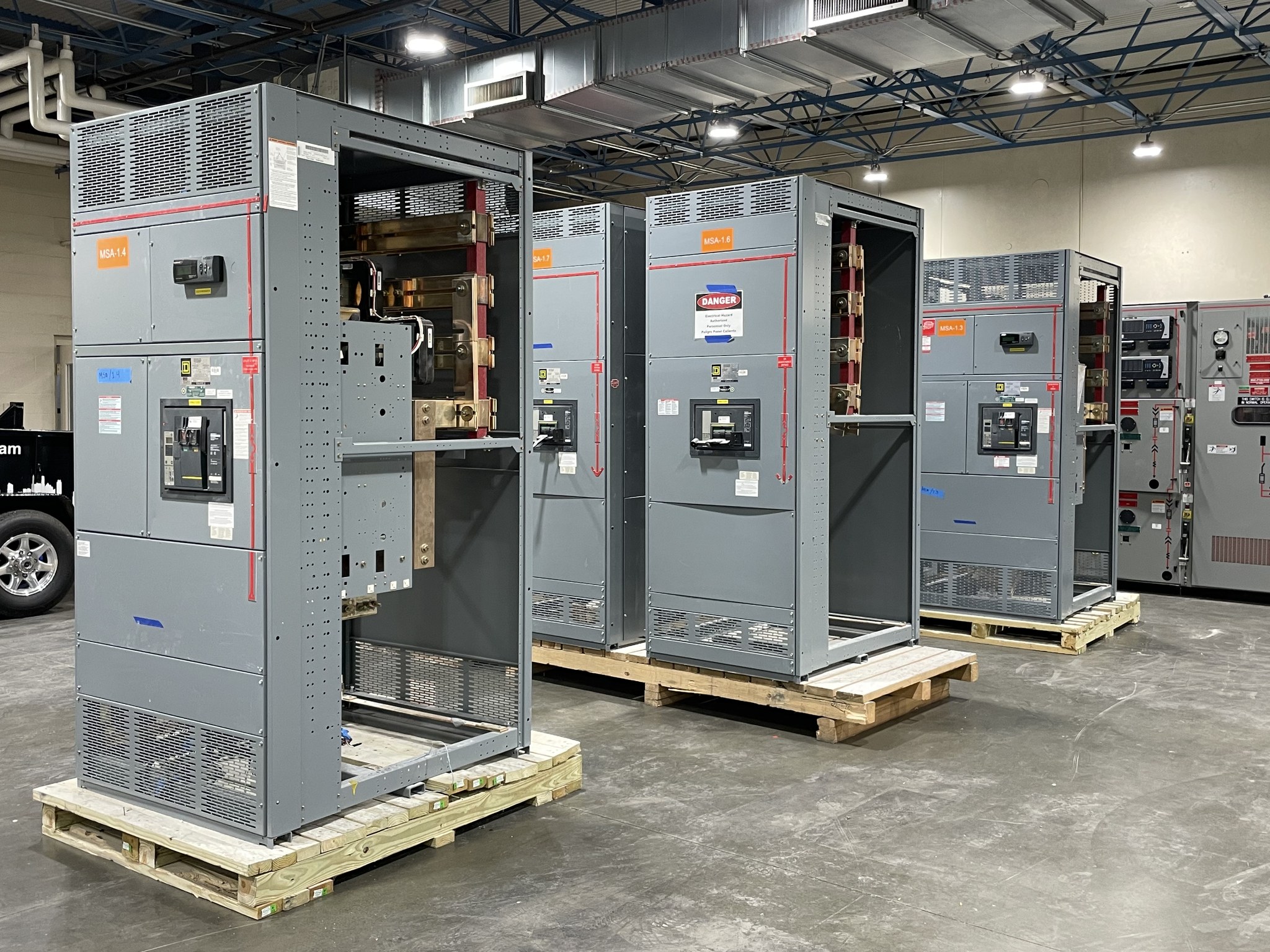
Clarify whether the offer concerns a standalone breaker, a breaker in a removable section, or equipment still associated with a lineup. Mention known shutters, drawout features, trip units, or included hardware only when documented or safely visible. Do not dismantle or package the equipment for the buyer. A qualified buyer-side review can address configuration and handling requirements after the available information is considered.
Coordinate a Kankakee County sale and pickup review
An Illinois buyer of used, surplus, and decommissioned electrical equipment may consider power breakers and related equipment across voltage classes, including equipment from food plants. Share the location at a practical level, the number of breakers, available records, ownership or sale authority, and whether the equipment remains installed. The buyer can review those details and discuss a specific offer; not every item or configuration is necessarily suitable.
For an accepted transaction, the stated terms are a cash offer, payment upfront, and freight covered. Payment is made before pickup, not after it. The buyer handles the applicable disconnects, crane or rigging, loading, freight, and hauling, with electrical work performed by qualified professionals as appropriate. Do not arrange removal yourself. Access limits, site rules, and pickup coordination can be discussed during review so the seller’s role remains providing information and authorization, then receiving payment.
Common questions
What should I send if the trip settings are known but the frame marking is not?
Provide the documented settings and identify their source, then mark the frame information as unknown. Existing schedules or records can guide review; do not open equipment or approach it to search for markings.
Can I describe the breaker using the compressor’s horsepower or voltage?
Use those details only as application context, with their source identified. They do not verify the breaker’s ampere or voltage rating. Share breaker-specific markings and drawings separately, without inferring missing ratings.
Who removes a breaker that is still installed at the food plant?
The buyer coordinates applicable disconnects, rigging, loading, and freight for a specific accepted transaction. Qualified professionals perform electrical work as appropriate; the seller should not dismantle, test, or move the breaker.