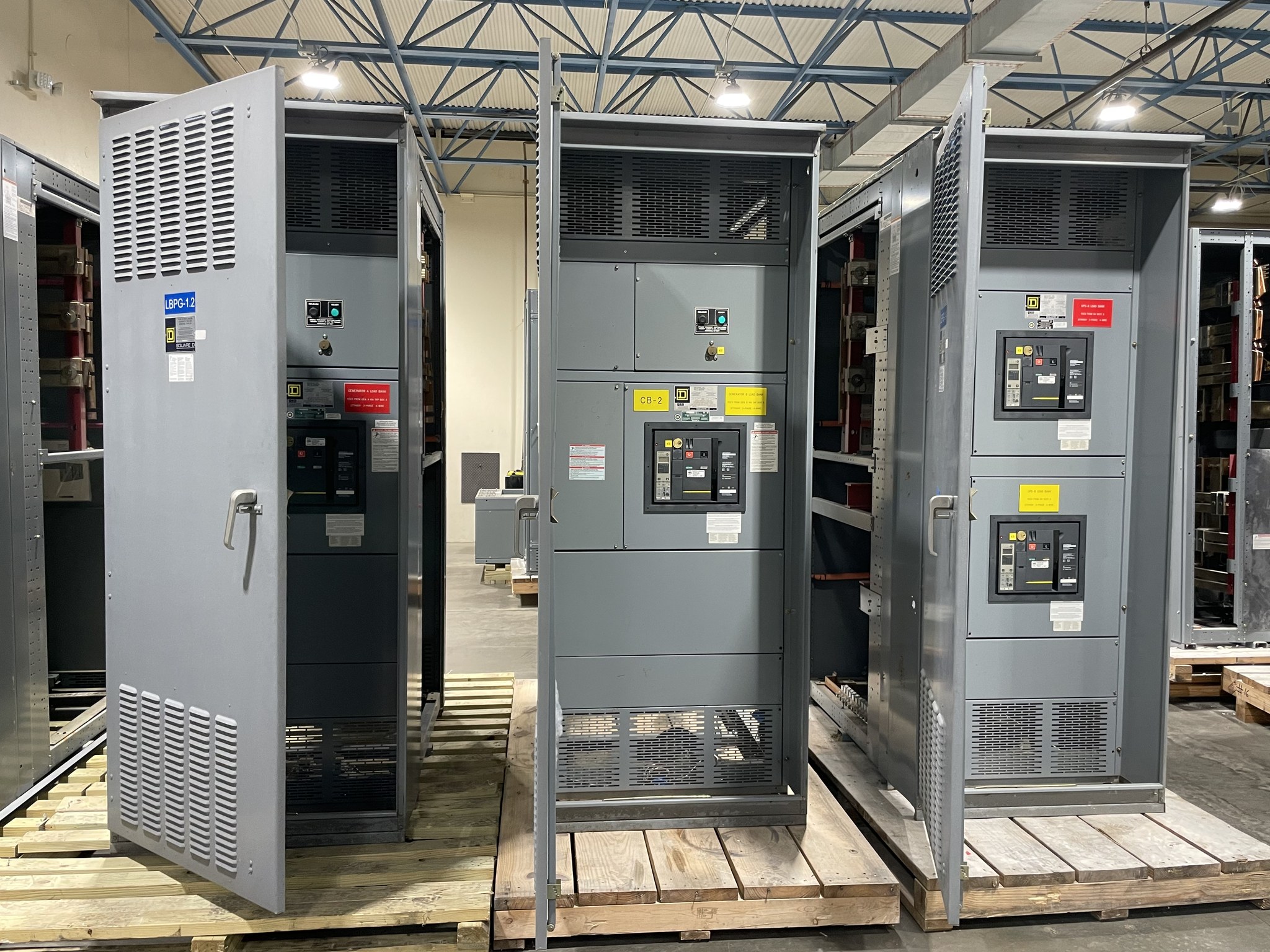
Build an equipment record that follows the riser
Start with existing drawings, schedules, asset lists, and safely accessible exterior labels. Record the manufacturer, model or type, catalog numbers, serial numbers, and any listed voltage and ampere ratings as separate fields. Voltage describes the electrical class; amperes describe current capacity. Do not estimate one from the other, and mark unreadable or missing information as unknown rather than guessing.
For a multi-section riser lineup, identify each section in order and note its apparent function from available records: incoming, distribution, metering, or another documented role. A hypothetical schedule might call out sections R1 through R5, with their listed ratings and connected floors. That sequence gives a buyer something more useful than a single photograph labeled “high-rise switchgear,” while preserving uncertainty where records do not agree.
Capture section widths without creating a measurement task
Section width can determine whether equipment can travel through a building’s exit route, so look first for dimensions on approved submittals, arrangement drawings, equipment schedules, or prior installation documents. Record whether a dimension applies to one section, a shipping split, or the complete lineup. Include drawing revision or source when available; dimensions copied from an old plan may not reflect later modifications.
Do not open an enclosure, approach energized apparatus, or take physical measurements around equipment to fill gaps. If a reliable width is unavailable, say so and ask the buyer what existing information would help with review. For example, a hypothetical lineup could have four sections with documented widths but one unverified end section; making that limitation explicit is better than presenting a guessed overall dimension.
Describe the freight-elevator and exit route from records
Gather existing building logistics information: freight-elevator door and cab limits, posted capacity, available service hours, loading-dock rules, and any known corridor or doorway restrictions. Distinguish a documented limit from a site estimate, and indicate which route information is confirmed. These details help frame a removal discussion, but they do not establish that a particular section can be moved by that route.
A hypothetical planning note might say that the elevator is reserved for renovation work only in specified windows, while the equipment’s shipping dimensions remain unconfirmed. Share that constraint rather than arranging a test move or asking building staff to manipulate the gear. The buyer can review the available information and discuss whether crane, rigging, loading, freight, or hauling coordination is appropriate for the specific opportunity.
Map tenant outages to the lineup and renovation phases
Summarize the planned outage sequence using the project’s approved schedules and documents. Note which riser sections or tenant areas are associated with each phase, the anticipated order of isolation and replacement, and any date windows that are still provisional. This is coordination context for evaluating a potential purchase, not an instruction to perform switching or electrical work.
For instance, a hypothetical project might replace a lower-floor distribution section first and retain other sections until later phases. A simple phase table can show what equipment may become available together and what remains in service for longer. Avoid treating a target outage date as a confirmed removal date; qualified professionals and the building’s project team determine electrical work and safe access as applicable.
Send a review packet and clarify the transaction
A concise packet can include the equipment list, source documents, exterior photographs taken from a safely accessible location, section sequence, known dimensions, route limits, outage phases, and ownership or authorization information. Identify what is included with the lineup, such as documented breakers or other components, without assuming every part will be purchased. The buyer reviews the specific equipment and circumstances; an offer and scope are subject to that review.
The Illinois buyer purchases used, surplus, and decommissioned electrical equipment, including switchgear and related distribution equipment across voltage classes. Cash offers and upfront payment are part of the process, with freight covered and no seller testing required. It also handles crane, rigging, disconnects, loading, freight, and hauling as appropriate. Qualified professionals perform electrical work as needed; the seller is not asked to dismantle, rig, test, or move the equipment.
Common questions
What if the drawings list section widths but the elevator route is uncertain?
Send the documented widths with their source and label the elevator or exit-route limits as unconfirmed. The buyer can review both facts and discuss access questions; do not attempt a test move or infer clearance.
Should tenant outage dates be fixed before I request a purchase review?
No. Share the current sequence and distinguish approved windows from tentative dates. That context can help assess availability and coordination, but a review does not authorize switching or guarantee a removal date.
Do I need to test the riser switchgear before contacting the buyer?
No seller testing is required under the stated terms. Provide existing records and safely accessible exterior information; never open enclosures, operate equipment, touch conductors, or approach energized apparatus to gather details.