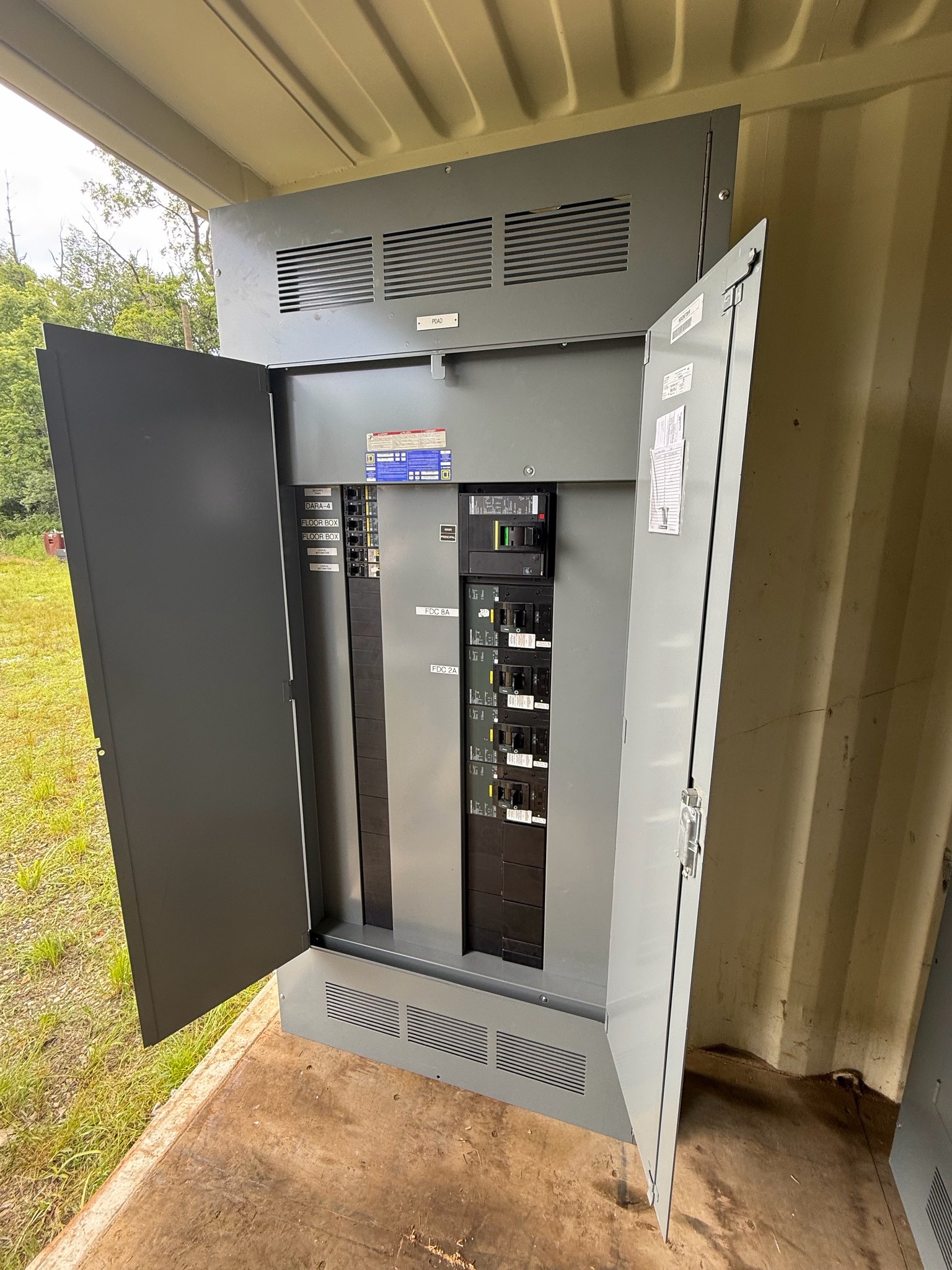
Separate the feeder panelboards from the molding presses
Start with an equipment list that treats each feeder panelboard as an item distinct from the injection-molding press, auxiliary equipment and production-line controls. Note where each panel was installed and, if existing records establish it, which press or group of loads it served. A line may include several cabinets with different functions; proximity to a press does not establish that a cabinet is a feeder panelboard.
For example, a hypothetical retirement inventory might list “Panel P-4, serving press line 4 per existing schedule” separately from the press, heater controls and resin-handling equipment. Keep that description tied to the paperwork rather than presenting it as a verified rating or function if records are incomplete. The buyer can review the described electrical equipment; the presses themselves are not the same asset.
Use the circuit schedule to describe what each panel served
An existing circuit directory or schedule can help distinguish one feeder panelboard from another and show how the plant organized its loads. Record the panel designation and transcribe useful schedule entries from available documents or safely accessible exterior information. Preserve uncertain, blank or illegible entries as such instead of guessing. The schedule is a reference to the installation, not proof that every listed load remains connected or operational.
Where a schedule names a press number, heater bank or auxiliary load, retain that wording and identify its source, such as a maintenance record or panel directory. A hypothetical entry could read “circuits 1–3: press 2 per directory; directory date unknown.” Avoid opening an enclosure or interacting with equipment to improve the description. Existing paperwork and safely visible information are enough to begin a review.
Record bus rating and other ratings as separate details
If documentation identifies a panelboard bus rating, report the value and its context exactly as shown in the available records or safely visible labeling. Do not substitute a main breaker rating, feeder rating or a circuit value for the bus rating. These are different equipment details, and a label’s purpose may not be clear from a partial description alone; note uncertainty rather than interpreting it as confirmed.
Keep ampere and voltage information in separate fields. Ampere rating describes current capacity; voltage rating describes the electrical potential for which equipment is rated. Neither can be inferred from the other, and a page title or seller’s shorthand does not verify either one. If a record gives only one value, report only that value and say which rating it identifies, if known.
Describe enclosure condition without inspecting inside
A practical exterior condition note can mention visible dents, corrosion, missing doors, damaged hinges, broken external handles, faded identification or apparent water staining, if these can be observed safely without approaching energized apparatus. Distinguish an observation from a conclusion: “paint worn on lower door” is more useful and defensible than declaring a panel electrically sound or ready for reuse. Do not operate, touch, test, measure or open the panel.
Include whether the panel appears complete from the exterior and whether accessories or separate components are present, but avoid claiming internal contents that have not been documented. If the panel’s electrical status or disconnection status is unknown, say so. Qualified professionals handle electrical work as appropriate; the seller should not be asked to disconnect, dismantle, test or move equipment for an initial buyer review.
Coordinate ownership, review and removal for the retired line
Before sharing an inventory, confirm that the person arranging the sale has authority to represent the equipment owner and identify any site rules or access constraints that may affect a later review and removal plan. A retirement schedule can also indicate when a panel becomes available, whether multiple panels are grouped together and whether the press line remains in place. These details help the buyer discuss scope without assuming every listed item will be purchased.
The Illinois buyer reviews descriptions and project details before discussing a specific offer; acceptance and terms depend on that review. The company buys used, surplus and decommissioned electrical equipment, including panelboards, and offers cash with payment upfront—not after pickup. No seller testing is required, and freight is covered. For accepted equipment, the company handles crane work, rigging, disconnects, loading, freight and hauling, so the seller does not have to dismantle or move it. Share the schedule, available ratings, exterior condition notes, ownership context and site-access information to start the conversation.
Common questions
Should I include the injection-molding press with its feeder panelboard?
List the panelboard separately from the press and other line equipment. Identify any documented relationship between them, but do not treat the machinery and electrical panel as one asset unless the buyer and owner agree on that scope.
What if the circuit schedule and bus rating are incomplete?
Send the information that is available, identify its source, and mark unknown or illegible details plainly. Do not estimate ratings or open the enclosure; the buyer can review the description and discuss what additional documentation, if any, is useful.
Does the seller need to disconnect or load panels before pickup?
No. For equipment accepted after review, the buyer handles disconnects, rigging, crane work, loading and freight. The seller is not expected to test, dismantle or move the panelboard; payment is upfront, not after pickup.