Use feeder records to establish what the switchboard served
A foundry furnace installation can include several electrical layers. A distribution switchboard may receive power from an upstream source and send it through individual feeders to furnace auxiliaries, pumps, ventilation, controls, or other plant loads. The furnace, its transformer, and specialized power-conversion equipment are separate items unless documentation shows they are included. A one-line diagram, panel schedule, or equipment list can clarify those boundaries.
When sharing feeder information, preserve the source and context: a schedule entry, drawing revision, or field description is more useful than an isolated number. For example, a hypothetical record listing separate feeders for cooling pumps and exhaust equipment suggests the board served plant distribution, not necessarily the furnace power circuit. Do not treat that illustration as a verified description of your equipment; the actual records govern.
Keep ampere capacity distinct from voltage and feeder ratings
Switchboard records may identify bus ampacity, main-device rating, feeder-breaker ratings, and system voltage in different places. These are not interchangeable. A board described informally as “large capacity” does not establish its voltage, and a voltage shown on a drawing does not determine the ampere rating. Share legible nameplate information and the relevant drawing pages so a buyer can review each value in its proper context.
A feeder schedule may describe the connected load or protective-device size rather than the board’s overall rating. For instance, a hypothetical 600-amp feeder entry would not prove that the switchboard bus is rated 600 amps. Likewise, a web page title or seller’s shorthand is not verified equipment data. If a plate is obscured or records conflict, identify the uncertainty rather than guessing or trying to inspect inside the enclosure.
Describe furnace-area thermal exposure through existing information
Heat history matters because a board near a furnace may have experienced radiant heat, hot ambient air, dust, or ventilation conditions unlike those in a general electrical room. Useful context can include the board’s location relative to the furnace, any recorded room-temperature or cooling concerns, maintenance notes, and whether the equipment was relocated. These details help frame review; they do not replace an inspection or establish a particular condition.
Use records and safely accessible exterior information only. Do not open an enclosure, operate equipment, touch conductors, take measurements, or approach apparatus that may be energized. If your records mention heat discoloration, repeated trips, or a cooling issue, report the note as documented and say when it was recorded, if known. Avoid diagnosing its cause from appearance or assuming the board is de-energized.
Identify configuration, completeness, and ownership without dismantling
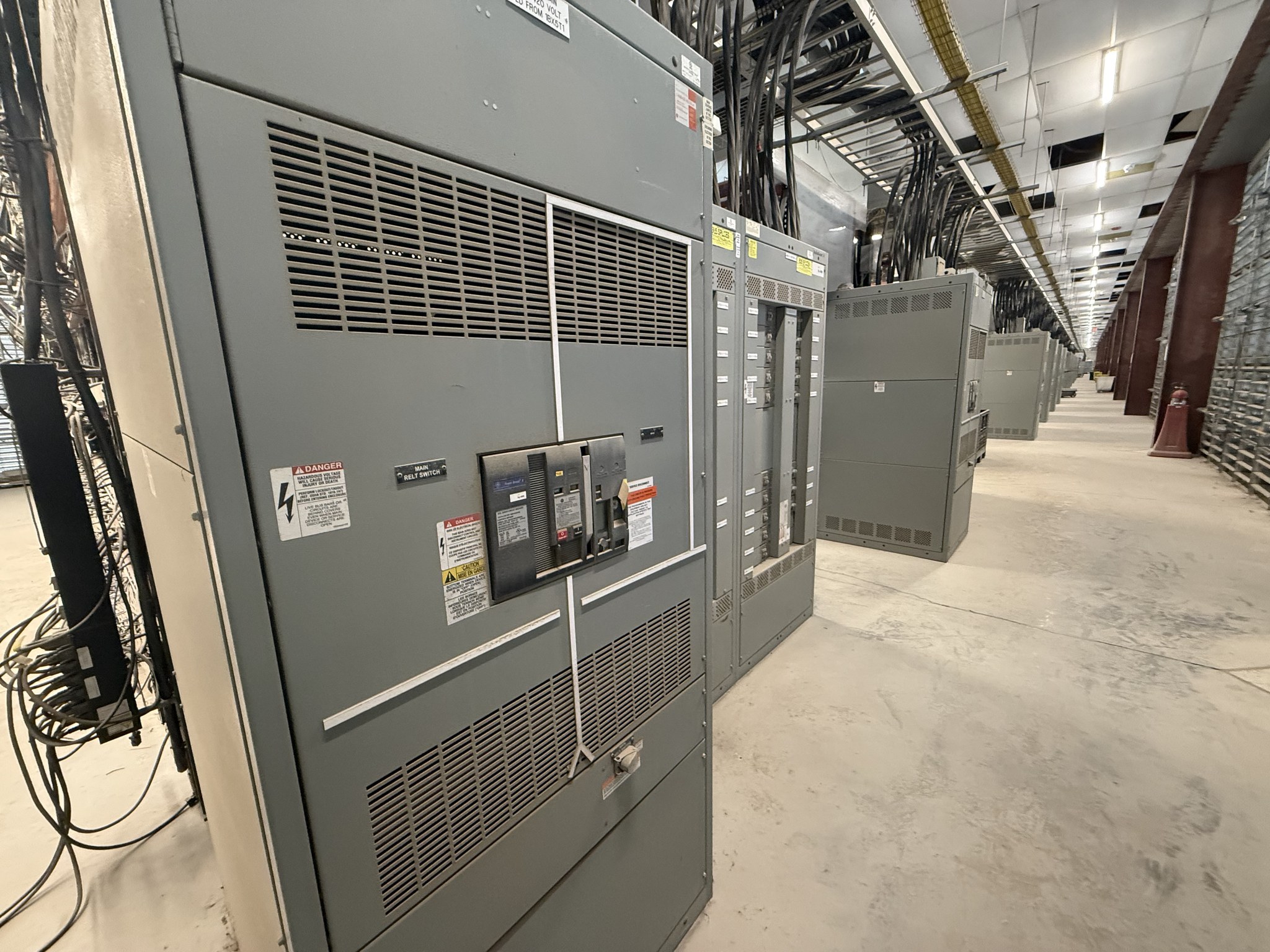
For a useful description, note the manufacturer and model if shown, lineup arrangement, number of sections, main-and-feeder configuration, and any plainly documented accessories. Say whether the switchboard remains assembled, has been separated into sections, or is stored with associated breakers or barriers. These details help distinguish a complete lineup from a partial or mixed configuration; they do not require you to remove covers or components.
Confirm who has authority to sell the equipment and whether it is included in a plant closure, contractor inventory, or surplus-asset process. If breakers, busway, or furnace controls are listed separately, identify them separately instead of implying they belong to the switchboard. A buyer can review the description and available records before discussing a specific offer; acceptance and scope remain subject to that review.
Coordinate a Peoria-area review around access and project work
A practical initial submission can include existing photographs of accessible exterior surfaces, nameplate images already available, drawings, feeder schedules, approximate dimensions, section count, and the site’s access constraints. Mention whether the equipment is indoors, its general loading location, and known restrictions for trucks or lifting equipment. In Peoria, Illinois, these details help coordinate a review of the actual site situation without assuming a particular facility layout.
The buyer is an Illinois purchaser of used, surplus, and decommissioned electrical equipment, including switchboards across voltage classes. For a reviewed transaction, the terms are cash offer, payment upfront, no seller testing required, and freight covered. The buyer coordinates required disconnects, crane or rigging work, loading, freight, and hauling with qualified professionals as appropriate; the seller is not expected to dismantle, move, or test the board. Payment is made upfront, not after pickup.
Common questions
How can I tell whether a board served furnace power or only furnace-area loads?
Check existing one-line diagrams, feeder schedules, and equipment lists for circuit destinations. A board feeding pumps or ventilation may be distribution equipment, while furnace conversion equipment is distinct. If records are incomplete, describe the uncertainty.
Should I arrange testing to prove the board is usable before requesting an offer?
No seller testing is required. Share available documentation and safely accessible exterior information instead. Do not open, operate, measure, or approach equipment that may be energized; condition and any offer are subject to review.
What should I report if the switchboard was close to a hot furnace?
Provide its known location and relevant existing maintenance or environmental notes, including documented cooling or heat concerns. Avoid diagnosing damage or claiming it is de-energized; qualified professionals handle appropriate electrical work.