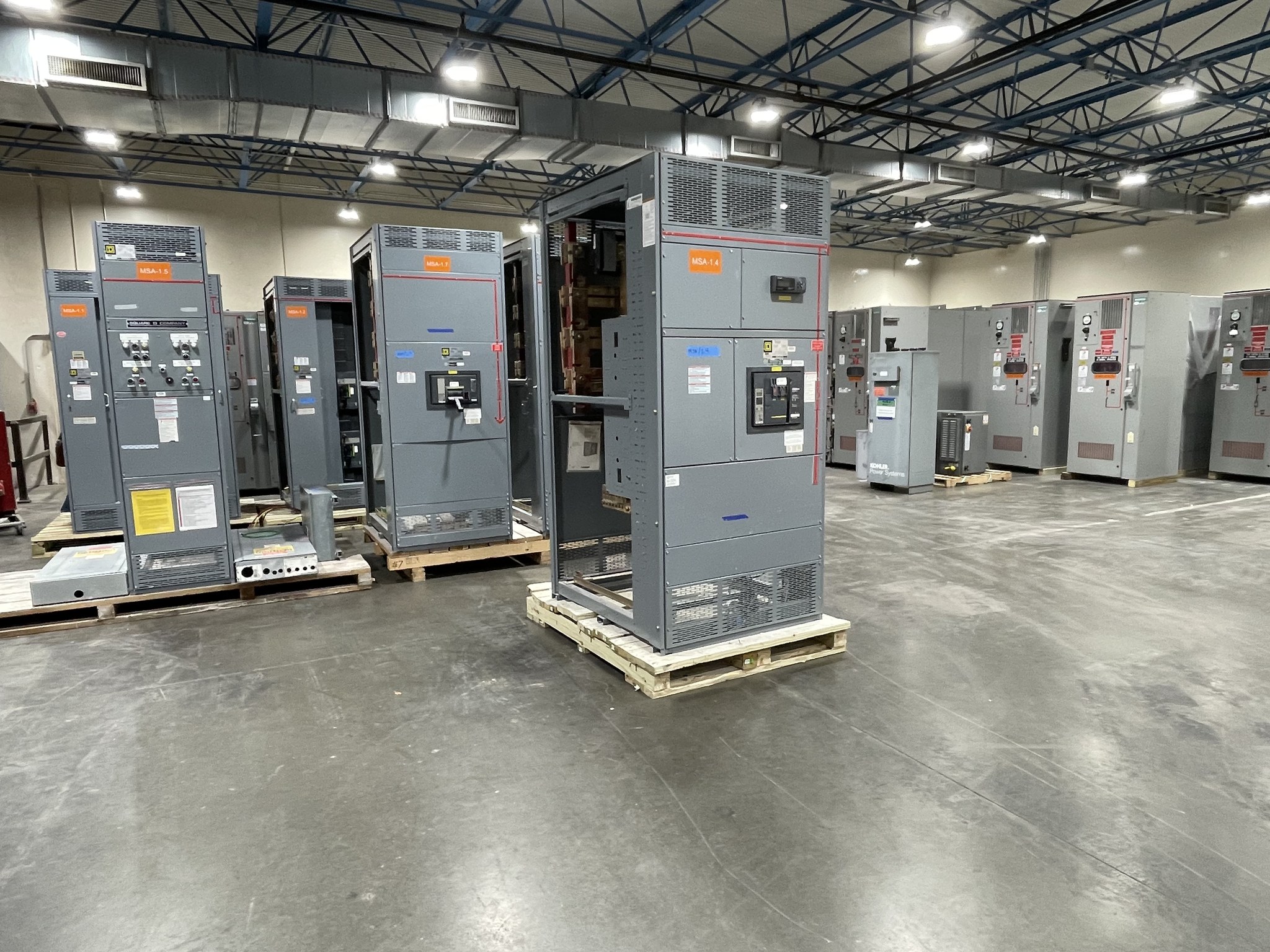
Start with the laboratory load and switch configuration
A transfer switch’s pole count describes how many conductors it switches; it is not a voltage rating. Record the pole configuration from existing nameplate information or drawings, then separately note the marked voltage and ampere ratings. Those details help distinguish equipment intended for a particular circuit arrangement from a superficially similar model. Do not infer voltage from amperage, or assume a switch suits a new application because its rating seems ample.
Laboratory backup may serve selected loads rather than an entire building. Existing one-line diagrams, schedules, equipment records, or upgrade documents may show whether the switch served a dedicated panel, critical branch, or another defined load group. A hypothetical example: two switches with matching ampere ratings may differ in poles and intended system voltage, making their documented configurations more useful than appearance alone. Share records already available; nobody needs to open the enclosure to gather this information.
Describe the generator interface without operating the equipment
The generator interface is another key identifier. Note, when shown in existing paperwork or safely accessible exterior labeling, whether the switch is associated with a generator connection and what control or signaling arrangement is documented. Automatic transfer equipment may coordinate sensing and control functions differently from manually operated equipment. Existing control diagrams, model information, and accessory lists can help explain the arrangement without anyone operating the switch or inspecting internal components.
For an upgrade, clarify whether the equipment is being removed as a complete transfer-switch assembly or offered with separately identified accessories or controls. Keep model and serial information, controller identifiers, and documented options together where possible. A hypothetical illustration: a switch body and a separately cataloged control component may have distinct identifying labels, so listing both prevents confusion during review. Do not disconnect, test, measure, or handle conductors to verify an interface; qualified personnel must determine what work is appropriate.
Treat source isolation as qualified electrical work
A transfer switch is connected to two power sources: the normal source and the generator or alternate source. Both must be isolated by qualified personnel before electrical work on the equipment. A planned laboratory upgrade does not, by itself, establish that either source is isolated or that the switch is safe to approach. The seller should rely on the site’s qualified electrical professionals for isolation and any necessary work, rather than attempting to confirm status personally.
For buyer discussions, the practical distinction is between describing documented equipment and performing electrical tasks. Use paperwork, prior asset records, and exterior information that is safely accessible; do not open enclosures, operate controls, touch conductors, or test or measure the switch. The buyer does not require seller testing. That avoids turning a resale inquiry into an informal inspection and leaves isolation, disconnects, and other electrical work to qualified professionals as appropriate.
Give a clear account of condition, ownership, and scope
A concise condition summary can separate known facts from unknowns: whether the switch was installed, held as spare equipment, or removed during an earlier project; whether its service history is documented; and whether visible exterior damage or missing listed components are already noted in records. Avoid describing operational performance unless that information comes from existing documentation. No seller testing is required, and a review remains subject to the specific equipment, its details, and the buyer’s assessment.
Confirm that the organization has authority to sell the equipment and identify what is included in the proposed sale. This matters when a laboratory, building owner, contractor, or equipment-management group handles different parts of an upgrade. A hypothetical example: a project inventory may list the switch while a separate record accounts for its controls or enclosure accessories. A clear inventory helps resolve scope before an offer is discussed; it does not require anyone to remove or dismantle anything for the inquiry.
Coordinate the upgrade handoff and buyer review
When contacting the Illinois buyer, provide the Naperville location, manufacturer and model if available, pole count, marked voltage and ampere ratings, generator-interface details from records, approximate quantity, and the equipment’s current project status. Add photographs only when they can be taken safely from an accessible exterior position. Existing drawings or inventory sheets can answer questions that a picture cannot, especially where labels distinguish the switch, controller, and accessories.
The company buys used, surplus, and decommissioned electrical equipment, including transfer switches, and states that its terms are cash offers, payment upfront, no seller testing required, and all freight covered. For accepted equipment, it handles crane, rigging, disconnects, loading, freight, and hauling, coordinating qualified professionals for electrical work as appropriate. The seller’s role is to provide information and coordinate access—not dismantle, rig, or move the equipment. Discuss scope and site access during review; a specific offer and logistics are subject to review, and payment is upfront, not after pickup.
Common questions
Why report both pole count and voltage for a laboratory transfer switch?
Pole count identifies the conductors switched, while voltage is a separate electrical rating. Recording both from existing labels or documents helps the buyer distinguish configurations without guessing from amperage, appearance, or intended laboratory use.
Does the seller need to prove that the generator interface works?
No seller testing is required. Share available model information, control diagrams, or equipment records instead. Do not operate controls, open the enclosure, test, or approach energized apparatus to verify the interface.
Who isolates the normal and generator sources before disconnecting the switch?
Qualified personnel must isolate both sources and perform electrical work as appropriate. A resale inquiry or upgrade plan does not establish isolation; the seller should not disconnect, dismantle, or handle conductors.