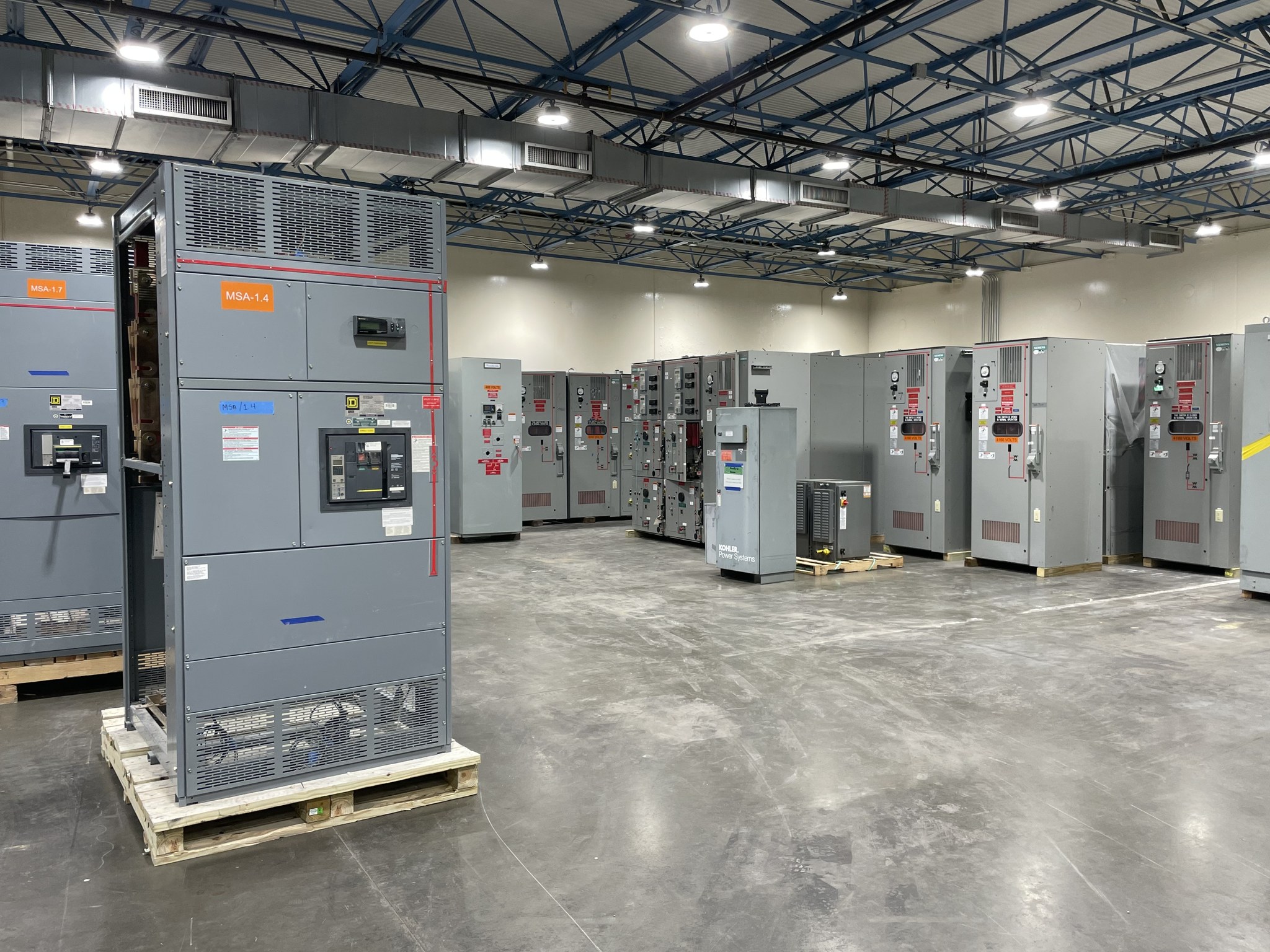
Describe the complete lineup before discussing separate sections
Start with the relationship among the primary switching equipment, transformer and secondary lineup. Note whether they are connected as one assembly, positioned as adjacent sections, or described in records as separate pieces of a larger unit substation. Include available manufacturer names, model or catalog identifiers, serial numbers and nameplate photographs when those can be obtained safely from existing records or accessible exterior locations.
A component list prevents a shipping conversation from treating an incomplete group as a complete substation—or overlooking included parts. For example, a hypothetical facility might offer a primary switch, transformer and four-section secondary lineup, while its old asset record names only the transformer. Flag the discrepancy and identify what is known, missing or uncertain. Do not infer a voltage or ampere rating from another component’s label or from the listing title; provide documented ratings with the equipment they apply to.
Record section dimensions and weights without preparing a move
For each shipping section, share approximate height, width and depth, plus weight if a reliable record or existing marking provides it. Identify the source and date of those figures where possible, and distinguish a documented weight from an estimate. Note whether a measurement describes an individual section or the assembled lineup. These details help a qualified carrier or rigger assess transport and handling needs; they are not a request for the seller to lift, separate or reposition equipment.
If drawings, shipping schedules or installation records show lifting points, skids, shipping splits or center-of-gravity information, include them as reference material and label them as such. A hypothetical drawing might show the transformer shipped separately from the switch and lineup, while the present installation appears connected. Report that difference rather than assuming the old shipping arrangement still applies. Never open enclosures, approach energized apparatus, touch conductors, operate equipment, or take measurements that require unsafe access.
Use existing records to explain ratings and condition
Useful documents can include nameplate images, one-line diagrams, equipment schedules, bills of material, maintenance records and prior shipping or installation drawings. A one-line diagram can help explain how the primary switch, transformer and secondary distribution relate, but it does not substitute for the equipment’s documented ratings. Keep primary-side and secondary-side information tied to the specific component; voltage and ampere ratings describe different properties and should not be conflated.
Give a candid account of known condition and history, such as whether records note damage, missing covers, water exposure, refurbishment or a prior change in configuration. Separate observed facts from assumptions, and do not arrange testing just to make an offer possible. No seller testing is required. The buyer reviews the information and may ask for clarification or additional safely available documentation; any offer and its scope remain subject to review of the particular equipment and details.
Coordinate site access, ownership and pickup planning
Before a site visit or removal plan is considered, clarify who owns the equipment and who can authorize its sale, particularly when it is part of a decommissioning, lease turnover or facility closure. Identify the site contact, access rules, operating constraints and any known scheduling or clearance requirements. Mention whether the equipment is indoors, on a mezzanine or in a constrained area if that information is already known; do not attempt to inspect inaccessible locations.
The Illinois buyer handles the logistics it agrees to undertake, including disconnects, crane and rigging coordination, loading, freight and hauling. Qualified professionals perform electrical work as appropriate. The seller is not expected to dismantle, rig, test or move the substation. Share practical site information early so the buyer can review access and coordinate the appropriate resources. Do not assume electrical work is complete or that equipment is de-energized; status and responsibilities need to be established for the specific site.
Send a useful offer package and understand the buying terms
A concise package can combine the component inventory, available ratings and identifiers, section dimensions and weights, condition notes, ownership contact and site-access information. Attach existing records and label uncertain details instead of filling gaps with guesses. The buyer considers used, surplus and decommissioned electrical equipment in all voltage classes, including unit substations and related switchgear. Manufacturers such as those shown on a nameplate identify equipment; they should not be presented as buyer affiliations or endorsements.
After reviewing the particulars, the buyer can discuss a specific offer rather than promise acceptance of every item. The stated buying terms are cash offers, payment upfront, no seller testing required and freight covered. The buyer handles the agreed removal and transport logistics, so the seller does not need to prepare the substation for shipment. Confirm the included components, payment arrangement and pickup scope before proceeding; details remain subject to review.
Common questions
Why list the primary switch, transformer and secondary lineup separately if I am offering one unit substation?
A component-by-component inventory shows what is included and how the assembly is configured. It also helps distinguish a complete substation from records that identify only one component, without implying any component must be separated.
What section shipping information should I provide if I cannot verify exact weights?
Share dimensions and any weight shown in existing records, identifying the source and whether figures are approximate. Mark unknown weights as unknown; a qualified carrier or rigger can assess shipping needs without asking you to move sections.
Do I need to disconnect or test the substation before submitting it for review?
No seller testing is required, and you should not undertake electrical work or move equipment for an inquiry. Share safely available records and site information; qualified professionals handle electrical work as appropriate, with pickup details reviewed for the specific offer.