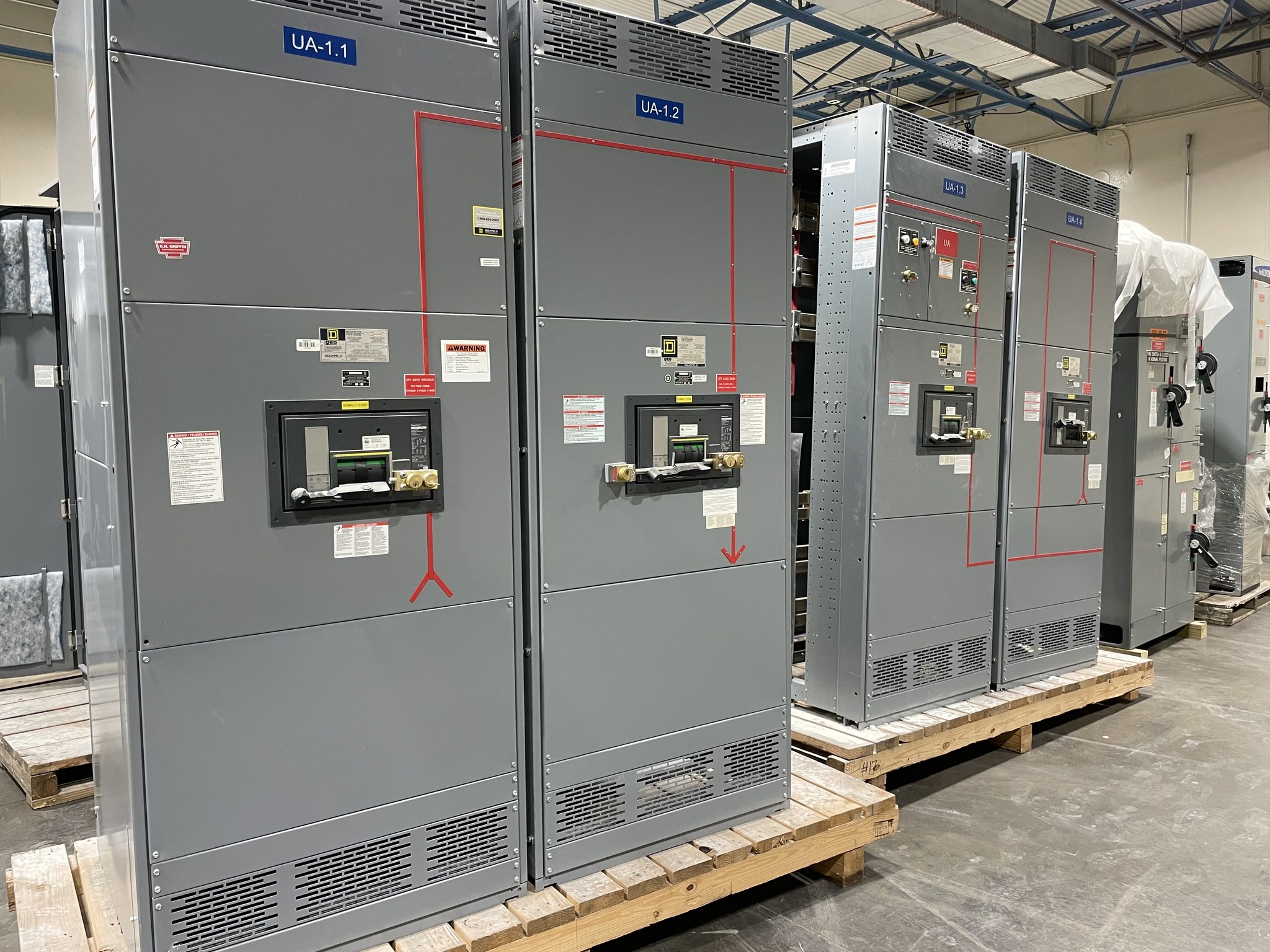
Describe the shipment, not just the lineup
Start with the equipment’s identity and configuration: switchgear or switchboard, manufacturer, model or catalog references, voltage and ampere ratings where documented, and the number and arrangement of sections. A title such as “480-volt gear” is not a verified rating by itself. Share readable nameplate information or existing records; do not open an enclosure or approach equipment to gather details.
For transport review, give the best available overall length, width and height, plus estimated weight and the source of each figure. Make clear whether measurements describe the bare lineup, a crated load, or a configuration that still includes extensions, shipping bases or attached components. If weight is unknown, say so rather than substituting a guess. A hypothetical 18-foot lineup and an 18-foot crated package are different planning inputs.
Configuration determines the load envelope
Switchgear sections may be joined in a lineup, separated for shipment, or accompanied by bus connections and other components. The shipping dimensions can change with those choices, and separating equipment is not a task for the seller. Tell us what configuration exists now and whether documentation describes a proposed shipping arrangement. Photos of safely accessible exterior views or existing packing records can help clarify what the stated dimensions include.
Packaging can add meaningful width, height and weight. Note whether the equipment is already crated, covered, mounted on a shipping base, or still installed, and whether the supplied dimensions account for that packaging. Do not dismantle or repackage gear to make it easier to quote. For example, a hypothetical lineup with removable-looking end sections should not be represented as a smaller load unless the configuration is documented; the carrier and qualified personnel determine handling arrangements.
Route limits belong in carrier planning
A large load’s practical route depends on more than distance. Road and bridge limits, overhead clearance, turning space, construction, permitted travel conditions and access at the destination may all matter. The licensed carrier assesses the route and determines applicable permits and transport equipment. A seller need not research legal routes, apply for permits, or decide whether a load qualifies as oversize; provide the known origin and site information for that professional review.
Useful site details include the facility address, entrance location, gate or driveway constraints, loading-area position, and any known height or weight limits on private access roads. Flag restricted receiving hours or a site contact requirement if you know of one. These facts are not a promise that a particular truck can reach the equipment. They help identify questions for the carrier before a proposed pickup is coordinated.
Condition, ownership and records support review
Describe condition plainly, including whether the equipment is installed, stored, visibly incomplete, or known to have damage. Existing maintenance records, drawings, bills of material, decommissioning documents and shipping records may help identify what is included and support the dimensions or weight. No seller testing is required. Do not operate, measure, test or touch equipment to answer questions, and do not approach energized apparatus; rely on paperwork and information safely available from outside.
Confirm that you own the equipment or are authorized to arrange its sale, and identify any known liens, removal conditions or other restrictions. A decommissioned data center or shut-down power plant may have multiple parties involved in asset disposition and site access, so clarify who can approve the sale and coordinate entry. We review the specific equipment and circumstances before making an offer; not every item or configuration can be assumed acceptable.
Coordinate a sale without taking on the haul
Send the available equipment description, documented ratings, dimensions, weight, condition, configuration, origin and site-access notes together when possible. If some details are missing, identify what is unknown. We can discuss the information and review the specific opportunity, including what is included in a proposed sale. A manufacturer name helps identify equipment; it does not imply an affiliation or establish the equipment’s condition or rating.
The Illinois company buys used, surplus and decommissioned electrical equipment, including switchgear, across voltage classes. For a transaction it agrees to, the terms are a cash offer, payment upfront, no seller testing required, and freight covered. The company handles the logistics, including disconnects, crane and rigging work, loading, freight and hauling, using qualified professionals for electrical work as appropriate. The seller does not dismantle, rig or move the equipment; payment is made upfront, never after pickup.
Common questions
What if the switchgear’s shipping weight is not documented?
Say that it is unknown and share any existing drawings, packing records or manufacturer documents that may help. Do not estimate by handling equipment. A licensed carrier determines what further transport information is needed.
Do we need to obtain oversize permits or choose a route?
No. Permit requirements, route suitability and transport equipment are decisions for the licensed carrier. Provide the origin and known site-access restrictions so those professionals can review the move.
Does oversize pickup mean our staff must dismantle or load the lineup?
No. For an agreed sale, the company handles disconnects, rigging, crane work, loading and hauling. Qualified professionals perform electrical work as appropriate, and payment is upfront rather than after pickup.