Describe the pickup window as a site rule, not a collection promise
Start by stating the hours when a buyer’s qualified crew and vehicle could be admitted, including any distinction between gate access, escort availability, and time allowed at the loading area. Note whether appointments must be booked in advance, whether arrival times are fixed, and whether weekends or holidays are excluded. These details help assess feasibility; they do not establish that a particular collection schedule is available.
For example, a hypothetical plant might permit escorted contractor access from 8 a.m. to noon on Tuesdays and Thursdays, while its loading bay is shared with active operations. That is more useful than saying “pickup by appointment.” If the window is short, explain whether the crew must complete check-in, travel across the property, and loading within it, or whether some steps can occur outside the restricted area.
Identify equipment accurately before discussing a constrained visit
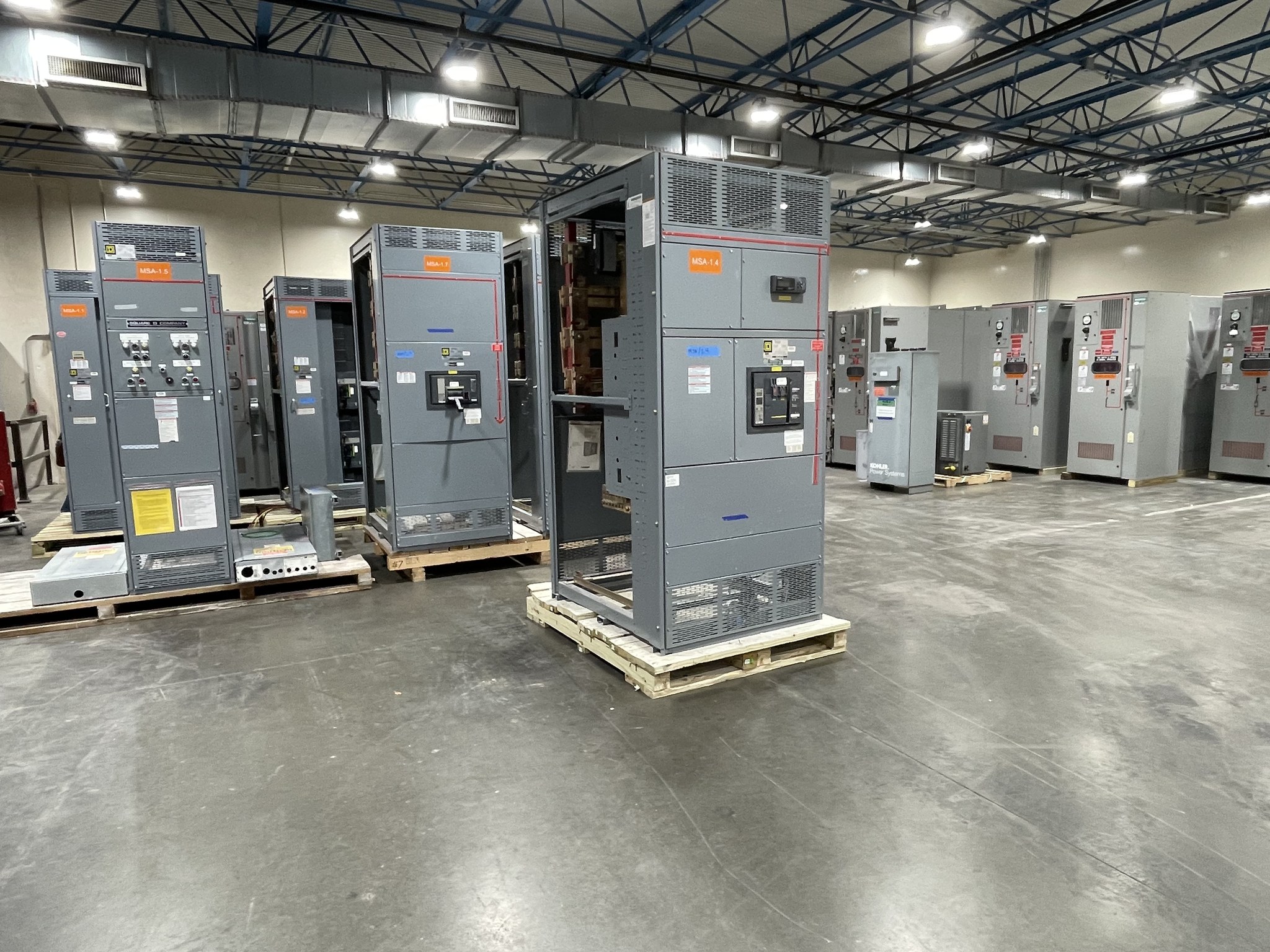
Send whatever records are already available: equipment schedules, one-line diagrams, nameplate photographs taken from a safely accessible exterior, prior inventory lists, and clear descriptions of configuration. Identify manufacturer, model, quantity, approximate dimensions, and whether units are complete or missing components. Switchgear, switchboards, MCCs, panelboards, busway, transfer switches, breakers, and unit substations are among the equipment types considered for purchase.
Keep voltage and ampere ratings distinct. A 2,000-amp designation does not establish voltage, and a page title or seller’s shorthand is not verified rating information. If documentation is incomplete, say so rather than guessing. Do not open enclosures, operate equipment, touch conductors, test, or measure anything for a sale inquiry; use existing paperwork or exterior information that can be viewed safely.
Explain escorts, permissions, and who controls access
List the practical entry requirements: who authorizes visitors, how escorts are arranged, what identification or advance notice is required, and whether contractors need a site orientation. Clarify which areas are accessible and whether photography is restricted. If a property manager, landlord, utility, or demolition contractor controls entry, identify that role and confirm that the appropriate party can approve a sale and a later removal.
The buyer’s Illinois team can review the information and discuss a specific offer and potential logistics, but site conditions and access details remain subject to review. Do not assume that a buyer can bypass an escort policy or enter during an unapproved period. A hypothetical seller with one escort available for only two hours should disclose that constraint early, rather than expecting a crew to arrange access after arrival.
Make loading availability and equipment configuration explicit
Describe the route and loading resources without taking on physical work yourself. Note whether a dock, grade-level door, freight elevator, or staging space is available; any known vehicle-height or weight limits; and whether a crane or rigging plan may be needed. Mention overhead or doorway restrictions only if documented, and flag shared traffic lanes or rules about where vehicles may wait.
State whether gear remains installed, has already been disconnected, or is staged, if that information is known—but do not represent it as de-energized unless verified by the responsible professionals. Do not dismantle, rig, test, or move equipment on the buyer’s behalf. The company handles disconnects, crane and rigging coordination, loading, freight, and hauling as appropriate, with qualified professionals performing electrical work where needed.
Coordinate the sale around a reviewable plan
A useful initial message combines the equipment list with photographs or records, ownership or authorization information, the exact access window, escort rules, and loading constraints. Explain whether the gear is surplus, from a decommissioned data center, or from a shut-down power plant, and identify any known missing sections or mixed configurations. This gives the buyer a basis to review the opportunity without requiring seller-performed testing.
The company buys used, surplus, and decommissioned electrical equipment in all voltage classes and makes cash offers for reviewed opportunities. Payment is upfront, never after pickup; no seller testing is required, and freight is covered. Collection timing and terms for a particular lot depend on review and site coordination, so share restrictions before agreeing to a plan. The seller’s role is to provide information and authorization—not to dismantle or haul the gear.
Common questions
What if our escort is available for only a narrow time window?
Report the exact hours, appointment rules, and time allowed inside. The buyer can review those limits alongside loading needs, but a specific collection schedule must be discussed and is not guaranteed by the stated window.
Do we need to test or disconnect equipment before requesting an offer?
No seller testing is required. Describe known condition and provide existing records. Do not open, operate, or test equipment; disconnection and related electrical work are handled by qualified professionals as appropriate.
Who handles loading and freight when the site restricts vehicle access?
The buyer covers freight and handles loading, hauling, and crane or rigging coordination as appropriate. Share vehicle, dock, staging, and escort restrictions early so the particular removal plan can be reviewed.