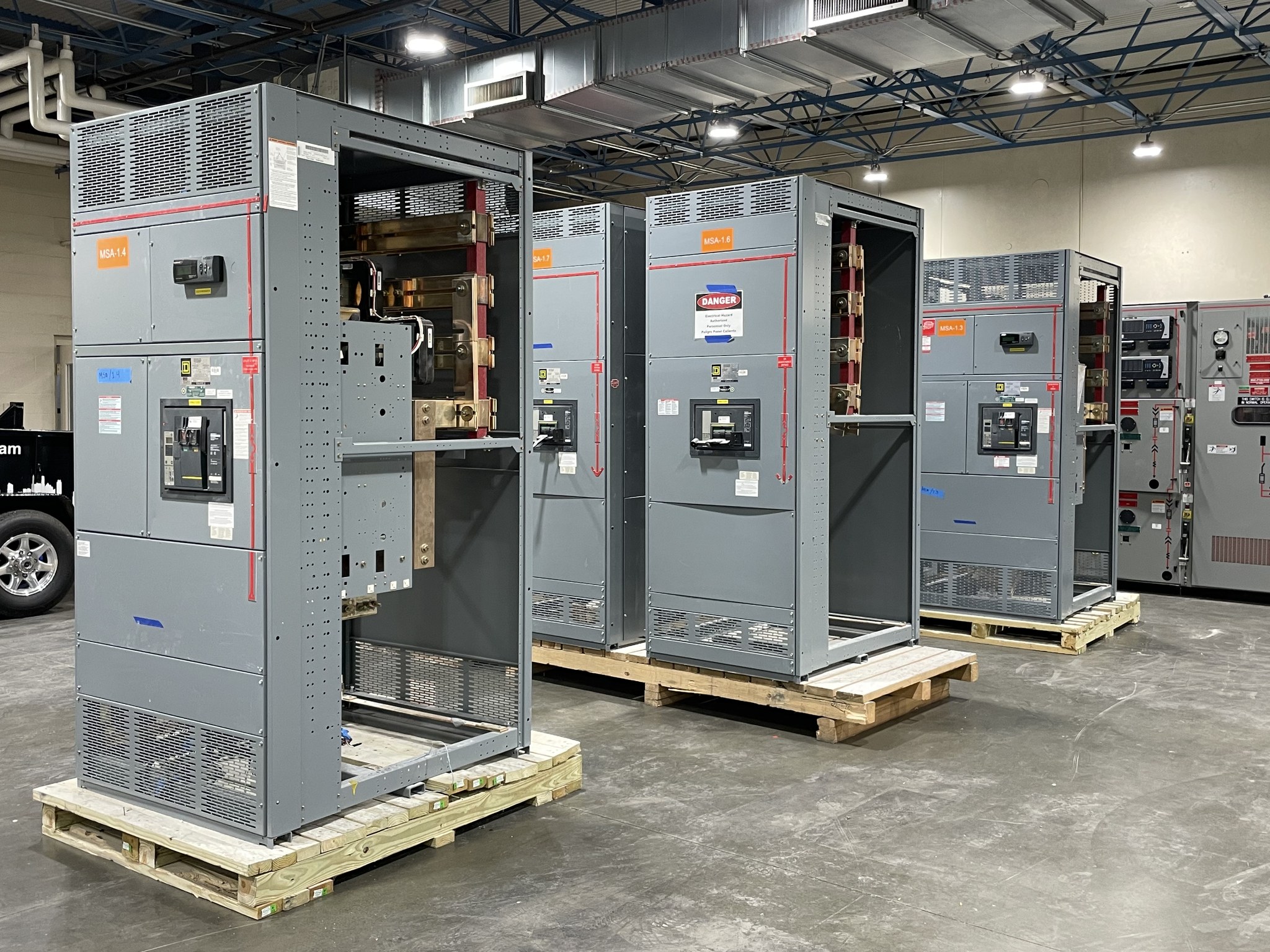
Build a section-by-section identity record
Start with an inventory that treats every separated object as an individual piece. Give each shipping section a temporary reference such as S1 or S2, and record any legible manufacturer, catalog, serial, lineup, or section identifiers from existing paperwork or safely accessible exterior markings. Note where each tag appears and whether it is attached to a breaker, cell, or enclosure. Do not turn a handwritten description into a claimed rating without supporting documentation.
Photograph overall views and close-ups of exterior identification plates, labels, and visible compartment markings, without opening enclosures or approaching energized apparatus. A hypothetical inventory might say “S2, exterior tag reads section 3; associated drawing shows feeder cell F3.” That is more informative than calling every piece “the third section,” especially if the parts were moved or relabeled after disassembly.
Match breakers to cells with evidence
A breaker that fits physically is not necessarily the correct breaker for a particular cell or lineup. Record the breaker’s own identifiers separately from the cell’s identifiers, then look for a documented relationship in existing schedules, drawings, labels, or removal records. Note uncertainties instead of filling gaps by visual guesswork. The buyer can review what is documented and ask focused follow-up questions before considering a specific offer.
Keep ampere and voltage information distinct. An ampere rating does not establish a voltage rating, and a breaker’s label should not be treated as the rating of the complete switchgear lineup without documentation. A hypothetical record might identify a breaker by catalog number and show a separate cell designation on a drawing, while marking the voltage as “not confirmed.” That honest distinction is more useful than an unsupported complete-equipment description.
Describe completeness and condition without testing
For each breaker, cell, and shipping section, describe what is visibly present or absent based on existing records and safe exterior observation. Note apparent transport damage, missing exterior covers, loose identification tags, or components stored separately. Identify whether a breaker is documented as belonging to the lineup, merely stored nearby, or of uncertain association. These distinctions help prevent a mixed group of equipment from being presented as one verified, complete assembly.
No seller testing is required for an inquiry. Do not operate breakers, open equipment, touch conductors, measure, or approach apparatus to gather details. Share existing inspection records or service documents if available, and say when none are available. Condition and configuration remain subject to review; a photograph can support identification, but it does not prove internal condition or confirm that separated parts can be reassembled into a working lineup.
Plan the sale around separated shipping sections
Explain how the pieces are currently staged and whether breakers are stored with their cells or separately, using a simple location list or labeled photo set. If the original lineup order is known, include it as documented rather than inferred. For example, a hypothetical sequence might show sections S1 through S4 on an old drawing, while the present storage order differs. That note helps the buyer distinguish original configuration from current placement without asking the seller to reconnect anything.
Before an offer is finalized, communicate site access constraints and the practical pickup context: indoor or outdoor staging, known door or route limitations, loading-area restrictions, and any scheduling requirements. The Illinois buyer handles crane, rigging, disconnects, loading, freight, and hauling as appropriate, with qualified professionals performing electrical work where needed. Do not dismantle, rig, load, or move the equipment for the inquiry; coordinate access and site requirements with the buyer.
Send a reviewable package and confirm terms
A concise package can include the section inventory, breaker-to-cell cross-reference, available drawings or removal records, safe exterior photographs, known condition notes, and the ownership or authority information needed to discuss a sale. Identify gaps plainly: “breaker B4 association unconfirmed” is a useful statement, not a flaw to conceal. The buyer reviews the details and may request clarification before making a specific offer; inclusion in an inquiry does not guarantee that every component will be purchased.
The company buys used, surplus, and decommissioned electrical equipment in Illinois, including switchgear and related equipment across voltage classes. For an agreed purchase, payment is upfront, and freight is covered; payment is not deferred until pickup. No seller testing is required. Discuss the proposed equipment, documentation, site access, and pickup coordination with the buyer so the offer and logistics reflect the actual separated pieces and the circumstances of the site.
Common questions
What if I cannot prove which breaker came from which cell?
List the breaker and cell identifiers separately, attach any existing drawings or removal records, and mark the association unconfirmed. The buyer can review the evidence; do not reconnect parts or guess to make the lineup appear complete.
Should I test a breaker or open a compartment to improve my inquiry?
No. Testing is not required, and do not open enclosures, operate equipment, touch conductors, or approach energized apparatus. Use existing paperwork and safely accessible exterior information, and describe records or condition details you cannot verify.
Who handles the separated sections at pickup, and when is payment made?
The buyer covers freight and handles crane, rigging, disconnects, loading, and hauling as appropriate, coordinating site access with you. For an agreed purchase, payment is upfront, not after pickup; specific terms and logistics are reviewed with the offer.