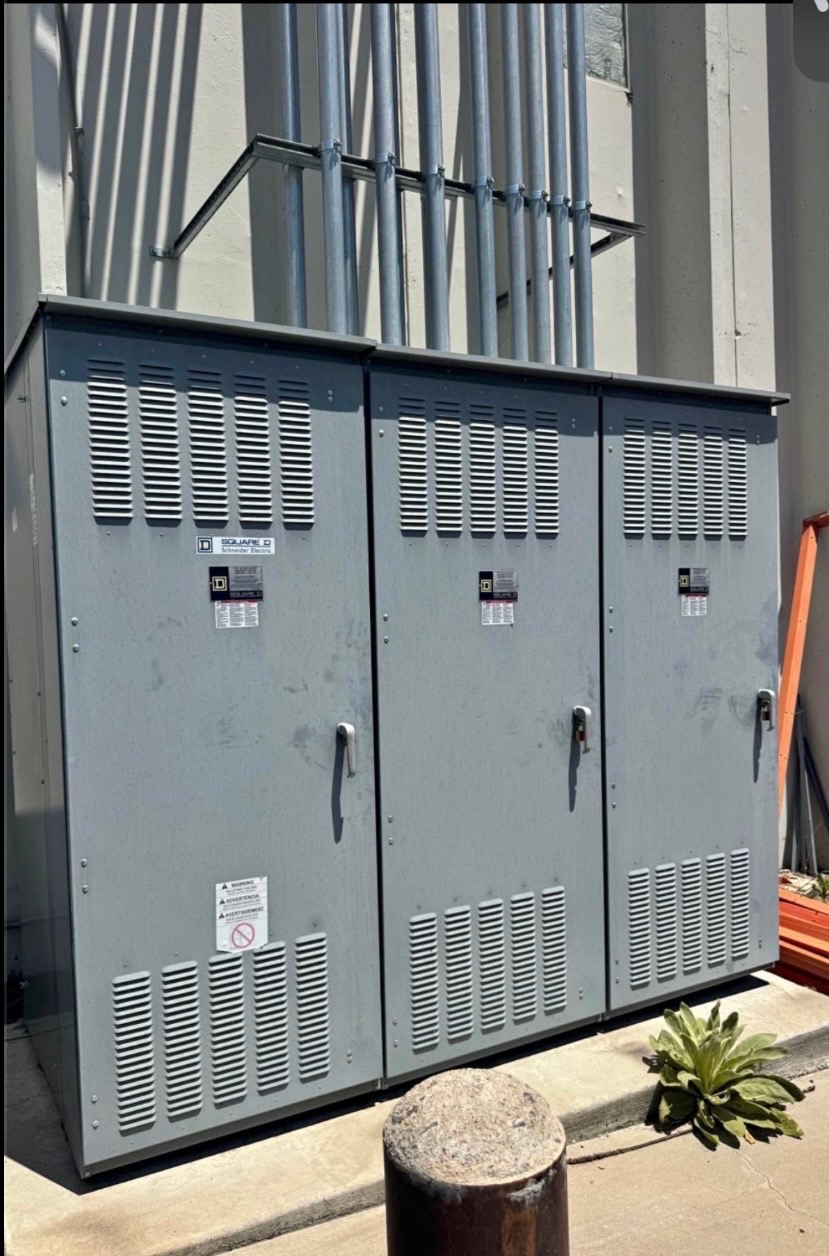
Start with the gear lineup, not a guessed total weight
Identify the lineup as precisely as available records allow: manufacturer, model or family, section count, approximate dimensions, and any nameplate information shown in existing documentation or safely accessible from the exterior. Include switchgear function and configuration where known, such as incoming, distribution, tie or metering sections. Ampere rating and voltage rating are separate facts; record each from its own documented source rather than inferring one from the other or relying on a page title.
For route planning, section-by-section weights are usually more useful than a single lineup total. Share manufacturer drawings, equipment schedules, shipping records or prior engineering documents that assign weights to individual sections, and identify whether figures refer to an empty enclosure, a section as configured, or another stated basis. If exact weights are unavailable, say so. A clearly labeled estimate or unknown is safer and more useful than false precision.
Pair floor limits with drawings of the actual travel path
Provide the floor-load information that applies to the areas a section may cross or occupy during extraction. This might include documented allowable loads, restrictions, structural notes, or locations where a floor condition changes. Include the source and scope of each limit if known: a value for one room or slab area may not apply to a corridor, loading zone, or temporary staging position. Do not convert a general building figure into a route-specific conclusion.
Route drawings should show the equipment’s present location and the likely path to an exit or loading area, with turns, doors, narrow points, ramps, level changes, and potential staging locations marked when those details already exist. A hypothetical example: a 2,000-pound section might fit through a doorway but still require review if the route crosses a floor with a lower documented limit. The number alone does not establish whether the move is feasible; a qualified contractor evaluates the actual arrangement.
Describe configuration and condition without opening the equipment
Explain what is included in the proposed sale: individual sections or a complete lineup, connected bus or separate sections, and known accessories or loose parts. Note whether shipping braces, pallets, skids, or original packing materials are present, absent, or simply undocumented. Packaging can affect dimensions and handling assumptions, so distinguish the equipment’s installed configuration from any proposed transport configuration rather than treating them as interchangeable.
Share known condition information from records and normal business documentation, such as service history, prior removal planning, or a list of missing components. Do not open enclosures, operate equipment, touch conductors, test, measure, or approach energized apparatus to gather details. Existing paperwork and safely accessible exterior information are appropriate sources. Do not assume electrical work is complete or that equipment has been de-energized; describe what is documented and leave site-specific electrical work to qualified professionals.
Make ownership and site coordination part of the review
A buyer also needs to understand who can authorize the sale and coordinate access. State whether you own the equipment or are acting for its owner, and identify any approval or documentation still needed. For a decommissioned data center, shut-down power plant, or other industrial site, flag relevant access procedures, work windows, escort requirements, loading-area rules, and known restrictions. These details help assess the project; they are not a request for the seller to perform the removal.
The Illinois buyer described here purchases used, surplus and decommissioned electrical equipment, including switchgear and other equipment across voltage classes. It handles disconnects, crane and rigging work, loading, freight and hauling, with qualified professionals performing electrical work as appropriate. The seller is not expected to dismantle, rig or move the gear. A contractor’s route review can inform whether a proposed transaction is workable, but acceptance and specific terms remain subject to review.
Use the route review to shape a clear offer discussion
Send the equipment list and relevant weights, drawings, floor-load records, photographs of safely accessible exterior areas, and site-access notes together when possible. Identify gaps plainly—for example, “section weights not found” or “floor limit available only for the equipment room.” That lets the buyer decide what clarification is needed and whether a qualified rigging contractor can evaluate the extraction route before purchase terms are set. Do not create new measurements or enter restricted areas for the sake of a complete package.
After reviewing the information, the buyer can discuss a specific offer and any practical details that need resolution. The buying terms include cash offers, payment upfront, no seller testing required, and freight covered. These terms do not mean every lineup will be accepted or that a route is automatically approved; the equipment, documentation, access conditions and proposed handling plan all remain subject to review.
Common questions
What if I have a floor-load limit but no weight for each switchgear section?
Send the available floor documentation and lineup drawings, and state clearly that section weights are unavailable. Existing manufacturer records or schedules may help; do not estimate by inference. A qualified rigging contractor can identify what further information is needed for review.
Does a route drawing have to prove the move is safe before I contact the buyer?
No. Share the drawings and restrictions you already have so a qualified contractor can evaluate the route. The seller should not certify feasibility, dismantle equipment, or undertake measurements; any specific plan remains subject to professional review.
Will the seller need to arrange a crane, disconnect the gear, or pay freight?
The buyer handles crane and rigging, disconnects, loading, freight and hauling, with qualified professionals doing electrical work as appropriate. The seller is not expected to move the equipment. Payment is upfront, subject to review of the proposed transaction.