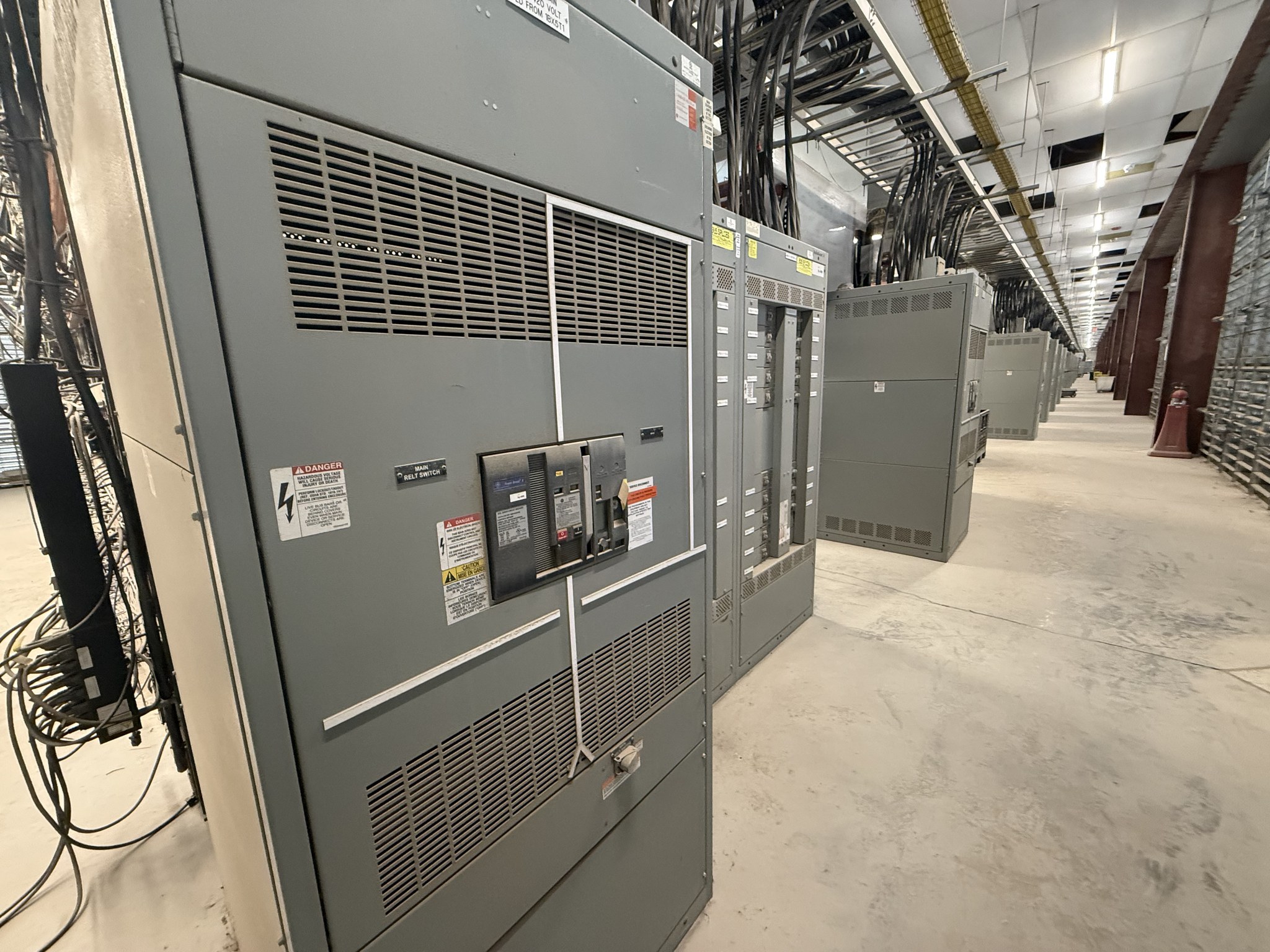
Describe the route from equipment to truck
Start with where the equipment sits and the path a crew would take to reach an outdoor pickup point. Note ground-level doors, ramps, corridors, gates, turns, low clearances, stairs, soft ground or paving, and any shared loading area. Mention whether a truck can park near the exit. These details help assess handling needs; they are not a request for you to move anything.
For example, hypothetically, a lineup in a ground-floor electrical room might be close to a wide exterior door but separated from the street by a narrow service lane. That is more useful than simply saying “easy access.” If a route has a lift, dock plate, overhead obstruction or restricted hours, describe what you know. Do not measure or inspect anything that would require entering an unsafe area.
Say what loading equipment is already available
Identify loading resources that are on site, such as a forklift, pallet jack, overhead crane or fixed lifting points, and say who controls them and whether their use is permitted. If none are available, say so plainly. Do not assume a machine is suitable just because it is present: capacity, reach, condition and operator availability may affect the plan and need professional review.
The buyer handles crane work, rigging, disconnects, loading, freight and hauling as needed, and covers freight. You do not need to hire a rigger, supply a forklift or arrange transport. Mentioning available equipment is still helpful because it gives the buyer a fuller picture, not because you are expected to operate it or prepare the equipment for pickup.
Identify the gear without relying on a headline
Send existing nameplate information or records for the switchgear, switchboard, motor control center (MCC), panelboard, busway, transfer switch, breakers or unit substation being considered. Useful details may include manufacturer, model, catalog or serial number, quantity, configuration and documented ratings. A page title or seller’s shorthand is not verification; keep voltage rating distinct from ampere rating and do not infer one from the other.
A hypothetical listing might call a lineup “480-volt, 3000-amp switchgear,” while an available drawing gives a different description or covers only part of the assembly. Flag that discrepancy and provide the source of each description rather than choosing one. Use paperwork or information already safely visible from outside. Do not open enclosures, operate equipment, touch conductors or test or measure apparatus for a sale inquiry.
Explain condition, ownership and what stays with the equipment
Give a straightforward account of whether the equipment is installed, disconnected, stored or awaiting decommissioning, and what is known about its condition. Share known faults, missing sections, prior service information and whether breakers, doors, covers, bus duct or accessories are included. Do not present unknown condition as confirmed. Testing is not required from the seller; the buyer reviews the information available before discussing a specific offer.
Confirm that you have authority to sell the equipment, or explain who must approve the sale if it belongs to a company, landlord, lender or project owner. For a plant closure or data-center decommissioning, clarify which equipment is included and what must remain. Do not claim the gear is de-energized or that electrical work is complete unless that status is established by appropriate people and records.
Coordinate a dockless pickup without taking on the move
When you contact the Illinois buyer, share the equipment description, location, access route, loading resources, ownership status and any site constraints in one organized note. Existing photographs of equipment exteriors, doorways or the route can help if they can be obtained safely. Mention escort rules, work-hour limits, permits or scheduling contacts that the buyer should review before proposing a pickup plan.
The buyer reviews the details and discusses any offer and handling requirements with you; acceptance and logistics depend on that review. The company buys used, surplus and decommissioned electrical equipment across voltage classes, including equipment from shut-down power plants and decommissioned data centers. Terms include cash offers, payment upfront, no seller testing requirement, and freight covered. Payment is upfront, not after pickup; the seller is not asked to arrange or pay for loading.
Common questions
What if there is no forklift, dock or loading equipment at the site?
Say that in your description and explain the ground-level route and truck access. The buyer handles appropriate loading arrangements, including crane or rigging work when needed, subject to review of the equipment and site.
Do I need to disconnect or dismantle the equipment before pickup?
No. Do not undertake electrical work, dismantling, rigging or moving for the sale. Describe the equipment’s known status; qualified professionals handle electrical work as appropriate, with pickup arrangements reviewed for the specific site.
When is payment made, and who pays freight?
Payment is upfront, not after pickup, and the buyer covers freight. Share the access and handling details so the buyer can review the proposed transaction and logistics before confirming an offer.