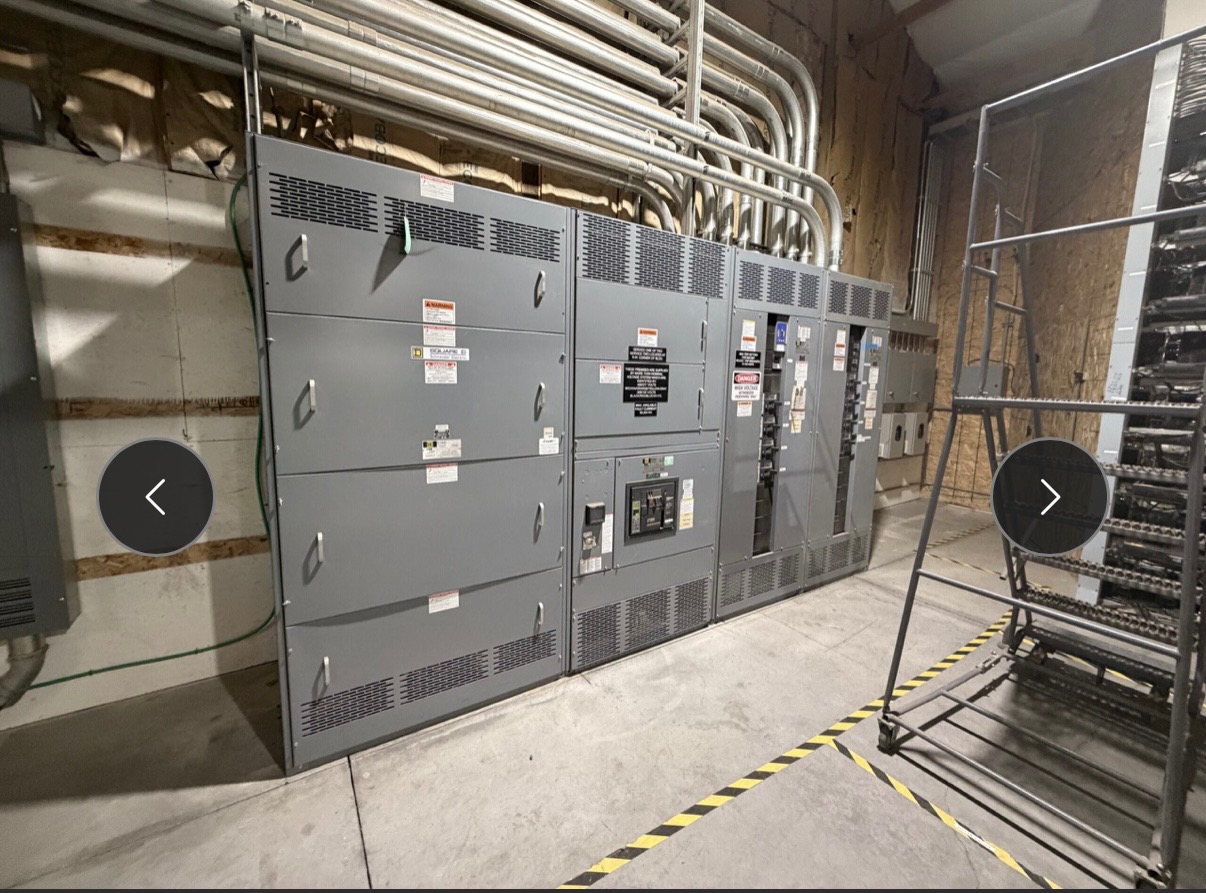
Identify what is actually in the basement
Start with existing records rather than assumptions based on the room or a page title. Gather equipment schedules, purchase documents, drawings, nameplate transcriptions, and maintenance records if available. These can help distinguish switchgear from a switchboard, MCC, panelboard, or another assembly. Manufacturer names identify equipment; they do not establish a partnership or, by themselves, confirm its rating or present condition.
Keep voltage and amperage as separate facts. A 2,000-amp label does not establish voltage, and a voltage marking does not reveal the ampere rating. Record each value only when supported by readable documentation or safely accessible exterior information, along with model or serial details where visible. If a label is obscured or context is unclear, say so rather than filling in a guess.
Describe the route from room to grade
Measure the path, not just the basement doorway. Relevant details can include the clear opening of an exterior access hatch, stairwell width and height, landing dimensions, turns, ramp length and slope, overhead clearance, and the distance from the exit to a possible loading position. Note fixed obstructions such as low beams, door frames, or narrow corridors. Existing measurements and photographs taken from safe locations can make an initial review more useful.
A hypothetical example: a lineup might fit through a wide hatch but be unable to turn at the landing below it; another assembly might leave through a stair opening only after the crew evaluates its configuration and handling options. These are not seller instructions to dismantle or move equipment. They illustrate why a route needs to be considered as a whole, with a qualified crew determining an appropriate removal method.
Treat weight and configuration as removal information
Look for documented shipping weights, section weights, drawings, or other records that may help characterize the equipment. Do not estimate a heavy lineup from its appearance or assume that one section weighs the same as another. If the available paperwork gives only a total weight, report that limitation. A crew can review the information alongside the route, the equipment arrangement, and the conditions at the site.
Configuration matters too: record the number of sections or cabinets if known, whether the assembly appears to be a single lineup or separate units, and whether accessible drawings show bus connections or other arrangement details. Do not open enclosures or handle conductors to answer these questions. No seller testing is required, and sellers should not operate, test, measure, touch, or approach energized apparatus to gather information.
Prepare a clear description and coordinate site review
A concise first description can state the Illinois location, equipment type, available manufacturer and model information, documented voltage and amperage, approximate dimensions, known weight, condition as recorded, and what paperwork exists. Explain whether the equipment is installed, disconnected, or otherwise described in existing records; do not infer that electrical work is complete or that the equipment is de-energized. Mention uncertainties plainly so they can be reviewed rather than mistaken for verified facts.
Also flag access constraints early: hatch dimensions, stair or ramp geometry, turning space, overhead limits, and any known limits on vehicle or lifting access. If the site is part of a larger decommissioning project, identify relevant coordination contacts and scheduling constraints. Qualified professionals handle electrical work as appropriate. The buyer reviews the equipment and circumstances before discussing a specific offer or removal plan.
Understand the purchase and removal terms
The Illinois buyer purchases used, surplus, and decommissioned electrical equipment, including switchgear, switchboards, MCCs, panelboards, busway, transfer switches, breakers, and unit substations across voltage classes. It buys equipment from sources such as decommissioned data centers and shut-down power plants. A basement location does not establish that an item will be accepted; equipment details, condition, ownership, access, and project requirements are subject to review.
For a transaction that proceeds, the terms include a cash offer, payment upfront, no seller testing requirement, and freight covered by the buyer. The buyer handles crane, rigging, disconnects, loading, freight, and hauling, with qualified professionals performing electrical work as appropriate. The seller is not expected to dismantle, rig, test, or move the equipment. Payment is upfront, not after pickup; the removal approach and offer details must be discussed for the specific site.
Common questions
What basement access measurements should I share first?
Share clear hatch and doorway openings, stair width and height, landing and turn dimensions, ramp length and slope, overhead clearance, and the route to loading access. Existing measurements are helpful; leave removal planning to the qualified crew.
Do I need to dismantle or test the switchgear before making an inquiry?
No seller testing is required, and you should not dismantle or move equipment. Provide existing records and safely accessible exterior information. The buyer reviews the details, and qualified professionals determine appropriate electrical and removal work.
What if the weight or electrical rating is missing from the records?
State that it is unknown rather than estimating. Share any available drawings, schedules, or exterior nameplate information without opening enclosures or approaching energized apparatus. The buyer can review what is documented when considering the equipment and access.