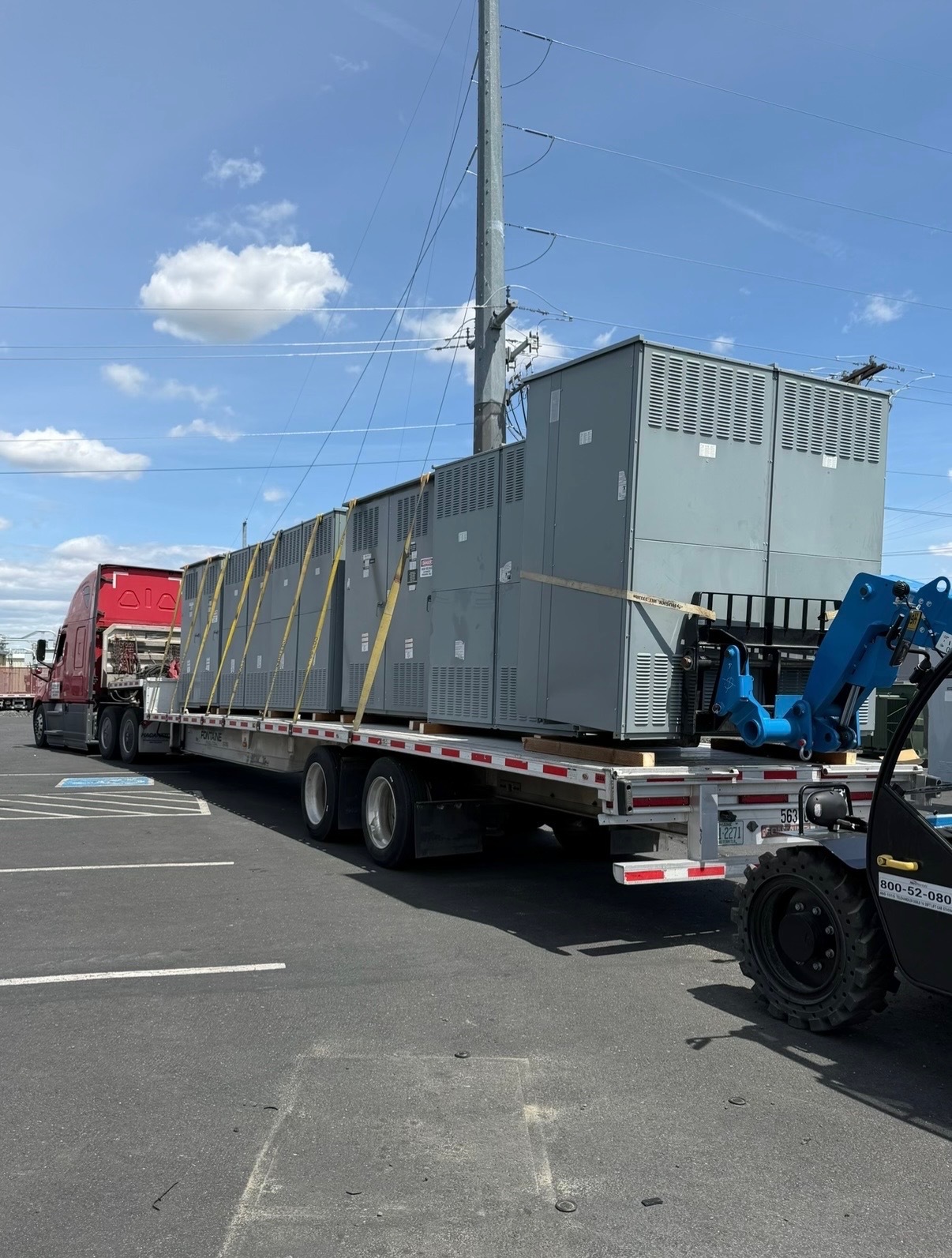
Start with a useful switchgear description
Before discussing a crane, help establish exactly what is being considered for sale. Gather existing nameplate photographs, equipment schedules, drawings, purchase or maintenance records, and any prior project inventory. Manufacturer and model information can help identify the lineup, but a manufacturer name alone does not establish its electrical ratings, configuration, or condition. Include available voltage and ampere ratings only when supported by documentation.
Describe the lineup as it exists: sections, connected bus arrangements, installed breakers, spare or blank sections, and any separately stored components. For example, a hypothetical seller might report three connected sections and two loose breakers while noting that the available drawing shows a different arrangement. That discrepancy is useful to flag for review; it should not be resolved by guessing from a page title or incomplete label.
Treat lifting-point records as planning documents
Look for existing manufacturer handling or lifting documentation that corresponds to the particular switchgear model and configuration. It may identify designated lifting points or explain limits relevant to handling. Share the document as information for a qualified rigger to evaluate. A general drawing for a similar-looking lineup may not apply, and the presence of lifting eyes or other hardware is not, by itself, confirmation of an approved lifting arrangement.
Do not attempt to prepare a lift, attach rigging, or determine capacity from photographs. If records are missing, say so rather than substituting assumptions. A qualified rigger can assess the equipment and applicable documentation as part of planning. The buyer can coordinate with the seller about available records and removal needs, but the seller is not expected to dismantle, rig, test, or move the switchgear.
Map the overhead route for the rigger
An overhead crane may be available while the path beneath it remains constrained. Note known obstructions such as lights, cable tray, piping, beams, ductwork, sprinkler systems, other equipment, or a low doorway along the route from the lineup to the loading area. Existing building drawings and safely accessible exterior views can help explain the setting. Do not enter restricted areas or approach energized apparatus to collect information.
A hypothetical example is a lineup beneath a crane runway with ductwork between the equipment and an exterior loading bay. That detail could affect the rigger’s route assessment even if the crane can reach the lineup. Share approximate locations, available site plans, and any known access restrictions; leave clearance judgments, lift design, and equipment operation to qualified professionals.
Explain configuration, condition, and ownership clearly
Useful condition notes are specific and factual: whether the lineup is installed or already removed, whether doors or covers are visibly missing, whether stored parts are included, and whether records mention prior repairs or damage. Do not open enclosures, operate breakers, touch conductors, test, or measure equipment to improve a description. Electrical status should not be presumed; work involving electrical systems belongs with qualified professionals.
Confirm who has authority to sell the equipment and whether it is owned outright, subject to a lease, or controlled by another party. Identify what is included in the proposed sale, including loose breakers, relays, documentation, or associated sections, and distinguish those items from equipment that will remain. Clear ownership and scope information helps prevent confusion when an offer and removal plan are reviewed.
Coordinate review, offer, and removal responsibilities
A practical first contact can include the Illinois site location, contact details, switchgear identification, available photographs and documents, ownership confirmation, and a brief description of crane access and overhead obstacles. The buyer reviews what is supplied and may ask follow-up questions or request additional information before considering a specific offer. No description or photograph guarantees acceptance; equipment and project details remain subject to review.
For equipment the buyer agrees to purchase, the stated terms are a cash offer with payment upfront, no seller testing requirement, and freight covered. Removal coordination can include crane work, rigging, disconnects, loading, freight, and hauling, with qualified professionals performing electrical work as appropriate. Payment is made upfront, not after pickup. The seller’s role is to provide information and coordinate site access—not to perform the lift or transport.
Common questions
What should I send if the switchgear’s lifting documentation is missing?
Share the records and identification you do have, and clearly note that lifting documentation is unavailable. Do not infer lifting points from a similar lineup; a qualified rigger must assess the applicable handling information and equipment.
Does an overhead crane at the site mean the removal route is suitable?
Not necessarily. Crane reach is only one planning detail. Be forthcoming about known beams, ductwork, cable trays, doorways, and loading access so a qualified rigger can evaluate the route.
Do I need to disconnect or move the switchgear before requesting an offer?
No seller testing, dismantling, rigging, or moving is required. Provide available equipment and site information; if the buyer proceeds, removal coordination can cover disconnects, crane work, loading, and freight.