Identify the assembly without guessing at its ratings
Start with existing asset schedules, drawings, nameplates already visible from a safe location, and maintenance or procurement records. Record the manufacturer, model or catalog number, serial number if available, lineup or compartment count, and any legible voltage-class information. A seller’s label, spreadsheet heading, or informal description is useful context, but it is not verified rating documentation by itself.
Keep voltage class separate from current rating. A voltage designation describes the class of electrical system the equipment is designed for; an ampere value describes current capacity. Neither can be inferred from the other. If records conflict, preserve both descriptions and note their sources instead of choosing one. For example, a hypothetical asset list may call a lineup “15 kV,” while an exterior nameplate is unreadable; report the discrepancy for review rather than presenting the list entry as confirmed.
Describe dead-front construction and configuration precisely
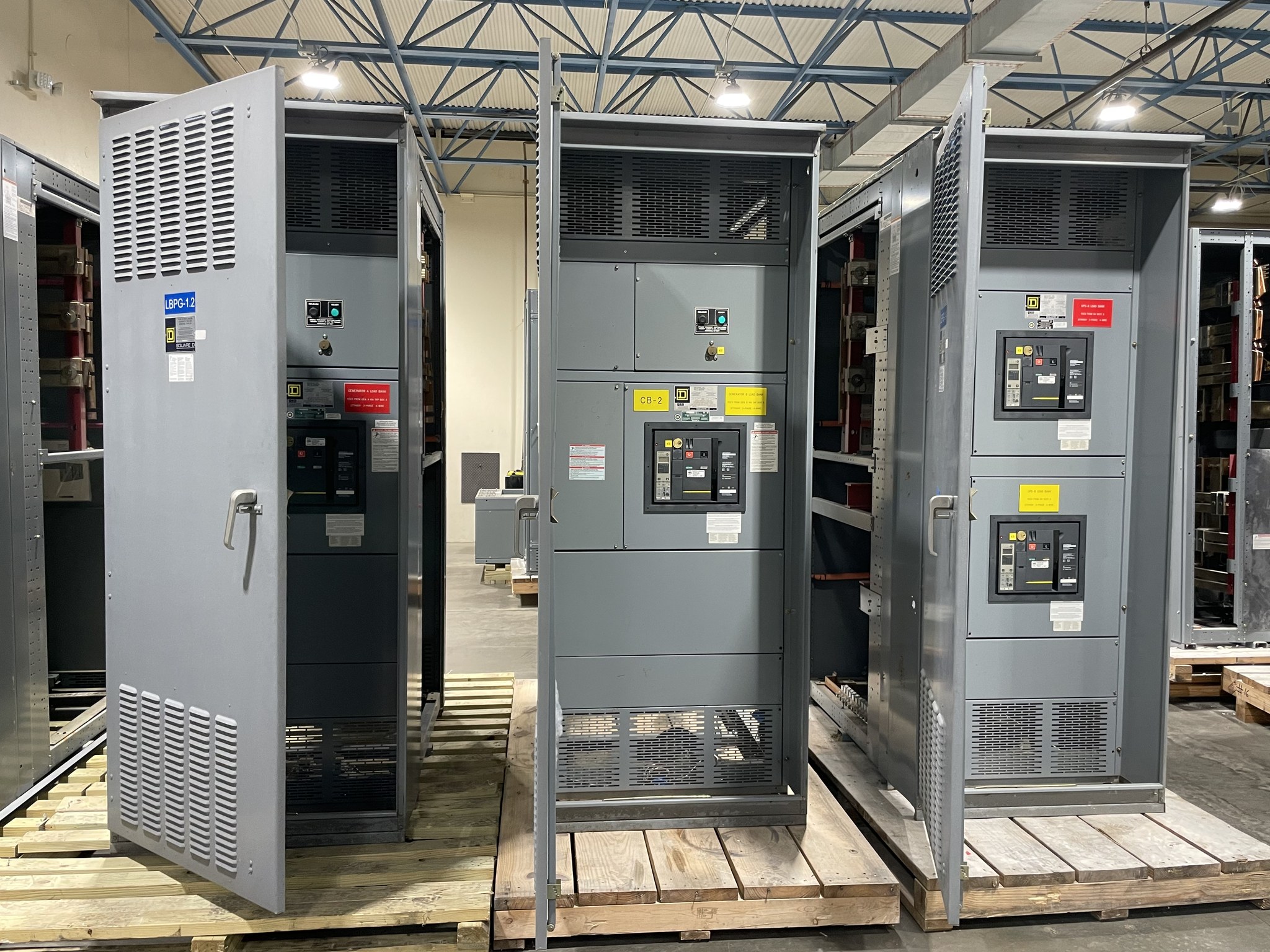
Pad-mounted dead-front gear is arranged so energized primary parts are not exposed as live terminals during normal access, but that description does not establish the condition, operating status, or safety of a particular assembly. Explain what the lineup appears to contain using drawings or safely accessible exterior information: incoming and outgoing ways, switching compartments, metering sections, protection devices, or spare positions. Avoid opening doors or covers to complete the inventory.
Configuration can materially affect how a buyer evaluates the equipment. Note whether the assembly is a single cabinet or connected lineup, whether a transformer is included or separate, and whether visible accessories, operating handles, barriers, or external controls appear present. These are observations, not a request to inspect internally. A hypothetical three-way lineup with a separate transformer should be described as such, rather than being summarized only as “pad gear,” which may conceal important scope differences.
Report enclosure condition and insulating-medium records
Give a factual exterior condition account: coating loss, corrosion, dents, damaged doors, missing external hardware, water staining, or signs of impact. Indicate which side or compartment is affected and whether the observation comes from a photograph or an existing site record. Do not infer internal condition from a clean cabinet or assume a weather-exposed enclosure has failed. The buyer can consider visible condition alongside documentation and the proposed removal scope.
Available insulating-medium records can help clarify what the equipment contains and what handling considerations may apply. Share existing manuals, nameplate information, fluid or gas records, service documents, or environmental paperwork if they are available. Do not open a compartment, take a sample, or attempt a field test to fill a gap. If the medium or its status is unknown, say so plainly; uncertainty is more useful to review than an unsupported claim that the gear is fluid-filled, gas-insulated, or empty.
Establish ownership, scope, and site constraints
Before discussing a sale, identify who owns the equipment and who is authorized to release it. For a decommissioning or closure, the gear may be part of a larger asset package, subject to a project schedule, or controlled by a landlord, lender, utility, or contractor. Gather any relevant ownership or disposal approvals and clarify whether the offer would cover the switchgear alone or associated components. A buyer’s review and any offer remain subject to the specific equipment and information provided.
Share practical site details that affect coordination: the Illinois location, approximate dimensions if documented, access route, overhead or doorway restrictions, surface conditions, nearby structures, and any known site scheduling rules. Do not dismantle, rig, disconnect, or move the equipment for the inquiry. The buyer handles coordination for disconnects and qualified electrical work as appropriate, plus crane, rigging, loading, freight, and hauling; the exact plan depends on site review and the agreed scope.
Coordinate review and removal without preparing the gear yourself
A useful first submission can include exterior photographs taken from a safe, permitted position, available nameplate images, drawings, a component list, insulating-medium records, and a short description of access and project timing. Do not approach energized apparatus or operate equipment to obtain information. No seller testing is required. If records are incomplete, identify what is known, what is uncertain, and who may be able to locate additional paperwork; a buyer can then ask focused follow-up questions.
An Illinois buyer of used, surplus, and decommissioned electrical equipment may review pad-mounted switchgear across voltage classes, but that does not guarantee every item will receive an offer. For a specific opportunity, the company reviews the equipment details and removal circumstances, then communicates whether it can make a cash offer and what scope applies. Where an offer is made, payment is upfront, not after pickup, and freight is covered. The seller is not expected to test, dismantle, rig, load, or haul the gear.
Common questions
What should I do if the voltage information on the pad-mounted gear is missing or conflicts with site records?
Provide the records and safely accessible exterior information as-is, labeling each source. Do not guess or treat a page title as a rating. The buyer can review the discrepancy when considering the specific equipment.
Do I need to open the dead-front enclosure or verify the insulating medium before requesting an offer?
No. Leave opening, isolation, and any electrical work to qualified crews. Share existing documentation or safe exterior observations; if the insulating medium is undocumented, state that it is unknown rather than sampling or testing it.
Who handles removal from an Illinois site, and when is payment made?
The buyer coordinates qualified disconnect work as appropriate, crane and rigging, loading, freight, and hauling, subject to review and agreed scope. If an offer is made, payment is upfront, never contingent on pickup.