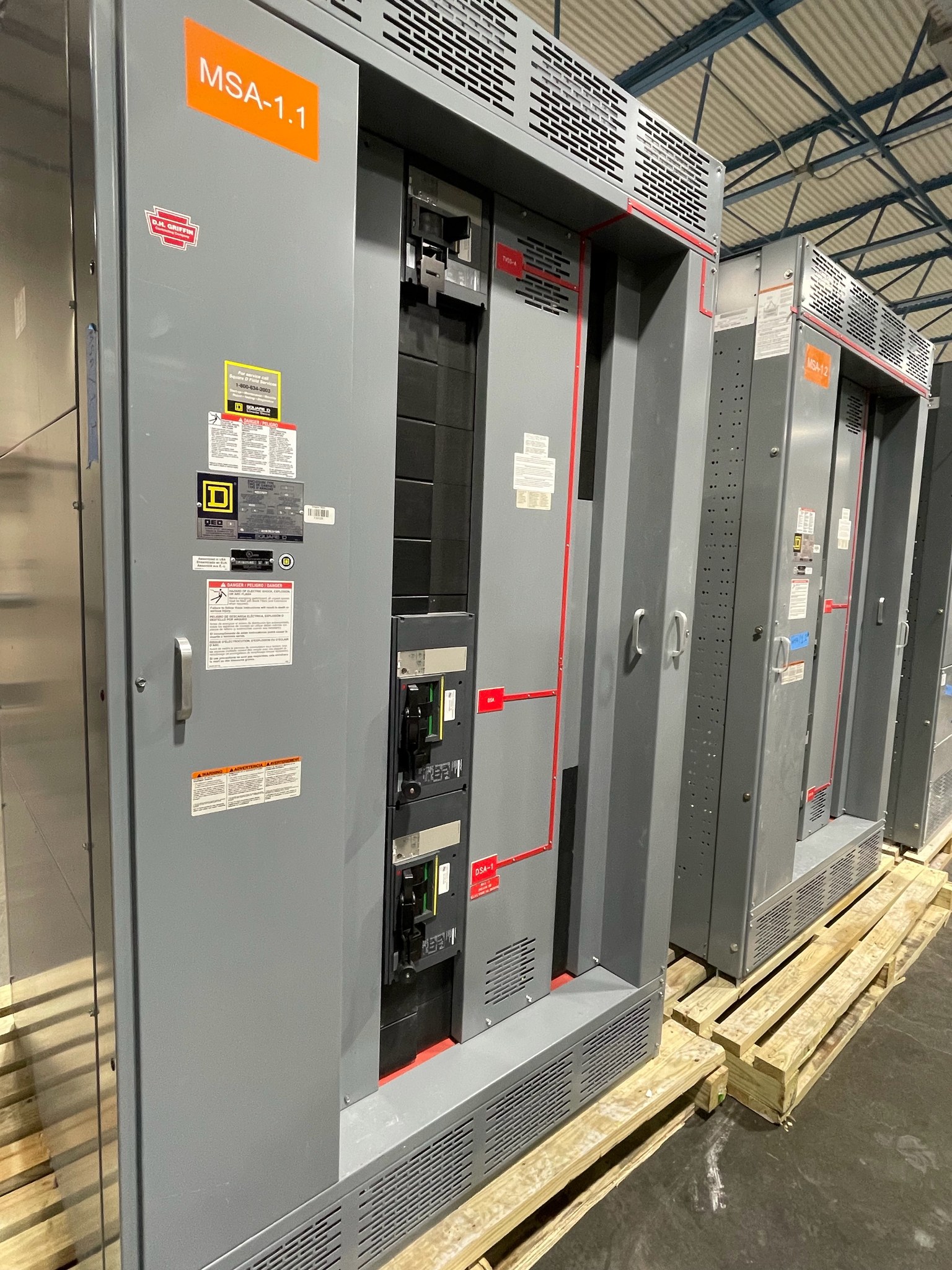
Separate the Service Rating from the Fuse and Voltage Details
Begin with the switchboard’s existing nameplate, drawings, schedules, or asset records, if available. Record the service rating exactly as documented and keep voltage information separate from ampere ratings: amperes describe current capacity, while volts describe electrical potential. Neither value establishes the other. A title such as “800-amp service board” is a seller’s description until supported by documentation; it does not verify voltage, configuration, or the rating of every section.
For example, a hypothetical inventory entry might say “1,200 A service entrance, three sections,” while a drawing lists a particular voltage and a separate schedule identifies feeder devices. Preserve those distinctions rather than combining them into one inferred rating. If documents disagree, note the discrepancy and share the source of each figure. The buyer can review what is available, but a specific evaluation remains subject to equipment and project details.
Describe the Main Disconnect and Fuse Arrangement Precisely
For a fusible service-entrance board, the main disconnect and its fuse data are central identification points. Use existing records to describe whether the main is a fusible switch, how the equipment is divided into sections, and what fuse class, type, or ampere rating the paperwork identifies. Include manufacturer and catalog identifiers when legible in existing documentation. Do not treat a fuse rating as the board’s service rating, or assume the fuse data applies to every switch in the lineup.
A hypothetical record could identify a main fusible switch and several distribution switches with different fuse information. That is more useful than reporting only the largest number visible in an old schedule. Sellers should not open an enclosure, operate a switch, touch conductors, test equipment, or approach apparatus that may be energized to gather details. Rely on existing paperwork or information already safely accessible from the exterior; qualified professionals handle electrical work as appropriate.
Explain What Is Included and What Is Known About Condition
Describe the lineup as it exists in the project records: section count, approximate overall arrangement, known incoming and outgoing provisions, and whether associated items such as transition sections or separate enclosures are included. Distinguish installed equipment from loose parts or items listed on a drawing but no longer present. Manufacturer names help identify equipment; they do not imply a relationship between the manufacturer and the buyer, nor do they by themselves verify condition or ratings.
Give a factual condition summary based on records and visible, safely accessible information. Mention known history such as decommissioning, storage, documented repairs, or missing components, and identify anything uncertain as unknown rather than guessing. No seller testing is required. The Illinois buyer considers used, surplus, and decommissioned electrical equipment, including switchboards, but acceptance and any offer depend on review of the particular equipment and its circumstances.
Keep Utility Coordination with the Responsible Qualified Parties
Service-entrance equipment can sit at the boundary between a facility’s electrical system and utility service, so removal planning may involve the owner, utility, electrical contractor, facility operator, or other qualified parties. The seller should identify known coordination requirements and project constraints, such as required approvals, access windows, or dependencies on other work. Do not represent the board as disconnected or de-energized unless that status has been established by the responsible professionals.
For a hypothetical shutdown project, the utility may need to coordinate service changes before equipment removal can proceed. That coordination is separate from a buyer’s commercial review and must be handled by the qualified parties responsible for the installation. The buyer can discuss the intended scope and site conditions with the seller, but the sequence and authorization for electrical work must be determined appropriately for the site. Never attempt to operate, disconnect, or prepare the switchboard yourself.
Share Access and Removal Details Before Discussing the Offer
Useful site information includes the switchboard’s location, route to an exit, door or corridor constraints, loading access, known rigging limitations, and any site rules affecting work. Photos, plans, or written measurements should come from information already available or be gathered safely by appropriate people. Identify whether the equipment is still installed, staged, or part of a broader decommissioning project. This lets the parties discuss practical removal requirements without asking the seller to dismantle, rig, test, or move it.
The Illinois buyer purchases electrical equipment across voltage classes and handles the removal logistics it agrees to, including disconnects, crane and rigging, loading, freight, and hauling; qualified professionals perform electrical work as appropriate. The seller does not have to arrange freight or prepare the board for transport. The buyer makes cash offers, requires no seller testing, covers freight, and pays upfront—not after pickup. Share records and site details to begin a review; any offer, scope, and arrangements are subject to discussion and review.
Common questions
Which documents best establish a fusible service-entrance switchboard’s ratings?
Existing nameplates, one-line diagrams, equipment schedules, and asset records can help. Keep service amperes, voltage, main-disconnect details, and individual fuse data distinct; report conflicts rather than resolving them by assumption.
Do I need utility approval or to disconnect the board before contacting a buyer?
You can discuss the equipment before removal planning is complete. Utility coordination and electrical work belong with the qualified parties responsible for the site; do not operate or disconnect equipment yourself.
What should I provide if fuse records are incomplete or the board remains installed?
Share the documentation you have, identify unknowns, and describe the lineup and site access from existing records or safely accessible exterior information. Testing is not required; removal logistics can be discussed during review.