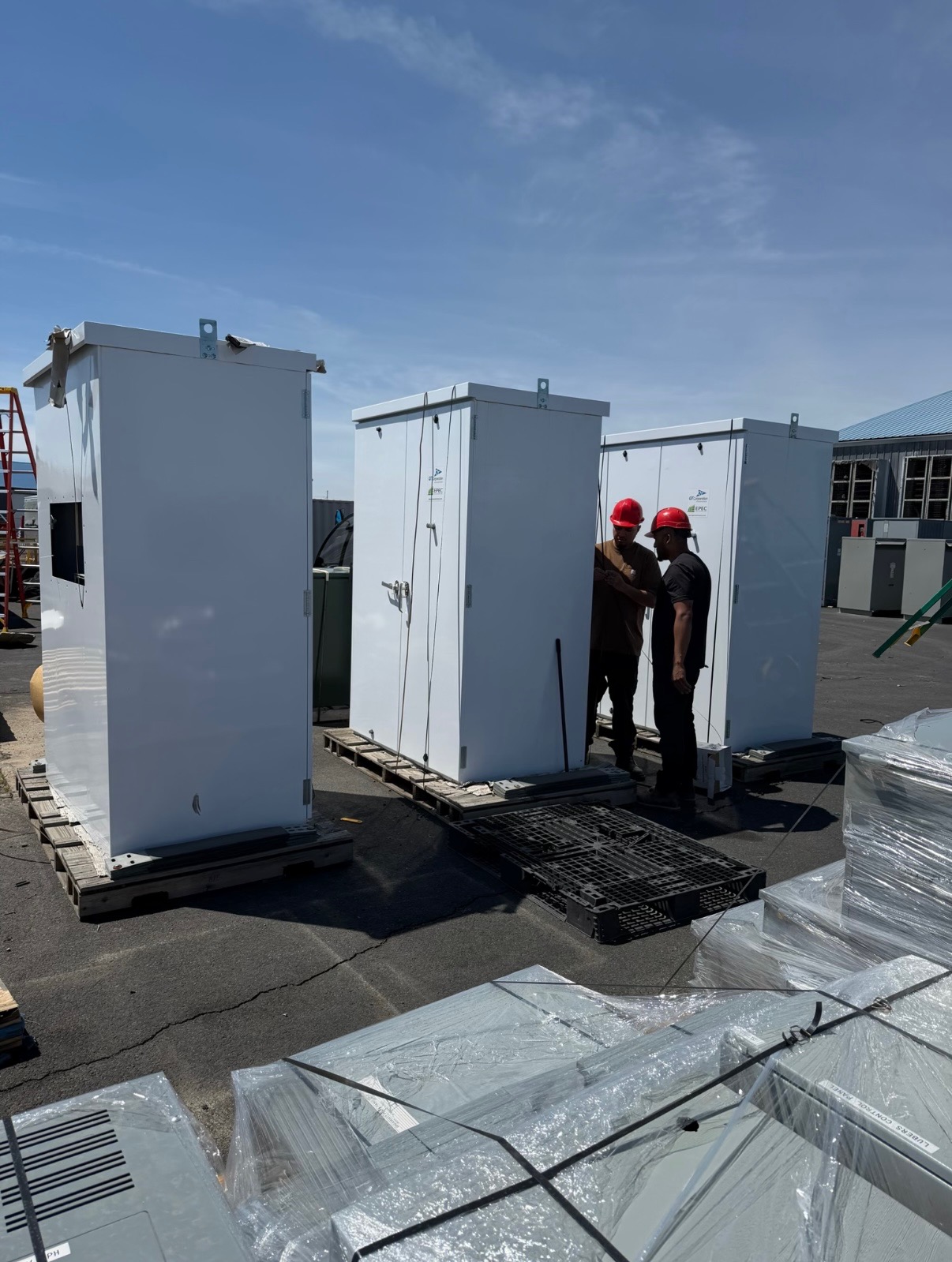
Identify the switch within its service-gear lineup
Bolted-pressure contact switches are commonly installed as switching devices in service equipment, where they may appear alongside protective devices, metering compartments, bus connections, or other sections. When describing one, distinguish the switch section from the complete switchboard or service lineup. Include the lineup manufacturer and model if known, plus the switch’s section or designation as shown on existing drawings or labels. A photo of the exterior can help establish context without opening an enclosure.
A hypothetical example: an owner has a multi-section service lineup and calls the entire assembly a “bolted-pressure switch.” Existing one-line drawings may show that only one section contains the switch, while adjacent sections contain distribution equipment. That distinction helps a buyer understand what is being offered and whether related sections are included. Describe what records indicate and what is plainly visible; leave internal inspection and electrical confirmation to qualified personnel.
Record nameplate information without confusing ratings
Use existing nameplate information to report the manufacturer, catalog or type designation, serial number if legible, and stated voltage and ampere ratings. These are separate characteristics: voltage describes the electrical class, while amperes describe current-carrying capacity. Do not estimate one from the other or substitute a lineup rating for the switch rating. If a plate is obscured, missing, or difficult to read from a safely accessible exterior position, say so rather than guessing.
Other documentation may identify the switch’s short-circuit or interrupting-related ratings, enclosure details, or applicable fuse class. Share those details only as stated in records or on accessible labels, and make clear which document or component they describe. A buyer can review the information alongside photographs and configuration notes. No seller testing is required, and no one should open equipment or approach energized apparatus to obtain a rating.
Describe the fuse arrangement and what is included
Fuse configuration can materially change how a bolted-pressure switch is described. Note whether existing records identify fuses, fuse clips, or a particular fuse arrangement, and whether the offer includes the fuses or only the switch and its section. If the lineup has labels or drawings naming fuse type or rating, report the wording as printed. Do not remove a cover or handle a fuse to determine what is installed; use existing documentation or safely accessible exterior information.
A hypothetical listing might say that a service switch section is present, the drawings identify a specified fuse class, and the seller has not confirmed whether fuses remain in place. That is more useful than calling the assembly “fused” without qualification. Include any known missing components, spare parts, barriers, or related sections, but avoid assuming that accessories belong with the switch unless ownership and scope are clear.
Report visible operating-mechanism condition carefully
A buyer can benefit from a factual description of the operating mechanism’s visible exterior condition: for example, whether the handle or linkage appears present, whether an external indicator is readable, or whether the enclosure shows impact damage, corrosion, or missing trim. Describe only what can be observed safely without opening the gear, touching parts, operating the mechanism, or approaching energized equipment. Do not characterize the switch as functional based solely on appearance.
If the mechanism’s status is unknown, say that it has not been tested. No operational demonstration or seller testing is required for an inquiry. Qualified professionals handle isolation and electrical work as appropriate; do not attempt to operate, inspect internally, or make the equipment safe yourself. Existing service records may add context, but they do not replace an on-site assessment where one is appropriate.
Coordinate ownership, site access, and a no-move pickup
When contacting the Illinois buyer, provide the site location, equipment description, available nameplate details, photographs taken from safe positions, and any relevant one-line drawings or inventory records. Explain whether the switch is part of a decommissioned data center, a shut-down power plant, or another facility, and clarify who owns the equipment and can authorize its removal. Mention access constraints such as scheduled entry, loading-dock rules, restricted hours, or known crane and rigging needs.
The buyer purchases used, surplus, and decommissioned electrical equipment, including bolted-pressure contact switches and related service gear across voltage classes. An offer is for cash, payment is upfront, freight is covered, and the seller is not asked to perform testing. Crane, rigging, disconnects, loading, freight, and hauling are handled by the buyer, with qualified professionals performing electrical work as appropriate. A specific offer and pickup details remain subject to review; payment is upfront, never after pickup.
Common questions
What information helps identify a bolted-pressure switch when its nameplate is unreadable?
Share the lineup and section labels, manufacturer or catalog details from existing records, drawings, and safely taken exterior photos. Mark the rating as unknown rather than inferring voltage or amperage.
Should I confirm the fuse arrangement or operate the mechanism before requesting an offer?
No. Use existing documentation and safely accessible exterior information. Do not open the enclosure, handle fuses, operate the switch, test it, or approach energized equipment; qualified personnel handle isolation.
Does the seller arrange disconnection, rigging, freight, or payment after removal?
The buyer states that it covers freight and handles disconnects, crane work, rigging, loading, and hauling. Payment is upfront, not after pickup; offer and site details require review.