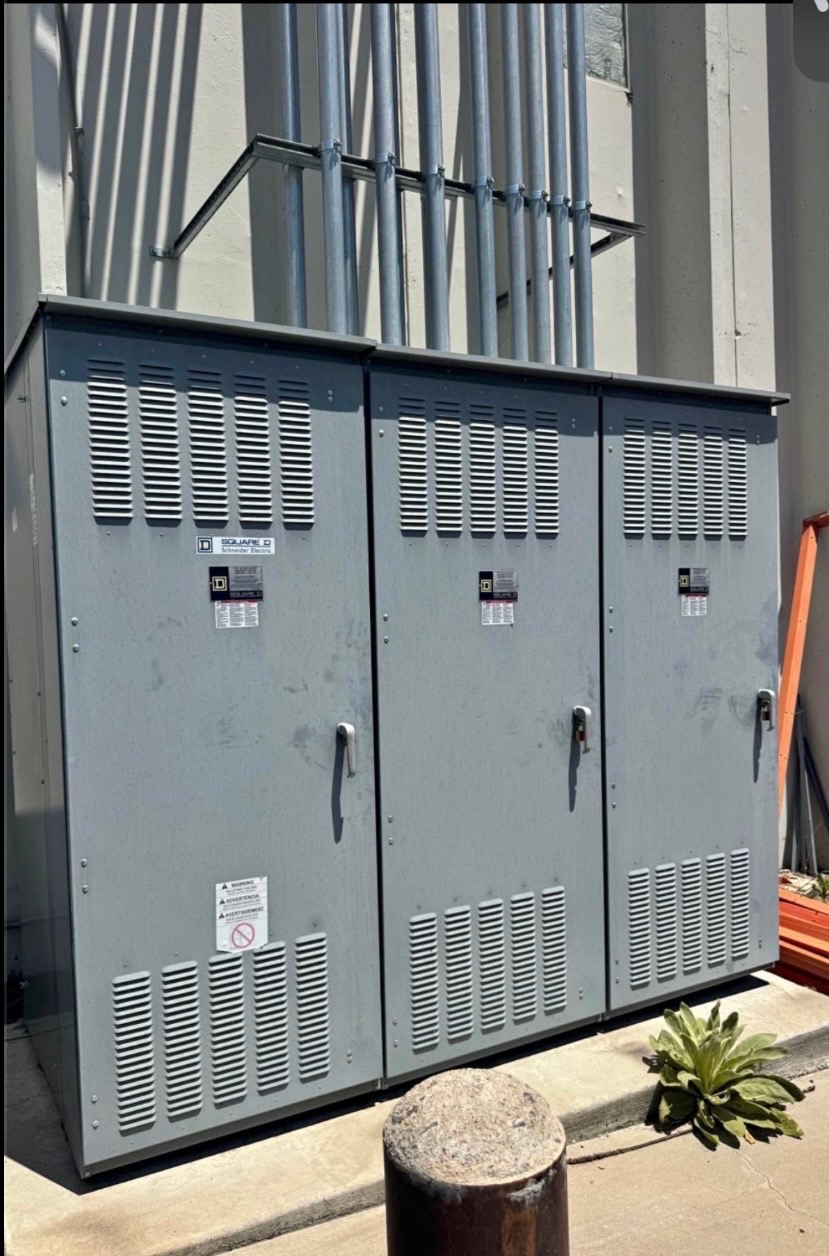
Describe the assembly from incoming sources to secondary distribution
Start at the primary side and identify the source-switch arrangement as it appears in existing drawings, equipment schedules, or safely accessible exterior labels. A primary-selective installation may have two incoming source paths and associated switching, but layouts differ. Record the number of incoming sections and how they are identified in the documentation; do not infer a switching scheme from the phrase “primary-selective” alone.
Continue through the transformer section to the secondary distribution lineup. Note whether the transformer and lineup are part of the same assembly, adjacent but separate, or connected by busway or other equipment. A hypothetical description might say that two documented source-switch sections, one transformer section, and a four-section secondary lineup are present. That is a useful inventory, not a claim about ratings or condition.
List what stays with the substation—and what does not
A clear included-components list helps distinguish a complete substation from a partial assembly. Specify whether both incoming source switches, the transformer, secondary main and distribution sections, control cabinets, and connecting bus or busway are included. If a section is absent, separately owned, or already removed, say so. Mention accessories only when you can identify them from records or safe exterior observation.
Keep the equipment boundary explicit. For example, a hypothetical seller might have the transformer and secondary lineup but not the upstream source switches; another might offer all three major portions while excluding a separately installed feeder bus. Do not assume that a shared enclosure, common lineup, or nearby equipment belongs to the sale. The buyer can review the proposed package before discussing a specific offer.
Use records to distinguish voltage, amperes, and configuration
Share existing nameplate transcriptions, one-line diagrams, equipment schedules, and photographs of exterior identification plates when available. Keep voltage and ampere information tied to the particular section and its documented label. Transformer voltage describes a different characteristic from a switch or lineup’s ampere rating; neither value establishes the other. A page title, seller shorthand, or remembered specification is not verified rating information.
Useful records can also show manufacturer, model or catalog identifiers, serial numbers, date codes, and the relationship between sections. Manufacturers are identifiers, not endorsements or partnerships. If paperwork conflicts with an exterior label, report the discrepancy rather than choosing one as correct. Nobody needs to open an enclosure, operate equipment, touch conductors, test, measure, or approach energized apparatus to prepare this information.
Report condition and site constraints without performing electrical work
Describe what is known from existing records and safe, accessible exterior observation: whether the assembly is installed or already removed, whether sections are visibly incomplete, and whether any damage or missing components are documented. Avoid presenting unknown internal condition as verified. The buyer does not require seller testing, and no seller should undertake testing or access unsafe areas simply to improve a description.
For an installed substation, share practical site details that affect removal: indoor location, access route, door or corridor constraints known to the site team, available loading area, and any scheduled site restrictions. Do not disconnect, dismantle, rig, or move equipment for the sale. Qualified professionals handle electrical work as appropriate; removal coordination can include disconnects, crane and rigging, loading, freight, and hauling.
Coordinate a review, offer, and removal plan
An Illinois buyer of used, surplus, and decommissioned electrical equipment can review the assembly description, records, photographs, ownership information, and site conditions to consider a specific transaction. The company buys equipment across voltage classes, including unit substations, and also purchases other electrical equipment. Review does not mean every configuration or component will be accepted; scope and offer details remain subject to evaluation.
If the equipment is considered for purchase, the terms are cash offers with payment upfront, before pickup; payment is not deferred until after removal. The buyer covers freight, and the seller is not asked to test, dismantle, rig, load, or haul the substation. The buyer coordinates removal requirements with the site contact, including access and appropriate professional work, so responsibilities are clear before scheduling.
Common questions
What should I list if the incoming switches, transformer, and secondary lineup are not all included?
Name each section present and absent, and identify any separately offered bus or accessories. Existing drawings or exterior labels can help establish the boundaries; do not describe a partial assembly as complete.
Can I submit a substation’s voltage and ampere details from a sales listing?
Treat listing text as unverified. Share existing equipment records or safely accessible exterior identification, tying each value to its labeled section. Voltage and amperes describe different ratings and cannot be inferred from one another.
Who handles disconnects and removal when the substation is still installed indoors?
The buyer coordinates removal, including disconnects by qualified professionals as appropriate, crane and rigging, loading, freight, and hauling. The seller should not dismantle, test, rig, or move equipment; payment is upfront before pickup.