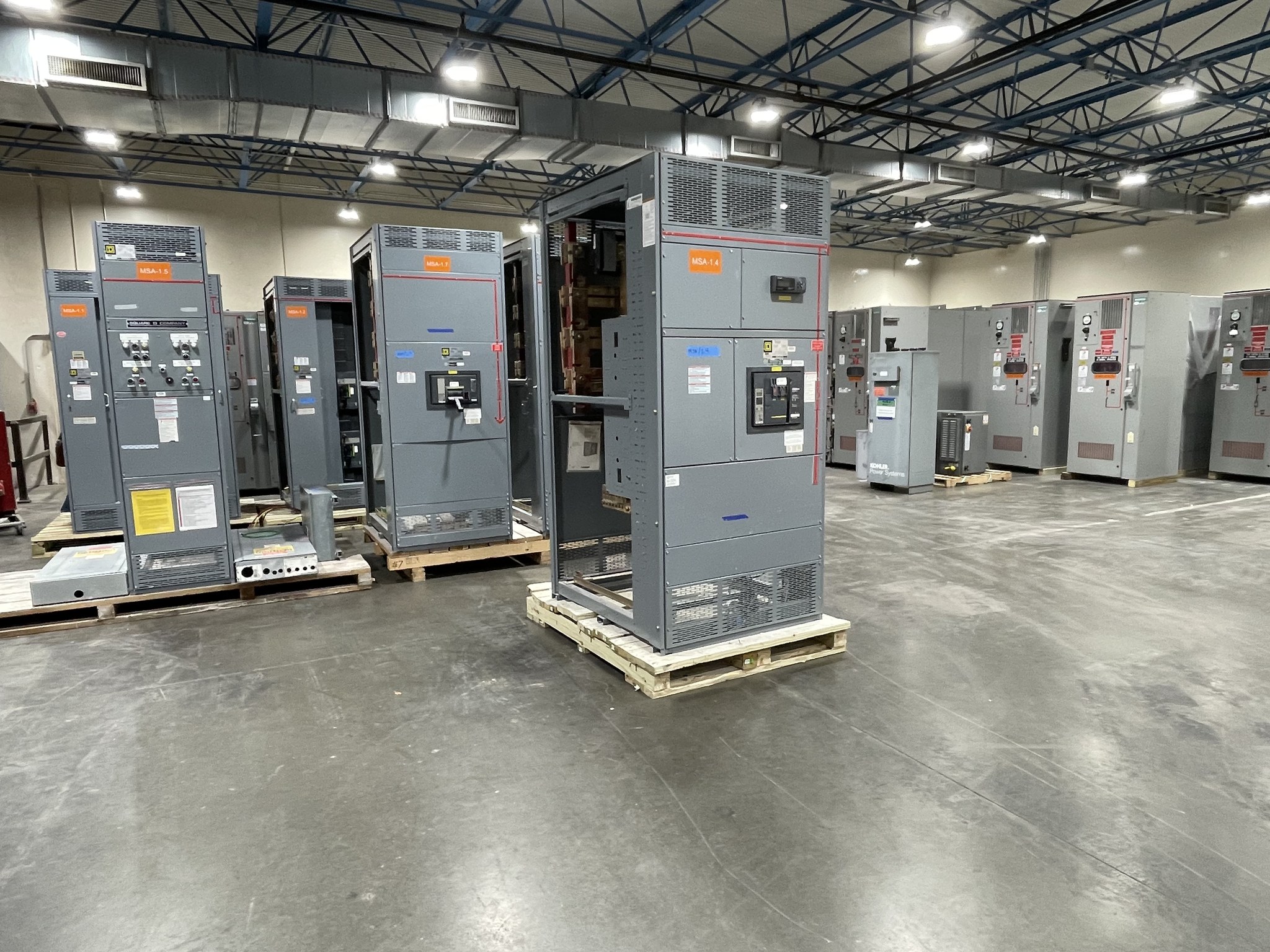
Describe the lineup as a system, not a single cabinet
Drawout switchgear depends on the relationship between the stationary cell and the removable breaker. A breaker on its own may not convey whether the matching cradle is available, whether the cell is complete, or whether accessories have been separated during removal or storage. List each lineup section and breaker, then note which cradle and associated parts you believe belong together. If the match is uncertain, say so rather than guessing.
For example, hypothetically, a seller might have three lineups sections, two drawout breakers, one identified cradle, and a bag of loose hardware with uncertain origin. Reporting that inventory as-is is more useful than calling it a complete lineup or omitting the loose parts. The buyer can review the actual configuration and ask focused follow-up questions; an offer and its scope remain subject to that review.
Record identifiers without treating labels as proof of ratings
Photograph existing exterior nameplates and readable markings where they can be seen safely. Useful details may include manufacturer, model or type designation, serial or catalog numbers, and the lineup or breaker identification shown in existing records. Include available drawings, equipment schedules, and prior inventories. Manufacturers such as Siemens, Eaton, or Schneider Electric can help identify equipment, but naming a manufacturer does not establish compatibility or a relationship with the buyer.
Keep voltage and ampere information distinct. A frame or breaker ampere marking is not a voltage rating, and one value cannot be inferred from the other. A page title or seller’s shorthand such as “480-volt gear” is not verified documentation. Report what paperwork or safely accessible exterior markings actually show, and flag unreadable, conflicting, or absent information for review. Do not open enclosures, operate equipment, touch conductors, test, or approach energized apparatus to gather details.
Make missing parts and condition legible
Use a simple inventory to distinguish installed components from loose, removed, or missing items. For each breaker, note whether a trip unit is present and identifiable, whether its cradle is included, and whether known cell hardware—such as shutters, racking components, or position-related parts—is present, absent, or not confirmed. Avoid asserting that loose parts fit a particular cell unless records support that identification.
Condition notes should be observational, not a substitute for testing. You can report visible damage already known, storage circumstances, water exposure history if documented, or parts removed during decommissioning. Do not energize or operate equipment to answer questions. No seller testing is required for an inquiry. A hypothetical breaker with an unknown trip unit and a missing racking component can still be described accurately; the buyer will decide what further information matters to a specific review.
Coordinate ownership, access, and the site plan early
Before arranging a review, establish who owns the equipment and who is authorized to discuss or release it. For a decommissioned data center, plant, or other facility, identify the person responsible for site coordination and any sale approvals. Clarify whether the gear remains installed, has been disconnected, or is already staged, but do not assume electrical work is complete or the equipment is de-energized. Qualified professionals handle electrical work as appropriate.
Share practical access details that affect planning: location within the site, loading constraints, known lift or crane requirements, security procedures, and any limits on pickup hours. The buyer handles crane, rigging, disconnects, loading, freight, and hauling under its buying arrangement, so the seller is not expected to dismantle, rig, or move the equipment. Site conditions and the specific scope still need review; do not arrange unsafe access or attempt removal yourself.
Send a coherent package and understand the buying process
A concise first message can include the Illinois site location, an inventory of lineup sections and breakers, breaker-to-cradle matches where known, trip-unit details, missing cell hardware, available documentation, and a small set of exterior photos. Separate confirmed facts from estimates. If an item’s identity or completeness is uncertain, label it clearly. This lets the buyer assess the package without mistaking a partial lineup for a verified, ready-to-install assembly.
The company buys used, surplus, and decommissioned electrical equipment, including low-voltage switchgear and breakers. It makes cash offers, pays upfront rather than after pickup, requires no seller testing, and covers freight. After reviewing the details, the buyer can discuss a specific offer and logistics; neither acceptance of every item nor a particular value is guaranteed. The seller’s role is to provide available information, confirm ownership and coordinate access—not perform electrical or removal work.
Common questions
Why list a breaker’s cradle and trip unit separately if they appear to belong together?
Separate entries show what is actually present and which associations are confirmed. A buyer can review a breaker with its cradle and trip-unit information without relying on assumptions about compatibility or completeness.
Should I leave missing cell hardware off the inventory?
No. Identify known missing, loose, or unverified hardware plainly. That distinction helps the buyer understand an incomplete lineup and avoids implying that a cell or drawout assembly includes parts you cannot confirm.
Do I need to test a breaker or remove it from its cell before asking for an offer?
No seller testing is required, and do not attempt operation or removal. Share existing records and safely accessible exterior information; qualified professionals handle electrical work as appropriate, with removal logistics reviewed for the site.