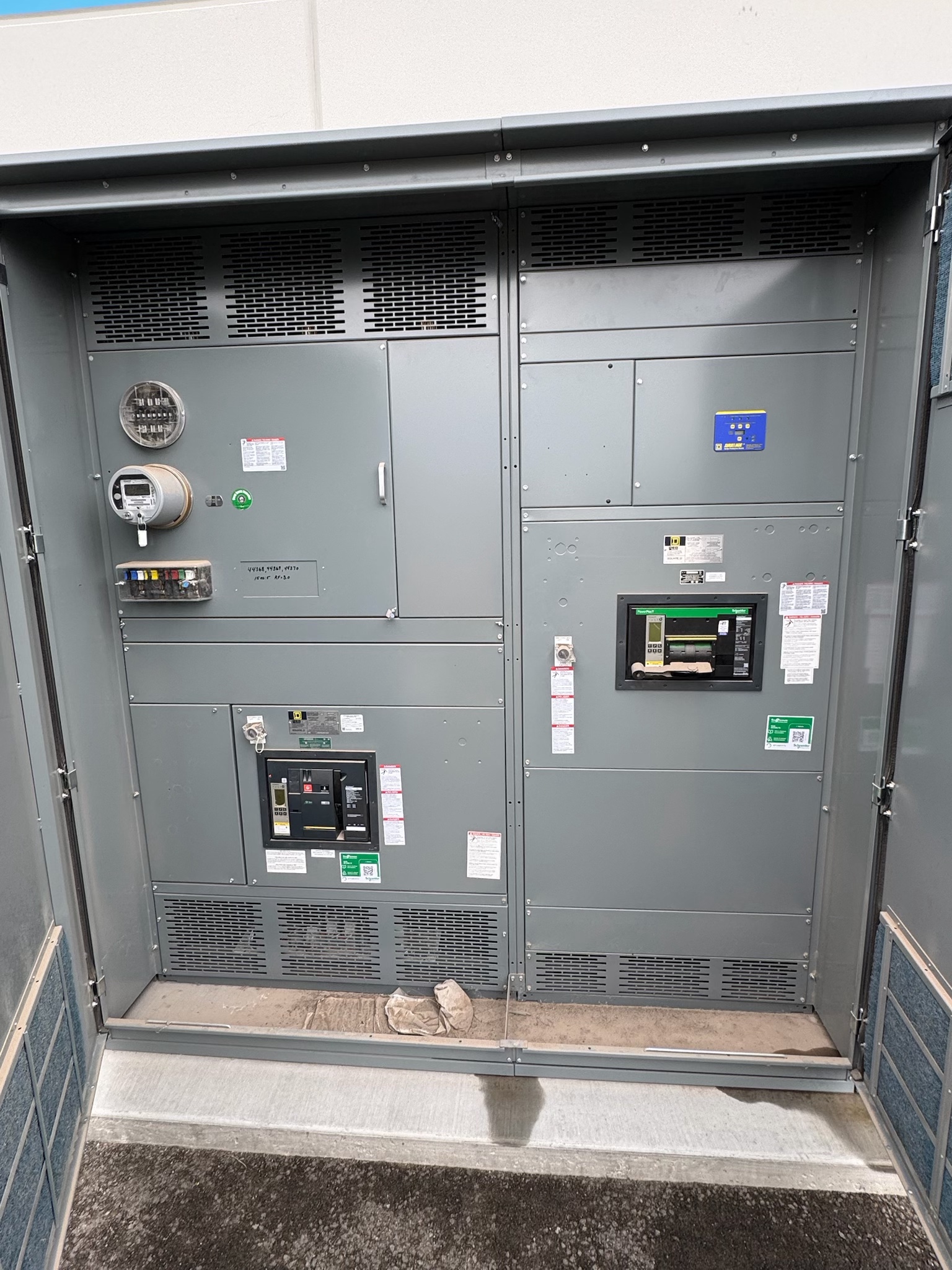
Build an inventory around the two transformer sections
Start with a left-and-right or A-and-B inventory, using the site's existing labels rather than assuming the sections are identical. For each transformer, record manufacturer, model or catalog information, serial number, documented voltage ratings, kVA, impedance if shown, cooling designation, and available nameplate details. Photograph existing exterior labels only where they can be viewed safely. Do not infer voltage from amperage, or assume a page title accurately states either rating.
Capture what each transformer feeds and how its primary side is identified in available drawings or records. Note whether both sections appear to share a common enclosure style or differ in age, dimensions, or accessories. For example, a hypothetical substation could have two transformers with matching kVA but different documented primary voltages; listing them as a matched pair without explaining that difference would obscure information relevant to review.
Map the secondary main-tie-main lineup as distinct equipment
Inventory the secondary switchgear or switchboard lineup by functional position: Main A, tie, and Main B. Record manufacturer, lineup identification, bus rating, documented voltage, available short-circuit or withstand information, and the rating and type of each breaker where paperwork supports those details. The main, tie, and opposite main are separate devices; a single breaker description does not describe the whole arrangement.
Use existing one-lines, schedules, or equipment lists to explain the intended relationship among the two transformer secondaries and the tie. Note whether the tie is shown as normally open or normally closed only when the documentation says so. A hypothetical lineup labeled “main-tie-main” might have a tie breaker with a different frame or trip arrangement from the mains; identify that distinction rather than assuming the three devices match.
Describe what is included, and what the records can verify
Make a component schedule that separates the transformers, primary-side equipment, secondary lineup, and any included bus connections or transition sections. Identify visible compartments, metering, protective relays, control power equipment, and spare or removed devices as present, absent, or unknown. This prevents a buyer from mistaking a partial lineup for a complete substation or assuming every accessory shown on an old drawing remains on site.
Gather existing nameplate photos, one-line diagrams, maintenance records, commissioning documents, and available bills of material. No seller testing is required for an initial review, and nobody should open enclosures, operate equipment, touch conductors, take measurements, or approach energized apparatus to gather information. If records conflict, describe the discrepancy plainly; a buyer can review the details before discussing a specific offer.
Explain condition and project status without overstating readiness
Report known condition by observation and record, not by unsupported conclusions such as “fully operational.” Note visible exterior damage, missing doors or covers, known water exposure, corrosion, modifications, or components already removed, if that information is safely available. Distinguish documented history from current observation, and identify uncertainties. Do not represent equipment as de-energized or all electrical work as complete unless the responsible site records establish that status.
For a hypothetical decommissioning, the transformers may be scheduled for removal while portions of the secondary lineup remain connected to other plant systems. That is a coordination issue, not a reason for a seller to disconnect or dismantle anything. Qualified professionals handle electrical work as appropriate, and removal planning should be based on site conditions, authorization, equipment configuration, and the buyer's review.
Coordinate review, access, and removal as a complete assembly
When contacting the Illinois buyer, send the two-transformer inventory, the main-tie-main schedule, available documentation, photos of safely accessible exteriors, ownership or authorization information, and the site's general access constraints. Mention approximate overall arrangement and any known shipping splits, but do not assume the assembly can be lifted as one piece. Clearances, doors, overhead restrictions, floor conditions, and loading access can affect the plan.
The company buys used, surplus, and decommissioned electrical equipment, including unit substations across voltage classes. It reviews the information before discussing a specific cash offer; no offer or acceptance of every item is implied. Payment is upfront, not after pickup, and seller testing is not required. Freight is covered, and the buyer handles crane, rigging, disconnects, loading, freight, and hauling, so the seller's role is to provide accurate information and coordinate access.
Common questions
Should I list the two transformers as one item or separately?
Describe them as two identified transformer sections within one double-ended substation, with separate nameplate and condition details. Also state which primary and secondary equipment appears associated with each, based on existing records.
What details matter most for the main-tie-main lineup?
Identify both mains and the tie individually, including documented voltage and ampere ratings, breaker information, bus details, and the available one-line. Do not infer ratings or operating sequence from labels alone.
Does the seller need to disconnect or prepare the substation for removal?
No seller dismantling, rigging, testing, or moving is required under the described process. The buyer handles removal logistics, including disconnects and freight; qualified professionals perform electrical work as appropriate.