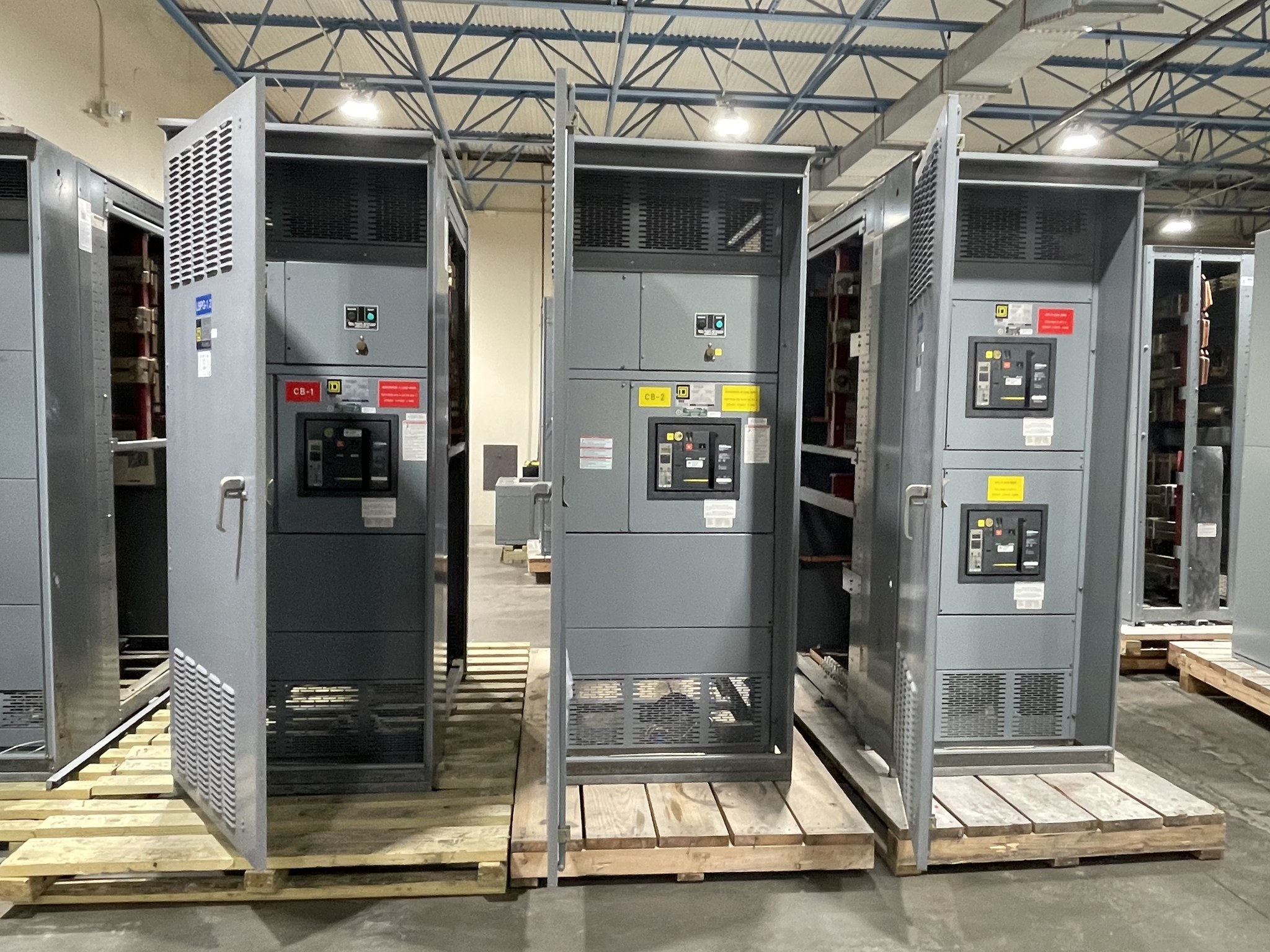
Describe the house and the switchgear as separate assets
Start with two inventories rather than one broad description. For the house, record approximate outside length, width, and height; door locations; roof or overhang features; and any attached stairs, platforms, HVAC units, or cable-entry structures. For the electrical equipment, list the identifiable sections, breakers, bus components, and control or protection equipment. Existing drawings, schedules, nameplates, and project records can help distinguish what belongs to each inventory.
Keep voltage and ampere information separate and tie each figure to its documented source and component. A switchgear lineup’s voltage class does not establish its ampere rating, and a figure in a project title or seller’s description is not verified equipment data. For example, a hypothetical record might identify a house as 30 feet long while listing a lineup’s voltage and bus ampacity from separate labels. Mark uncertain details as unconfirmed instead of guessing.
Describe weathering without overstating what it means
Outdoor exposure can leave clues about the enclosure and its contents: faded coatings, rust at seams, damaged roof flashing, water staining, deteriorated door seals, or blocked drains. Note where an observation appears and whether it affects the house, a removable section, or both. A brief, factual description is more useful than calling the entire assembly either good or unusable based on exterior appearance alone.
Do not open equipment or approach potentially energized apparatus to investigate. Use only paperwork and information already visible from a safe location, such as exterior markings or an accessible nameplate. If records mention leaks, condensation, corrosion, or prior repairs, share that history and identify whether it is documented or reported. The buyer can review the information; no seller testing is required to make an inquiry.
Clarify what stays, what can be removed, and who owns it
A walk-in house may contain equipment intended to remain in place, gear designed to be withdrawn, or components added during later modifications. Explain the current configuration: what is inside, what is bolted or attached to the structure, and what is already separated. Do not assume that a removable breaker or section is included in a house sale; list included and excluded items explicitly so the scope can be reviewed clearly.
Confirm that the seller has authority to transfer each item, especially where the facility, a tenant, a contractor, or a lender may have an interest. Retain available asset records, drawings, and decommissioning documentation, and flag missing or conflicting paperwork. A hypothetical lineup might have breakers listed on an old schedule that no longer matches the visible arrangement; describe that mismatch rather than treating the schedule as a complete current inventory.
Plan the move around the enclosure, not just the lineup
Transport constraints often begin outside the electrical room. Useful site details include gate and driveway width, overhead obstructions, turning space, ground conditions, loading area, and any limits on vehicle access. Provide approximate house dimensions and note whether stairs, roof projections, or attached equipment change the clearance. Photos taken from safe, accessible positions can help explain the route without asking anyone to inspect inside electrical equipment.
The enclosure and the gear may require different handling plans. If the gear could be removed before the house moves, say whether that is established in project records or simply a possibility; do not dismantle anything to prepare an inquiry. The buyer handles crane work, rigging, disconnects, loading, freight, and hauling as appropriate, with qualified professionals performing electrical work where needed. Site review is essential, and no pickup plan should be assumed before details are assessed.
Send a focused package and discuss the offer before scheduling
A practical first message can include the site location in Illinois, ownership or authorization status, equipment and enclosure inventories, available ratings documentation, known condition history, and access constraints. Attach existing records and safe exterior photographs if available. Identify whether the house is still installed, whether shutdown or decommissioning is planned, and any project schedule considerations. The buyer reviews the information and may ask follow-up questions before discussing a specific offer.
The company buys used, surplus, and decommissioned electrical equipment, including switchgear and related equipment across voltage classes. Offers and the items covered are subject to review; there is no promise that every enclosure or component will be accepted. The buying terms are cash, payment upfront—not after pickup—with freight covered and no seller testing required. The company coordinates the handling and transport work so the seller does not have to dismantle, rig, or move the equipment.
Common questions
Should I provide separate dimensions for the walk-in house and the switchgear?
Yes. Give approximate exterior house dimensions and separately identify lineup or section dimensions if documented. Note protrusions, doors, stairs, and attached equipment, and label estimates clearly so neither measurement is mistaken for a verified specification.
Can I request an offer if the enclosure shows rust or signs of water exposure?
Yes. Describe visible conditions and share relevant existing records without opening enclosures or testing equipment. The buyer reviews condition details with the rest of the information; an inquiry does not guarantee acceptance or a particular offer.
Do I need to remove the switchgear or arrange transport before contacting the buyer?
No. Do not dismantle, rig, or move it to prepare an inquiry. Share the configuration and site-access details; handling, loading, freight, and hauling are coordinated as appropriate after review, with payment upfront rather than after pickup.