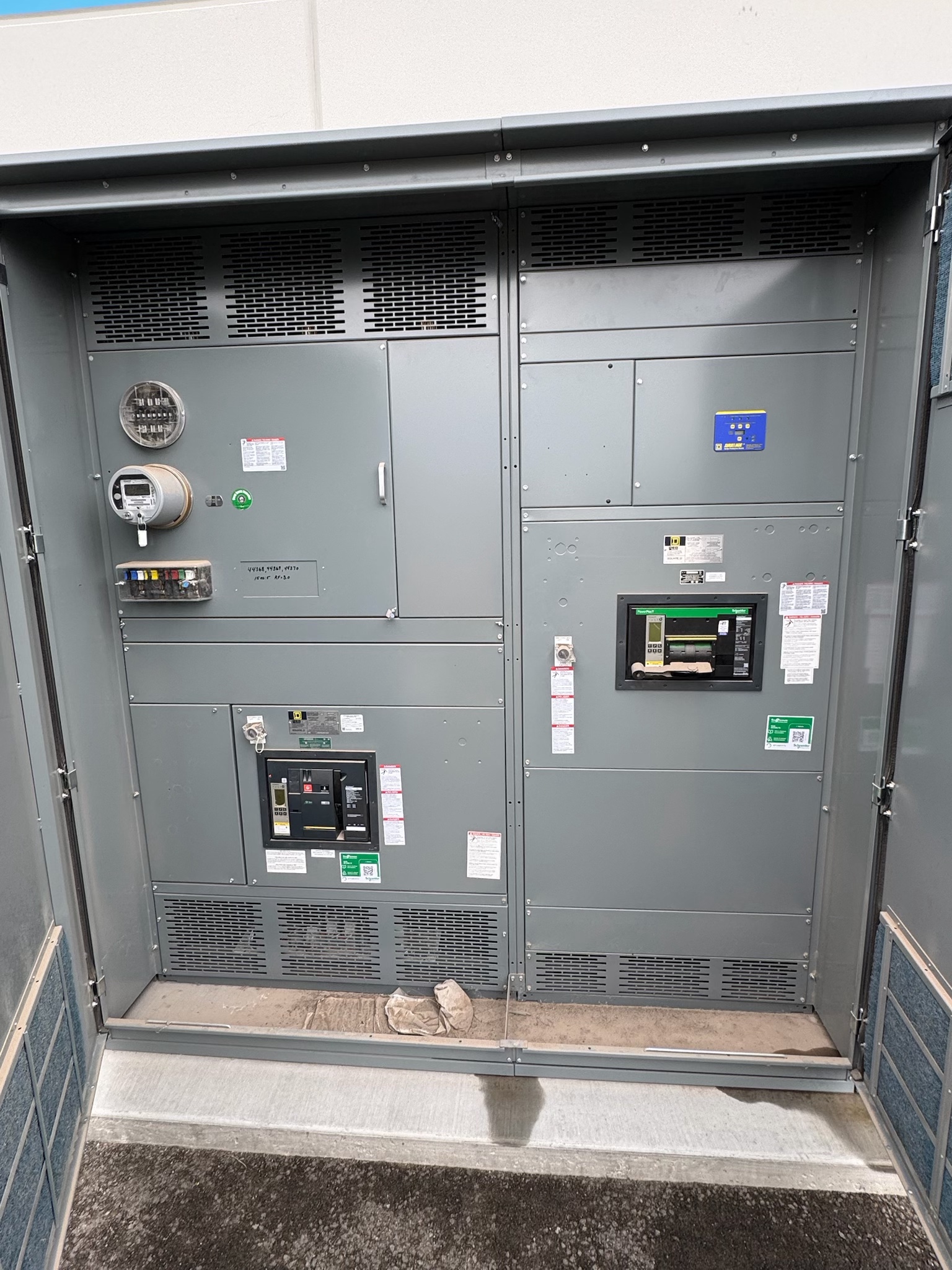
Describe the lineup as an assembly, not a contactor lot
Start with the MCC’s lineup manufacturer and any series or product-family identification shown on existing documentation or exterior labels. Record the number of sections, approximate overall arrangement, and which buckets or spaces are populated, spare, or blank if that information is safely visible. Siemens identifies the SIMOVAC contactors; that does not establish who manufactured the MCC lineup or verify its ratings.
Keep the scope clear when contacting a buyer: you are asking about the complete MCC lineup containing the contactors, not offering SIMOVAC units by themselves. For example, a hypothetical lineup might have several sections, each with a mix of motor-control buckets and unused spaces. Describe that configuration as observed, and flag uncertain details rather than filling gaps with assumptions.
Transcribe SIMOVAC model and electrical information carefully
Use the exact SIMOVAC model designation visible on an existing record or safely accessible nameplate, preserving letters, numbers, suffixes, and series markings. If different contactor models appear in one lineup, list them by section or bucket where you can do so without opening an enclosure. A partial or unclear marking is worth reporting as partial or unclear, not reconstructing from memory.
Document voltage and fuse information as separate facts, and note which label or record each came from. Voltage is not ampere rating, and neither should be inferred from the other. A fuse marking may relate to a particular bucket or circuit rather than describe the lineup as a whole; record its stated context, or say that context is unknown. A seller’s title or informal description is not verified equipment-rating evidence.
Give a useful condition and configuration snapshot
A concise condition description helps a buyer understand what is present without asking you to investigate inside the MCC. From safely accessible exterior views, note obvious missing doors, visible shipping damage, corrosion, or incomplete sections. Existing inspection records, service documents, and photographs can add context, but no seller testing is required. Do not open equipment, operate it, touch conductors, take measurements, or approach apparatus that may be energized.
Explain whether the lineup is still installed, has been disconnected, or is already staged, only to the extent that you know. Do not imply that electrical work is complete or that the assembly is de-energized unless reliable documentation establishes that fact. A hypothetical seller with an old service report and an uncertain present status can share the report and clearly label the current status as unconfirmed.
Include the parts that define the sale’s scope
Tell the buyer what is included with the MCC: sections, installed buckets, doors, barriers, bus components, and related distribution-assembly parts when their presence is known. Identify removed or separately stored items and any gaps in the lineup. This avoids presenting a partial lineup as complete and gives both sides a basis to discuss what the proposed purchase would cover.
SIMOVAC contactors are relevant here as components within the MCC, not as a separate offer for standalone contactors. If fuses or other auxiliary components are present, describe them as part of the assembly and make clear that their inclusion is subject to discussion and review. Do not assume that a contactor, fuse, or bucket is compatible with another lineup merely because markings or dimensions appear similar.
Coordinate review, access, and removal with the buyer
Share the lineup description, available paperwork, safely obtained exterior photos, and Illinois site location through the buyer’s communication process. The buyer reviews the specific equipment and details before discussing an offer; not every assembly is automatically accepted. If the lineup is at a shut-down power plant or decommissioned data center, mention known access rules, loading constraints, and any site contact or scheduling requirements.
For equipment the buyer agrees to purchase, the company’s terms include a cash offer, payment upfront, and freight covered. The seller does not need to test, dismantle, rig, load, or haul the lineup: the buyer handles crane work, rigging, disconnects, loading, freight, and hauling, with qualified professionals performing electrical work as appropriate. The seller’s role is to provide accurate information and coordinate site access; payment is upfront, not after pickup.
Common questions
Should I list each SIMOVAC contactor as a separate item?
Describe each identifiable model within its MCC section or bucket, but present the opportunity as the complete lineup. The buyer reviews the assembled equipment and decides what components are included in any specific offer.
What if the lineup voltage and fuse information are incomplete?
Share only what existing documents or safely accessible labels actually show, identifying the source and uncertainty. Do not infer lineup voltage from a fuse marking, contactor model, ampere rating, or sales description.
Do I need to disconnect or prepare the MCC before pickup?
Do not perform electrical work, dismantle, rig, or move the equipment. For a purchased lineup, the buyer handles disconnects and removal logistics with qualified professionals as appropriate; coordinate access and site requirements.