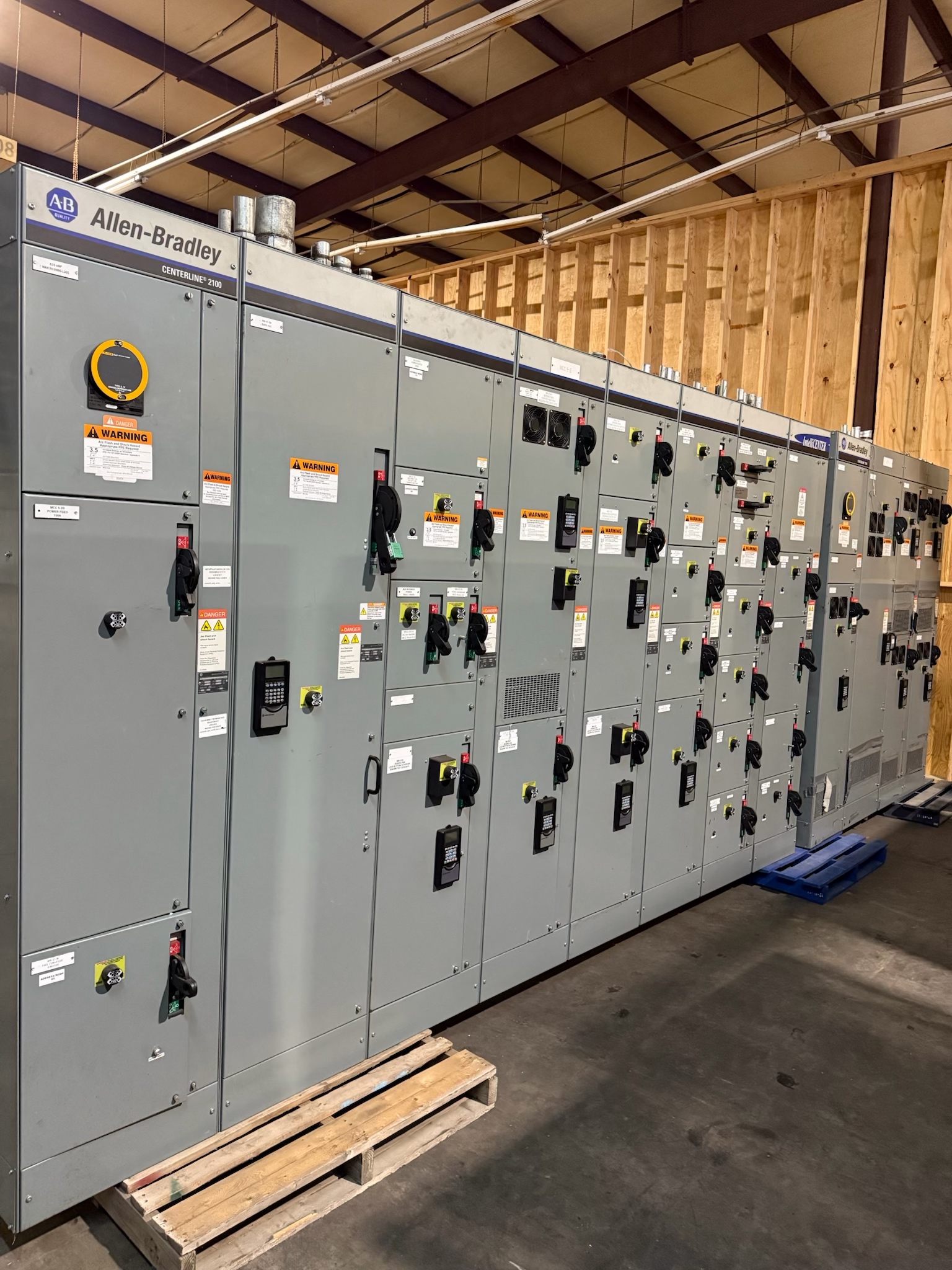
Describe the gaps section by section
Start with the lineup’s arrangement, then identify what is absent at each position. A simple left-to-right list might note section labels, breaker positions, and whether each opening has its cover or door. Distinguish a missing breaker from an empty space designed for one; those conditions are not interchangeable. If you do not know a component’s purpose, say so rather than guessing from its appearance.
For example, a hypothetical lineup might have three sections, with a breaker removed from the middle section, a cover missing from the right-hand section, and a control device unaccounted for. That description is more useful than calling the whole lineup “mostly complete.” Existing schedules, drawings, parts lists, or photographs of safely accessible exterior areas can help clarify the configuration without anyone opening equipment or handling components.
Separate the lineup’s ratings from its identity
Provide manufacturer and model information, section identifiers, and any catalog or serial numbers that are already documented or safely visible. Include the voltage and ampere ratings only when supported by a nameplate, drawings, or other reliable records. Voltage and ampere ratings describe different characteristics; one cannot be inferred from the other, and a page title or seller’s shorthand is not verification.
If records describe the lineup as a particular rating but labels are unclear, report both facts with their sources: for instance, “the old schedule lists this value; the exterior nameplate is not legible from the available view.” A buyer can review those details rather than treating an assumed rating as confirmed. Do not open a compartment, approach energized apparatus, or operate or test equipment to fill gaps in the information.
Explain condition without implying completeness
Report known damage and uncertainty separately. Note visible exterior issues such as bent doors, corrosion, impact marks, or missing hardware, and say whether the observation applies to one section or the entire lineup. If a breaker or control component was removed, describe it as missing unless you have documentation establishing its status. Avoid describing the assembly as operational or tested unless that is documented and relevant; no seller testing is required for an inquiry.
Condition also includes what is not known. A control circuit may be undocumented, or a removed breaker may be stored elsewhere without a confirmed match to the lineup. State that plainly and list any loose parts as a separate group, with labels or identifiers where available. This helps a buyer consider whether the offered sections and parts have value independently, without assuming that every missing item can be supplied or that the assembly is suitable for a particular installation.
Clarify what is included and how it is arranged
Make an inclusion list that distinguishes connected sections from loose equipment, removed breakers, spare covers, control components, and paperwork. If a loose part is believed to belong to a particular section, identify the basis for that match, such as an existing tag or parts list. If the match is uncertain, mark it as uncertain. Do not combine unrelated surplus parts into the lineup description merely because they are stored nearby.
Packaging and configuration matter as well. Explain whether the sections remain arranged as a lineup, are already separated, or are stored as individual pieces, and identify where loose items are located. Do not dismantle or repackage equipment for an inquiry. A hypothetical example: two sections still joined, one section already removed, and a labeled breaker stored on a separate pallet. That is a clearer description than saying “complete except for a few pieces.”
Coordinate review, access, and removal responsibilities
An Illinois buyer of used, surplus, and decommissioned electrical equipment can review switchgear information and discuss a specific offer based on the equipment, its condition, and what is included. Send the inventory and safely gathered documentation for review, then clarify questions about ownership, site access, location, and any site rules that may affect removal. A discussion or preliminary description is not a promise to accept every item; the specific offer and details remain subject to review.
If a transaction is agreed, payment is upfront, not after pickup, and freight is covered. The buyer handles the required disconnects, crane and rigging coordination, loading, freight, and hauling, so the seller is not expected to dismantle, rig, test, or move the lineup. Qualified professionals perform electrical work as appropriate. Do not assume electrical work is complete or that equipment is de-energized; access and removal arrangements must account for the actual site conditions.
Common questions
Should I list a missing breaker as part of the lineup or as a separate item?
Describe the empty breaker position in the lineup inventory, then list any loose breaker separately. Include visible identifiers or documentation linking it to that position; if the match is uncertain, say so rather than treating it as confirmed.
What if the lineup’s rating is unclear because a label is unreadable?
Share any safely accessible exterior information and existing drawings or schedules, identifying each source. Report unreadable or conflicting details as unknown or unverified. Do not open equipment, measure, operate, or test it to establish a rating.
Do I have to remove covers or move sections before requesting an offer?
No. Provide the available inventory, records, and safely accessible exterior details as they are. If an offer is agreed, the buyer coordinates appropriate disconnects, rigging, loading, and freight; payment is upfront, not after pickup.