Separate “not verified” from “known defective”
A unit that has not been operated or tested recently is not automatically a working unit, but it is not automatically defective either. Describe what is actually known: perhaps the equipment was in service before a facility closure, its operating history is incomplete, and no current functional test is available. Avoid converting “not tested” into “tested and passed,” or treating a lack of records as proof of failure.
Disclose observations and reports that point to a specific problem, including known damage, missing components, alarms, repair history, or a prior failure. Distinguish firsthand observations from information supplied by someone else. For example, if a hypothetical site contact recalls a breaker tripping before shutdown but has no report, say that the event was reported and documentation is unavailable; do not label the breaker definitively failed or serviceable.
Build an identification record without assuming ratings
Gather the information already available from asset lists, maintenance files, purchase records, drawings, and safely accessible exterior labels. Useful identifiers can include manufacturer, product family, catalog or model number, serial number, equipment type, section count, and visible configuration. Do not open an enclosure or operate equipment to find details. A clear photo of an existing, safely accessible nameplate may help, but do not approach energized apparatus to obtain one.
Keep voltage and ampere ratings separate. An ampere figure does not establish voltage, and a voltage figure does not establish current capacity. A listing title, handwritten description, or seller estimate is not a verified rating; share its source and mark it as unconfirmed if documentation is missing. A hypothetical inventory might say “switchboard, model number recorded, voltage not confirmed, 1,200 A shown on an asset sheet,” rather than presenting that sheet as a complete rating record.
Share test records, including their limits
If test reports exist, provide the documents as they are, with dates, equipment identifiers, scope, and any stated limitations. A report for one breaker or one section does not necessarily describe every component in an assembly. Likewise, an older result records a particular test at a particular time; it does not prove present operating condition. If no records can be found, say so plainly rather than arranging a test solely to make an inquiry possible.
Where records refer to a repaired fault, note the repair and include any follow-up paperwork that is available. Do not summarize a partial test as a blanket pass, and do not infer that equipment was de-energized or that electrical work is complete. The buyer can review the supplied information alongside the equipment description. Testing is not required from the seller as a condition of making an inquiry, but the absence or limits of records can matter to the review.
Describe what is included and how it sits at the site
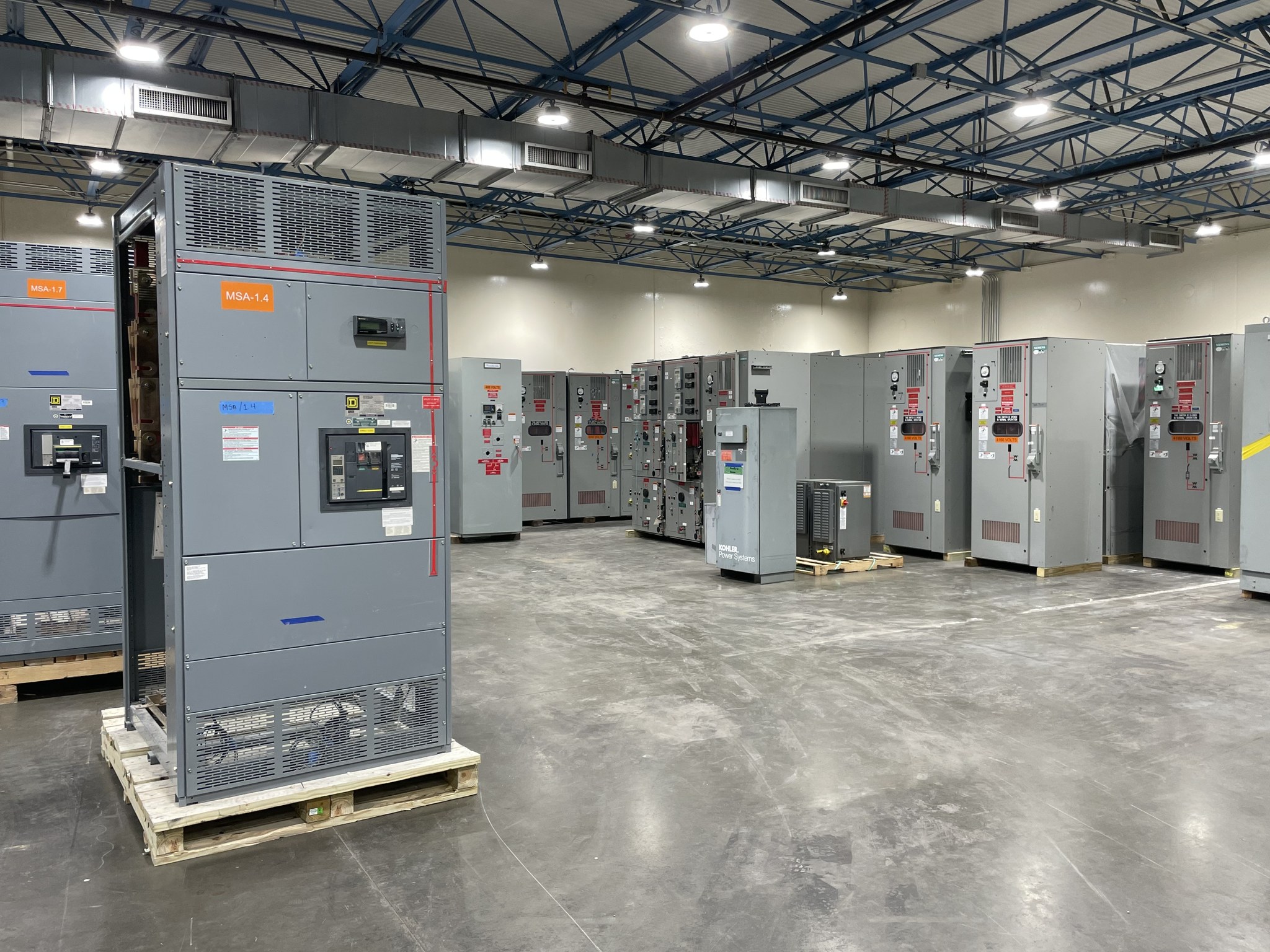
Identify whether the offer discussion concerns a complete assembly or selected components, and list known accessories, spare breakers, controls, or removed parts separately. For a hypothetical decommissioned data center, a seller might describe several switchboard sections and identify a control component known to be absent, while noting that the remaining contents have not been inventoried. Such detail helps prevent a partial configuration from being mistaken for a complete unit.
Explain what is known about location and access: indoor or outdoor setting, floor or level, doorway or dock constraints, loading-area rules, and any known crane or rigging considerations. These are planning details, not a request for you to disconnect, dismantle, rig, or move equipment. Qualified professionals handle electrical work as appropriate; the buyer coordinates removal planning with the seller and site contacts. Do not approach or touch equipment to gather access information—use existing site documentation and safe observations.
Understand review, offers, and removal coordination
An Illinois buyer of used, surplus, and decommissioned electrical equipment may review switchgear, switchboards, MCCs, panelboards, busway, transfer switches, breakers, and unit substations across voltage classes. Share the equipment identity, condition distinctions, available records, ownership information, and site constraints so the buyer can evaluate the specific opportunity. An inquiry or description is not an advance guarantee that every item will receive an offer; terms and scope remain subject to review.
For equipment accepted under an agreed transaction, the stated commercial terms are a cash offer, payment upfront, no seller testing requirement, and freight covered. Payment is made upfront, not after pickup. The buyer handles crane, rigging, disconnects, loading, freight, and hauling, with qualified professionals performing electrical work as appropriate. Discuss the proposed scope, access, schedule, and any exclusions before agreement; the seller should not undertake removal work to prepare the equipment for sale.
Common questions
Can I offer equipment when its operating history and present condition are both unknown?
Yes, you can submit it for review, but describe both uncertainties explicitly and provide identifiers and records you have. Review is not a promise of an offer or acceptance as-is; the specific equipment and terms are subject to evaluation.
Should I arrange testing to prove a unit works before contacting the buyer?
No seller testing is required under the stated buying terms. Share available reports and their scope or explain that none are available. Do not operate equipment or open enclosures to investigate; qualified professionals handle electrical work as appropriate.
What should I report if records show an old fault but no current test?
Identify the reported fault, its source and date if known, any documented repair, and the lack of current test results. Separate confirmed paperwork from recollection, and avoid describing the unit as either failed or proven operational without support.