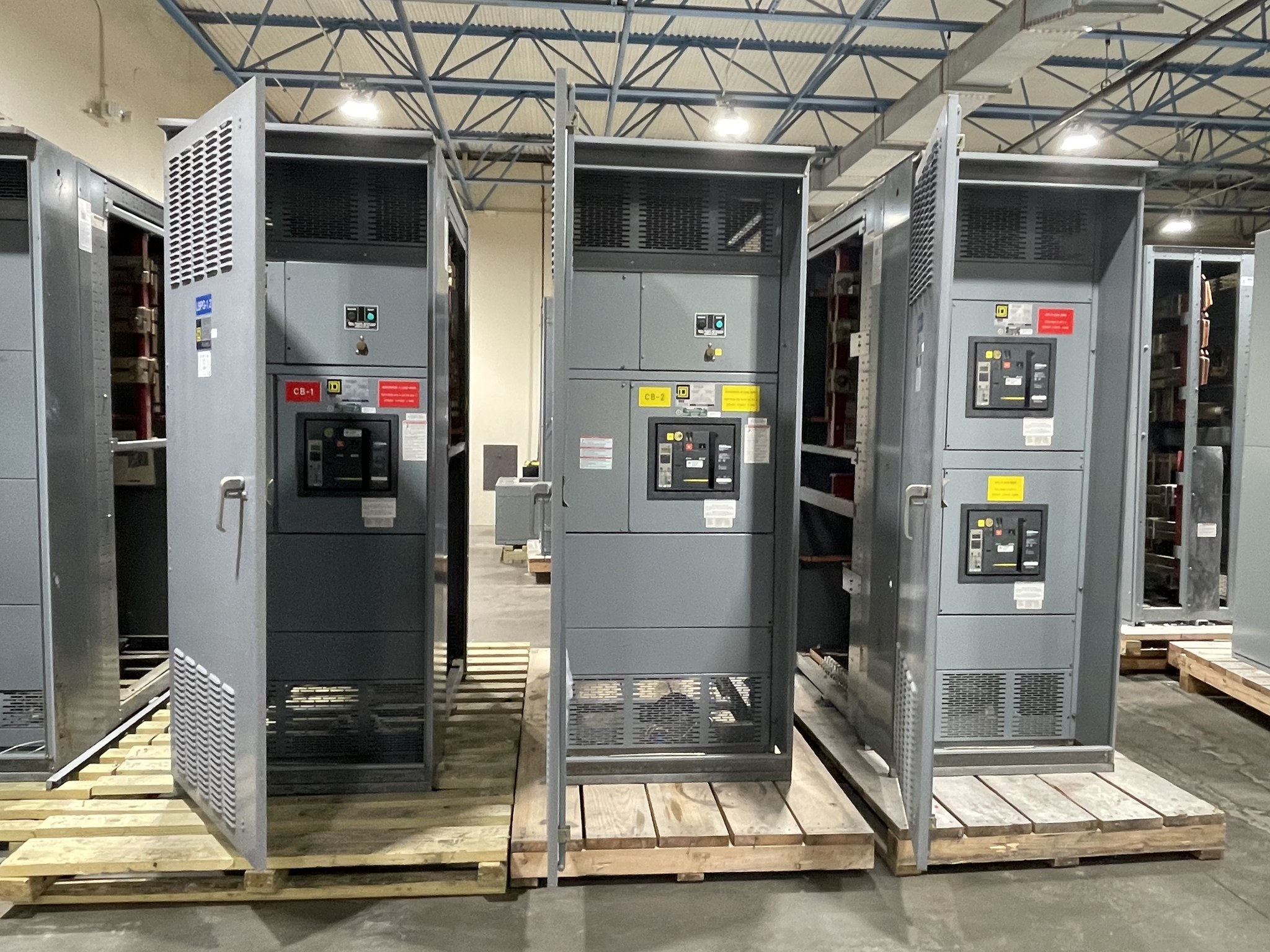
Map the sources before identifying the switch
Start with the one-line diagram, equipment schedule, or other existing project paperwork, if available. Record whether the emergency transfer switch selects between utility and generator power, two generator sources, or another documented pair. Note whether the installation includes bypass-isolation equipment or multiple transfer switches, but do not treat a nearby cabinet as part of the offered assembly without confirmation. The documented source arrangement helps distinguish equipment that otherwise appears alike.
A hypothetical example: a data hall may have one switch for a utility-to-generator path and another serving a separate load group. A seller’s shorthand such as “backup ATS” does not establish the switch’s actual source configuration, served loads, or rating. Share the drawing reference or a clear description of the arrangement, and flag any mismatch between paperwork and the equipment’s existing exterior identification for review rather than guessing.
Record poles, voltage, and amperes separately
Capture the manufacturer, model or catalog number, serial number when safely visible, and any existing nameplate information accessible from outside the enclosure. Record pole count as documented, along with voltage and ampere ratings as separate fields. Pole count describes the switched conductors in the applicable configuration; it does not establish voltage, and an ampere value does not establish either voltage or source arrangement.
Do not infer a rating from a page title, seller description, frame appearance, or a partial label. If documentation is incomplete, say exactly what is known and identify what remains unverified. Existing drawings, schedules, and safely accessible exterior markings are useful starting points. No one should open an enclosure, operate the switch, touch conductors, test or measure equipment, or approach energized apparatus to fill in missing information.
Explain transition behavior with documentation
Open-transition equipment breaks one source connection before making the other; closed-transition equipment briefly overlaps sources during transfer when the system design and conditions permit. The distinction matters to the application and should be supported by the switch documentation or project records, not assumed from a control-panel label or a general description. Include whether the paperwork identifies open, closed, delayed, or another transition sequence, and note if the records are unavailable or inconsistent.
For a hypothetical listing, “closed transition” written on an old asset spreadsheet is a lead, not verification, if the available switch documents describe a different sequence. Provide the relevant document title or excerpt and let the details be reviewed. Do not operate the equipment to demonstrate behavior. A buyer can discuss the item based on available records and disclosed uncertainty, with any specific offer subject to review.
Coordinate source isolation and removal responsibly
Transfer-switch removal is not a seller-side dismantling task. Both sources associated with the equipment must be isolated by qualified personnel as appropriate to the installation before removal work proceeds; one source being unavailable does not establish that the other is safe. Do not assume the switch is de-energized or that electrical work is complete. Qualified professionals handle electrical work, disconnects, and the work sequence at the site.
Share the site’s access rules, operating constraints, equipment location, and any known restrictions on crane or rigging access. The Illinois buyer handles coordination for disconnects, rigging, loading, freight, and hauling as applicable, with the work planned around site requirements. The seller should not dismantle, rig, load, or move the switch. The scope and arrangements are discussed before a specific transaction is finalized.
Describe condition, ownership, and the transaction clearly
Give a practical account of what is included: the transfer-switch assembly, controls or accessories only where identifiable, and any associated enclosure or bypass section if it is part of the offered equipment. Note known history such as storage, prior service, visible exterior damage, or missing documentation without presenting an unverified condition claim as fact. Photographs should be limited to safely accessible exterior views; paperwork can clarify configuration without anyone opening the equipment.
The company buys used, surplus, and decommissioned electrical equipment in Illinois, including emergency transfer switches, across voltage classes. It offers cash, pays upfront rather than after pickup, requires no seller testing, and covers freight. A seller can begin by sharing location, ownership and availability information, equipment identifiers, existing records, and removal constraints. Details are reviewed before an offer; there is no promise that every item will be accepted. The objective is to leave the seller with coordination—not dismantling or transport—to manage.
Common questions
How should I report an open- or closed-transition switch if records conflict?
Share the conflicting document references and describe which information comes from each record. Mark transition behavior unverified; do not operate the switch to settle the discrepancy. The buyer can review the available details before discussing an offer.
Does one isolated source make a data center transfer switch ready for removal?
Not necessarily. Both associated sources require isolation by qualified personnel as appropriate. Do not assume the switch is de-energized or undertake electrical work yourself; removal planning should account for the installation and site conditions.
What information helps distinguish two similar emergency transfer switches?
Useful details include documented source configuration, pole count, separately recorded voltage and ampere ratings, manufacturer and model identifiers, transition documentation, and whether bypass or other sections are included. Note unknowns rather than inferring them.