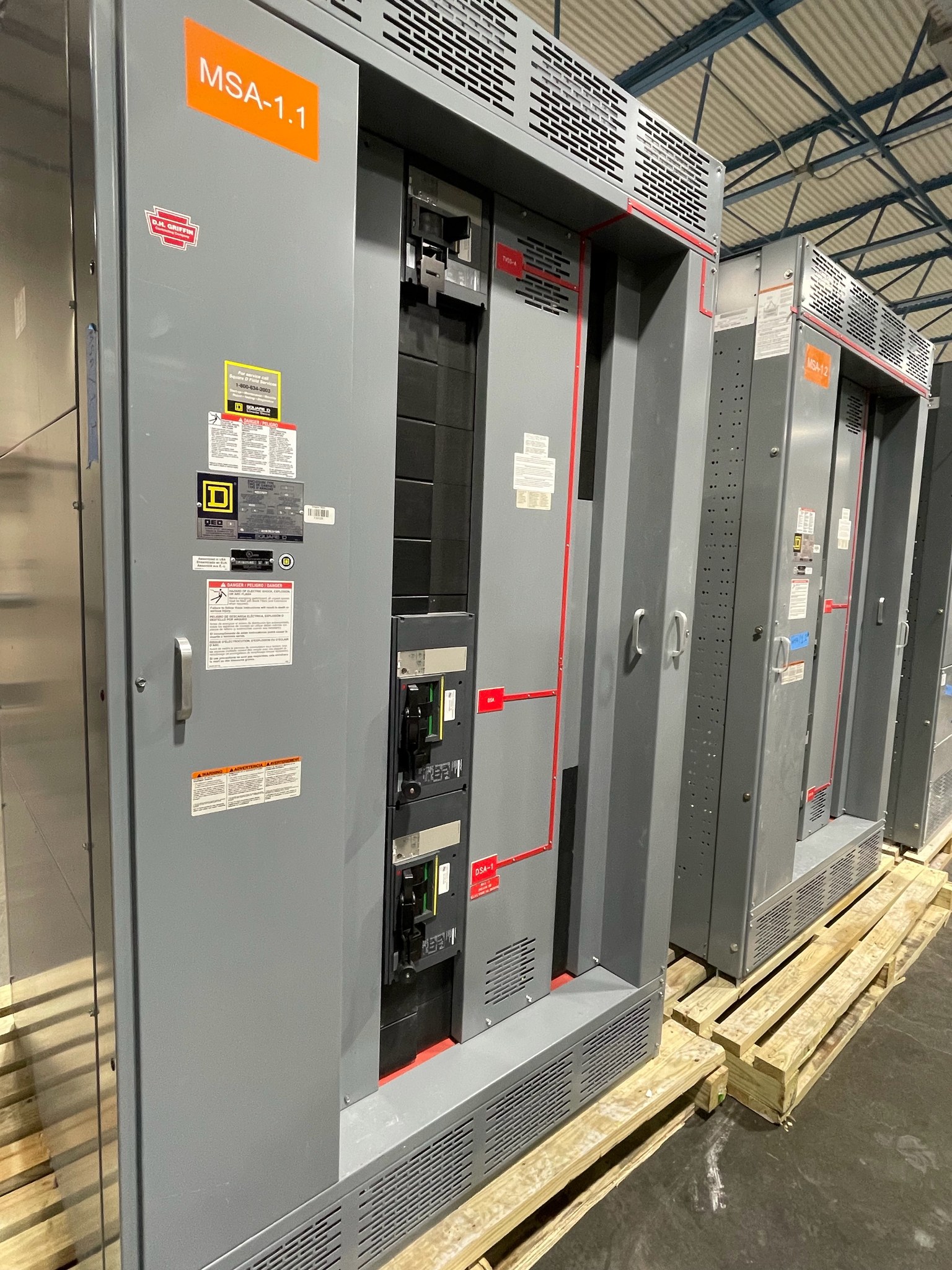
Describe the section as part of a lineup, not automatically as a standalone breaker
Start with the section’s former position and role: for example, a generator source position in a multi-source paralleling lineup, rather than simply “generator breaker.” Note the lineup manufacturer and model information if shown, the section identifier, and any adjacent equipment that was removed with it. A breaker section may rely on shared bus, metering, control power, or interlocking arrangements, so its appearance alone does not establish independent operating capability.
Keep the distinction between the breaker and its enclosure or section. A record might say that a particular drawout breaker is installed in a particular generator section, while noting that controls or other components are absent, included separately, or not yet inventoried. If the assembly was separated from a lineup, say so. Do not describe a section as operational or self-contained unless that status is documented; no functional test is needed to begin a buyer review.
Capture model and rating information without guessing
Use existing drawings, equipment schedules, nameplates visible from a safely accessible exterior, and decommissioning records to identify the breaker and section. Useful details can include manufacturer, breaker family or catalog number, serial number if recorded, trip-unit type, frame information, and the section’s own designation. Photos of existing labels and the overall assembly can help distinguish a breaker model from a lineup model; a title in an inventory sheet is a description, not verified rating data.
Record voltage and amperage as separate fields only when supported by documentation. A breaker’s ampere rating does not establish its voltage rating, and neither can be inferred from the phrase “generator breaker.” If a label is obscured or a schedule conflicts with a drawing, mark the detail as unknown or unresolved rather than filling it in by assumption. A hypothetical inventory could identify a breaker family and lineup position while explicitly leaving voltage unconfirmed pending records review.
Map the control interface and what stayed with the section
For a paralleling application, describe control-related items as observed or documented, not as proof the section can synchronize or run independently. Note whether a local control panel, protective relay, trip unit, meters, terminal blocks, wiring harnesses, or auxiliary devices appear to remain with the section. Identify any separate control cabinets, generator controls, or lineup-level components that were retained elsewhere, if that information is available.
A simple component list can prevent confusion: breaker and cradle, section enclosure, installed devices, loose accessories, and known exclusions. Mention whether wiring diagrams, elementary schematics, interconnection drawings, or settings records exist, and whether they correspond to the equipment being offered. For instance, a hypothetical seller might report that a relay remains mounted but that the lineup master controls are not included. That is more useful than calling the section “complete” without defining the term.
Report condition and configuration from records and safe observations
Describe known history that affects identification or review: whether the section was removed during a data center shutdown, whether it was stored indoors or outdoors, and whether any parts were documented as missing or damaged. Existing maintenance reports, inspection notes, and removal inventories can be shared if available. These records provide context, but the buyer does not require the seller to arrange testing or certify the equipment’s condition.
Limit observations to what can be seen safely without opening enclosures, operating the breaker, touching conductors, taking measurements, or approaching energized apparatus. Do not assume the equipment is de-energized or that electrical work is complete. Qualified professionals should handle electrical work as appropriate. A description such as “exterior has visible impact damage” or “condition not assessed” is preferable to a conclusion about internal condition unsupported by records.
Coordinate access and removal details before the offer is finalized
Share the site location in Illinois, the section’s approximate dimensions or weight if documented, how it is currently positioned, and any known access constraints such as loading-dock limits, restricted hours, or crane requirements. Explain whether the section remains in the lineup or has already been separated by the decommissioning team. This is coordination information, not a request for your staff to dismantle, rig, load, or haul the equipment.
The buyer purchases used, surplus, and decommissioned electrical equipment, including switchgear and breakers, across voltage classes. It reviews the equipment details before making a specific offer; no offer or acceptance should be assumed before that review. The company’s terms are cash offers, payment upfront, no seller testing required, and freight covered. It handles disconnects, crane and rigging, loading, freight, and hauling, so the seller’s role is to provide information and coordinate access—not perform removal.
Common questions
What should I send if the breaker section’s control relationship to the lineup is unclear?
Send the section identifier, available drawings or inventories, and photos of safely accessible exterior labels. List which controls or accessories are known to remain or be separate, and mark uncertain items as unknown rather than assuming standalone capability.
Can I submit a section when its voltage rating is missing from the inventory?
Yes. Provide documented model and rating details that are available, and identify the voltage as unconfirmed. Do not derive voltage from amperage, a page title, or the generator application; the buyer can review the information before discussing a specific offer.
Who handles disconnecting and removing the section from the data center?
The buyer coordinates qualified professionals as appropriate and handles disconnects, crane and rigging, loading, freight, and hauling. Do not dismantle or move the section for the sale. Discuss site access and the existing configuration during the review.