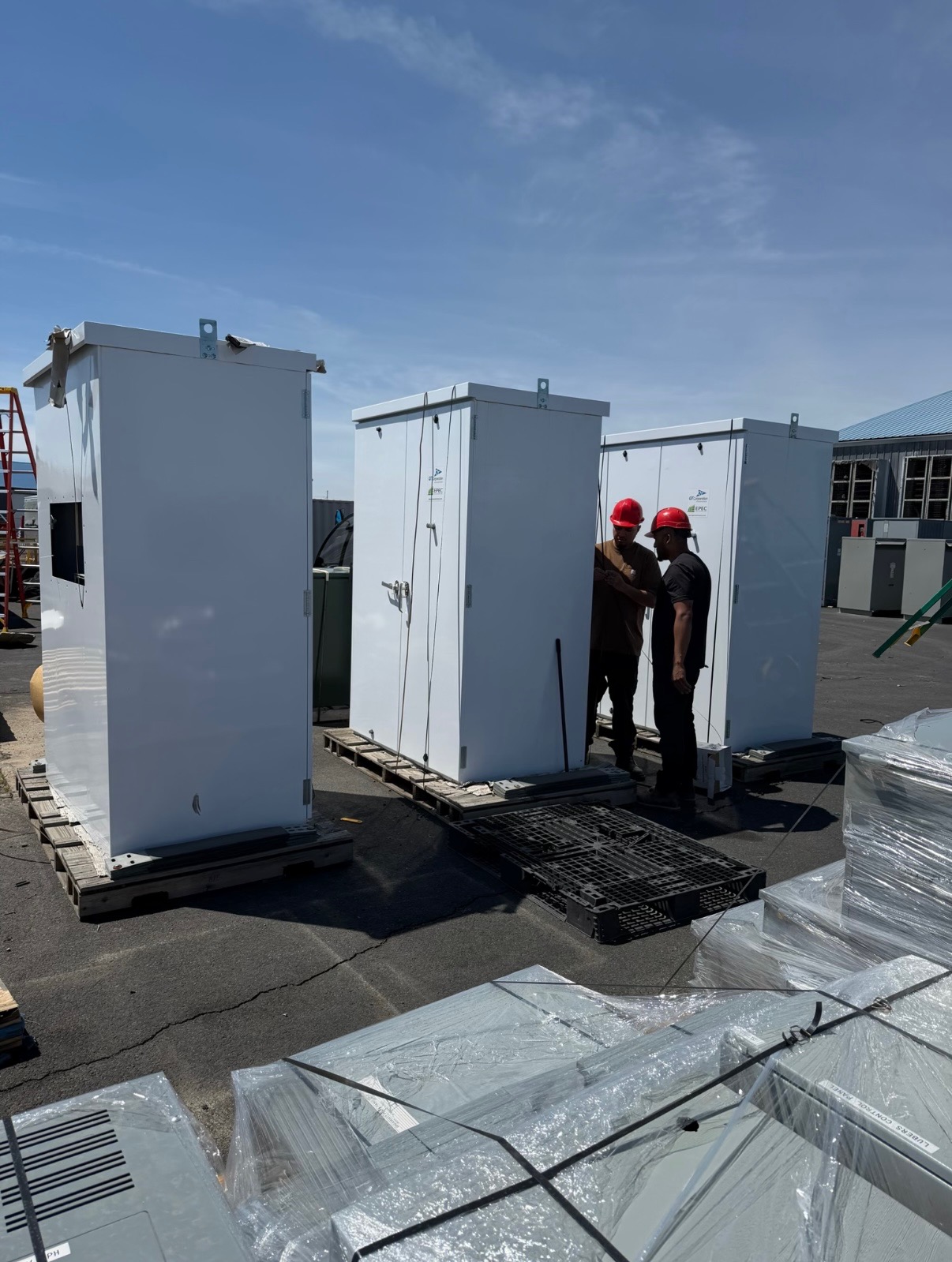
Read the auxiliary distribution picture before describing the lineup
Auxiliary switchboards distribute electrical power to equipment that supports a generating station rather than exporting its main output. Depending on the plant and board, outgoing feeders may serve items such as service-water pumps, ventilation fans, compressors, lighting panels, or other balance-of-plant loads. These examples are possibilities, not a basis for identifying a particular board: use the equipment nameplates, drawings, and schedules available for the actual installation.
A feeder schedule can connect circuit identifiers with load descriptions and breaker positions, making it useful for understanding what the board served. Keep the schedule’s wording intact when sharing it, and distinguish recorded information from your interpretation. For example, a line marked “auxiliary pump” does not by itself establish the pump’s operating condition, the breaker’s present configuration, or whether the circuit is included in the equipment being offered.
Separate main and branch breaker details from board voltage
For a useful inventory, record the board’s documented voltage separately from each available ampere rating. The main breaker rating and the ratings of branch breakers describe different parts of the lineup; neither can be inferred from the other. A schedule, nameplate, drawing, or existing asset record may provide these details. If sources disagree, note the discrepancy rather than choosing a value or treating a page title as verified equipment data.
A hypothetical inventory might identify a switchboard by its lineup designation, list a documented system voltage, and then separately record a main breaker and several branch breaker ratings as shown on existing records. That structure is more useful than a description such as “high-amp plant board.” Share only information you can verify from safely accessible exterior markings or existing paperwork; do not open an enclosure or operate equipment to complete the list.
Define exactly which sections belong to the offered lot
Large plant lineups may include multiple sections, adjoining boards, or equipment installed nearby that is not part of the same asset. Identify the sections offered using lineup labels, section numbers, or drawing references where available. State whether the lot includes the main section, distribution sections, tie equipment, metering compartments, or associated breakers only when those items are actually included and documented.
A hypothetical boundary description could say that sections A through D of a named auxiliary board are offered, while a neighboring section E remains with the site. It could also flag a breaker or accessory whose inclusion is uncertain. Clear boundaries prevent a buyer from pricing equipment that the seller cannot convey and help the teardown team plan around retained equipment, adjacent systems, and the site’s disposition requirements.
Describe condition and ownership from records, not assumptions
Useful condition notes are factual and appropriately limited: for instance, whether the lineup is identified as installed, stored, incomplete, or previously removed, if that status is known. Mention visible exterior damage or missing parts only when safely observable without touching or approaching energized apparatus. No seller testing is required for an offer, and a description should not imply that equipment has been tested, is functional, or is de-energized unless reliable documentation supports that statement.
Before a sale, confirm that the person arranging it is authorized to transfer the equipment and clarify any ownership, project, or site restrictions that affect removal. Existing asset lists, purchase records, and teardown documents may help establish what is being sold. An Illinois equipment buyer reviews the submitted details before discussing a specific offer; an inventory is a starting point, not a promise that every component will be accepted.
Coordinate a plant teardown without assigning removal work to the seller
A practical first communication can include the board identification, available schedules and drawings, documented voltage and breaker ratings, lot boundaries, known condition, and photographs of safely accessible exterior information. Also describe the teardown setting and any known access constraints, such as limited loading space or coordination with other contractors. Do not approach energized equipment or ask anyone to open, measure, test, or operate it to prepare a submission.
The Illinois buyer purchases used, surplus, and decommissioned electrical equipment, including switchboards, and states that it covers freight and handles crane work, rigging, disconnects, loading, and hauling as appropriate to the agreed transaction. Qualified professionals perform electrical work when appropriate. The seller is not expected to dismantle, rig, test, or move the equipment. Offers are cash, payment is upfront rather than after pickup, and specific scope, access, and logistics are reviewed before arrangements are made.
Common questions
How should I report different main and branch breaker ratings?
List the main and branch ratings separately, identifying the source for each where possible. Keep ampere ratings distinct from documented voltage, and flag missing or conflicting records instead of estimating.
What if the auxiliary feeder schedule names loads but not all included sections?
Share the schedule as supporting information, then identify the offered lineup sections by labels or drawing references. Clearly mark uncertain boundaries and any adjacent sections or equipment excluded from the lot.
Do we need to disconnect or test the switchboard before requesting an offer?
No seller testing is required, and the seller is not expected to disconnect, dismantle, rig, or move it. Provide existing records and safe exterior information; qualified professionals handle electrical work as appropriate.