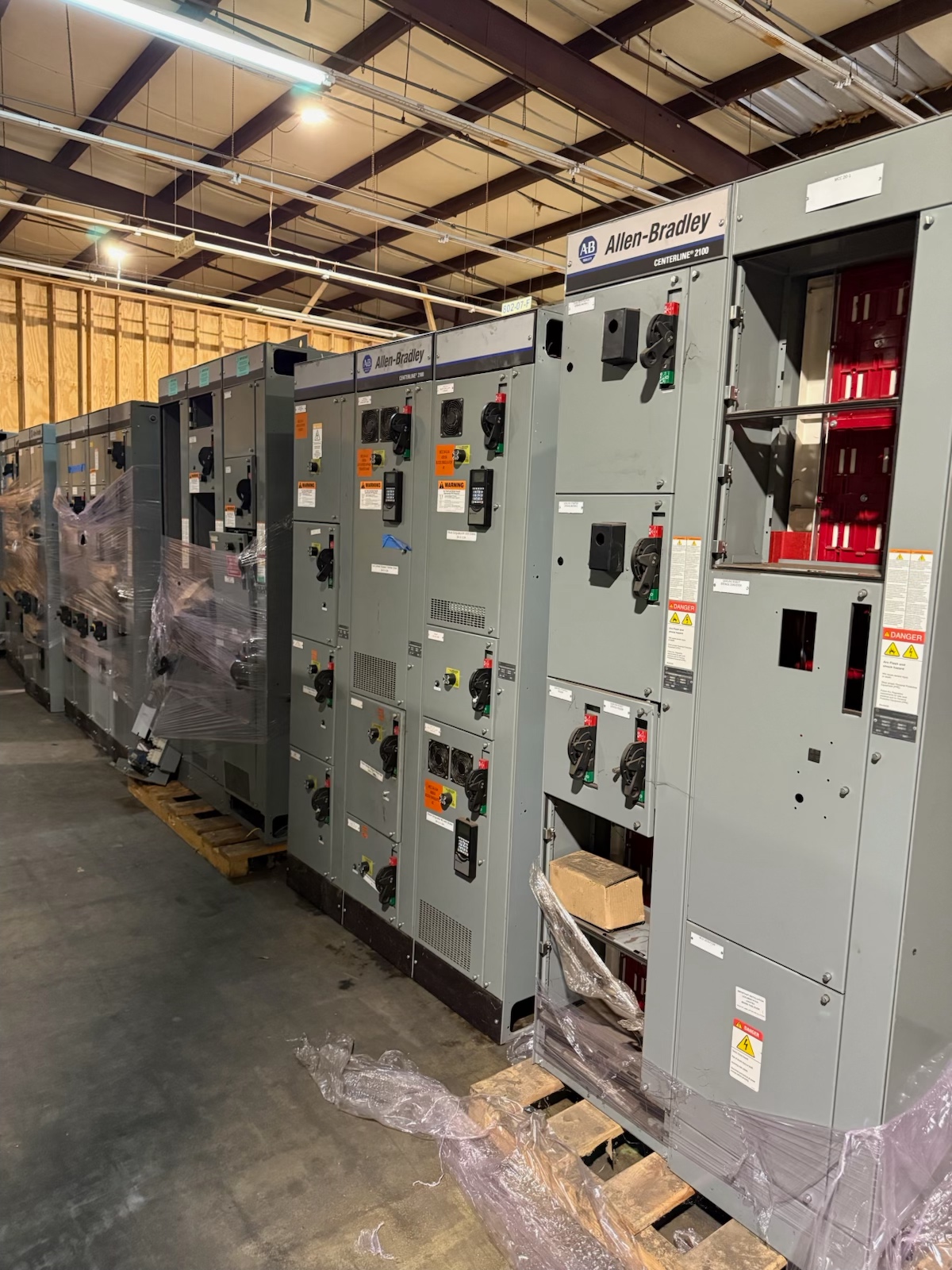
Use the station-service one-line to define the equipment boundary
Start with the most recent station-service one-line available, then compare it with earlier revisions if the plant’s configuration changed. Trace the buses and identify the switchgear lineup, incoming sources, bus ties, feeder sections, and labeled loads. This helps distinguish station-service distribution equipment from generator terminals, generator breakers, excitation equipment, and other apparatus that may be shown nearby but belong to a different package.
Treat drawing labels as clues, not proof of the physical contents or ratings. A hypothetical drawing might show a station-service bus fed by an auxiliary transformer while the teardown scope separately lists the transformer and its secondary switchgear. Note where the drawing’s boundary appears, flag missing or conflicting sheets, and record which sections are visibly present. Existing documents and safely accessible exterior information are enough for an initial inventory; do not open equipment or investigate energized apparatus.
Inventory the lineup and breakers as related, separate items
List the switchgear lineup by section or lineup designation, and record the number of sections, visible nameplate identifiers, manufacturer, model or type, and any documented voltage and ampere ratings. Keep voltage and ampere ratings in separate fields: voltage describes the electrical system rating, while amperes describe current capacity. Do not infer one from the other, or treat a page title, drawing label, or seller shorthand as a verified rating.
Make a separate breaker schedule where records permit. Include each breaker’s designation, documented type, rating information, and the lineup section or compartment it is associated with. Note whether a breaker is installed, recorded as a spare, or listed in maintenance paperwork but not confirmed in the teardown inventory. For example, a hypothetical schedule may identify a feeder breaker by circuit name while its rating is absent; preserve that distinction instead of filling the gap with an assumed value.
Let maintenance records describe condition without requiring seller testing
Gather existing inspection reports, maintenance logs, outage notes, relay or trip-unit records, and known repair history that relate to the station-service lineup and breakers. These documents can clarify what was serviced, what remained in operation, and whether a record refers to a particular section or device. Include dates and document titles when available, and identify records as historical rather than representing them as a current condition assessment.
No seller testing is required to present the equipment for review. Do not operate breakers, test devices, measure conductors, or open enclosures to answer inventory questions. If records identify a defect, missing component, or unresolved issue, disclose it plainly; if condition is unknown, say so. Qualified professionals handle electrical work as appropriate during a project. The buyer reviews the information and may ask follow-up questions before making a specific offer.
Describe what stays with the switchgear and how it is packaged
Clarify whether the available scope includes only the switchgear and breakers or also items such as protective relays, control-power components, metering, and documented spare parts. Use the one-line and maintenance records to connect those items to the station-service lineup, but avoid treating every adjacent transformer, cable, or control panel as included. A simple section-by-section list can show what is confirmed, excluded, or still uncertain.
Record visible configuration details that affect how the equipment is understood and handled: lineup arrangement, section identifiers, apparent shipping splits if documented, and whether breakers are shown or listed as installed. Photographs may help when they can be taken safely from accessible exterior areas. Do not remove covers, detach components, or prepare the equipment for transport yourself. A hypothetical inventory could mark three identified sections as present and one listed spare breaker as unconfirmed, leaving the buyer to review that distinction.
Coordinate scope review and teardown logistics before removal
Send the inventory with the relevant one-line sheets and maintenance records, noting the plant location in Illinois, ownership or authority to sell, project contacts, and any known schedule or site-access constraints. Explain whether the lineup is part of a wider shutdown and identify who controls site entry and work coordination. The buyer reviews the specific equipment and details; a description alone does not guarantee that every item will be accepted or establish an offer.
The Illinois buyer purchases used, surplus, and decommissioned electrical equipment, including switchgear and breakers across voltage classes. For an agreed purchase, payment is upfront, before pickup, and freight is covered; the seller is not required to test, dismantle, rig, load, or haul the equipment. The buyer handles crane, rigging, disconnects, loading, freight, and hauling, with qualified professionals performing electrical work as appropriate. Confirm scope, access, and project coordination directly before removal so the agreed equipment and responsibilities are clear.
Common questions
How can I tell station-service switchgear apart from generator equipment in a teardown inventory?
Use the station-service one-line to trace auxiliary buses, incoming sources, and feeder sections, then compare those labels with records and visible identifiers. Keep generator-side equipment separate unless the documented sale scope specifically includes it.
Should I test or open the breakers to provide condition information?
No. Seller testing is not required, and you should not open enclosures, operate breakers, or approach energized apparatus. Share existing maintenance records and safely accessible exterior details; identify anything unknown as unknown.
Who handles removal and when is payment made?
For an agreed purchase, payment is upfront before pickup, and freight is covered. The buyer handles disconnects, crane and rigging, loading, and hauling; confirm the specific scope and site access during review.