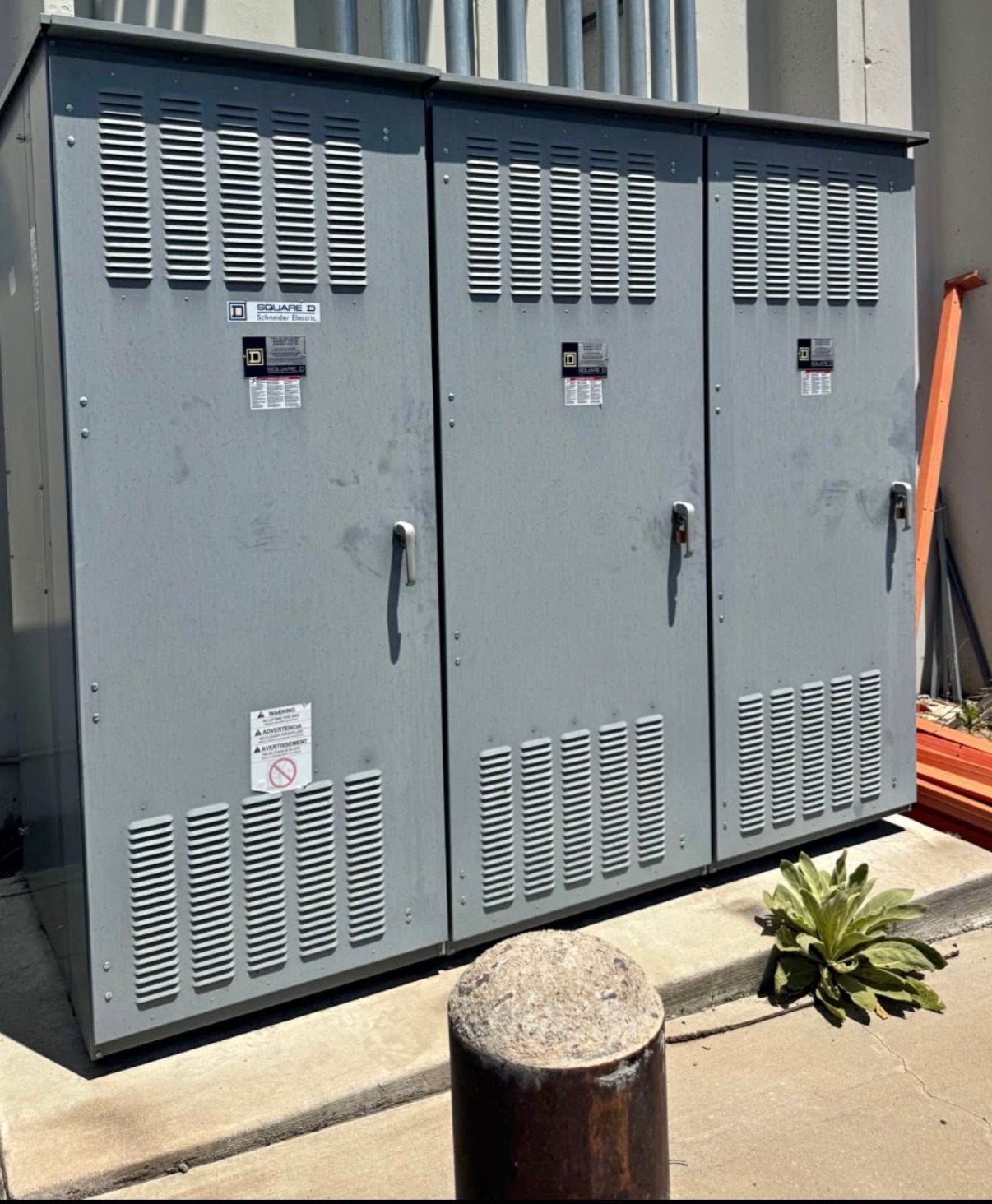
Start with the lineup, not the cooling system label
A data center may call a group of electrical gear a “cooling pump MCC,” but that phrase alone does not establish its contents or ratings. Use existing equipment schedules, single-line diagrams, panel directories, shutdown records, and exterior nameplates where safely accessible. Note the lineup’s sections, manufacturer, model or catalog identifiers, and any documented voltage and ampere ratings separately. A page title or seller description is useful context, not verification.
Describe how the lineup was assigned to the cooling system without treating every connected item as part of the sale. For example, a hypothetical MCC may contain starters for condenser-water pumps while a nearby chiller panel and building automation cabinet remain. Identify what is included by equipment tag or lineup section, and flag uncertainties for review rather than guessing from proximity or a broad “cooling” designation.
Use the starter schedule to explain what each section served
A starter schedule can make a used MCC easier to assess because it connects buckets or sections with the loads they were intended to control. Share existing schedules showing pump tags, starter types, motor references, and spare or unused positions, if available. Where records differ from field labels, report the discrepancy instead of choosing one version. Do not open an enclosure or operate equipment to resolve it; rely on existing records and safely accessible exterior information.
Pump service may be divided by operating duty, redundancy, or water loop, so preserve those distinctions in your description. A hypothetical schedule might list two duty pumps and one standby pump, while a separate row identifies a smaller sump pump. That information helps a buyer understand the lineup’s original arrangement, but it does not prove current condition or confirm that every listed motor or pump is included in the transaction.
Describe variable-speed-drive interfaces precisely
Cooling-pump MCCs may incorporate drives, provide feeder connections to separately mounted drives, or use a mixture of arrangements. Record what documentation says about each interface: drive manufacturer and model, associated pump tag, section or bucket reference, and whether the drive appears to be included or is separately mounted. Manufacturers help identify equipment; their names do not imply an affiliation, endorsement, or relationship with the buyer.
Avoid describing an MCC as “VFD-rated” or assigning a voltage or ampere rating based only on a drive label, pump horsepower, or marketing description. Those details refer to different equipment or electrical characteristics and may not establish the lineup’s ratings. A hypothetical site record could show an MCC feeder supplying a wall-mounted drive that remains with the facility. State that boundary clearly and provide the relevant drawings for review.
Draw a clear boundary around equipment staying behind
Decommissioning plans often remove electrical controls while leaving some cooling infrastructure for another phase, tenant, or facility use. Make a simple inclusion-and-exclusion list covering the MCC lineup, separately mounted drives, pump motors, pumps, local disconnects, control cabinets, and associated wiring where ownership and scope are known. Do not assume that a connected motor, drive, or controller transfers merely because the MCC served it.
For instance, a hypothetical sale might include three MCC sections and their installed starters, exclude the pumps and motors, and leave a separate automation cabinet in place. Marking that boundary in the equipment list and on existing drawings can prevent confusion during offer review and site coordination. If ownership is shared or uncertain, identify the question early; the buyer can review the proposed scope before any specific offer is made.
Coordinate review and removal around the shutdown plan
An Illinois buyer of used, surplus, and decommissioned electrical equipment can review cooling-pump MCC details from data centers as well as other facilities. Share available photographs of safely accessible exteriors, nameplates, schedules, and drawings, along with the site location, equipment count, known removal constraints, and your role in the sale. The buyer reviews the information and discusses scope and a specific offer; acceptance and terms depend on that review.
If a purchase proceeds, the buyer’s stated terms are a cash offer, payment upfront, no seller testing required, and freight covered. The buyer handles crane, rigging, disconnects, loading, freight, and hauling, so the seller is not expected to dismantle, move, or test the gear. Qualified professionals perform electrical work as appropriate; do not approach energized apparatus or attempt inspection, testing, or removal yourself.
Common questions
What should I send if the pump starter schedule does not match the MCC labels?
Share both records and note which one appears current, if known. Include safely accessible exterior identifiers and explain the discrepancy; do not open equipment or operate it to reconcile conflicting information.
Should separately mounted variable-speed drives be included with the MCC?
That depends on ownership and the proposed sale scope. List each drive separately, identify its documented pump or feeder association, and state whether it stays or is offered for review.
Do we need to disconnect or move the cooling-pump MCC before requesting an offer?
No. You can provide existing records and exterior information for review. If a purchase proceeds, the buyer handles disconnects, rigging, loading, freight, and hauling; payment is upfront, before pickup.