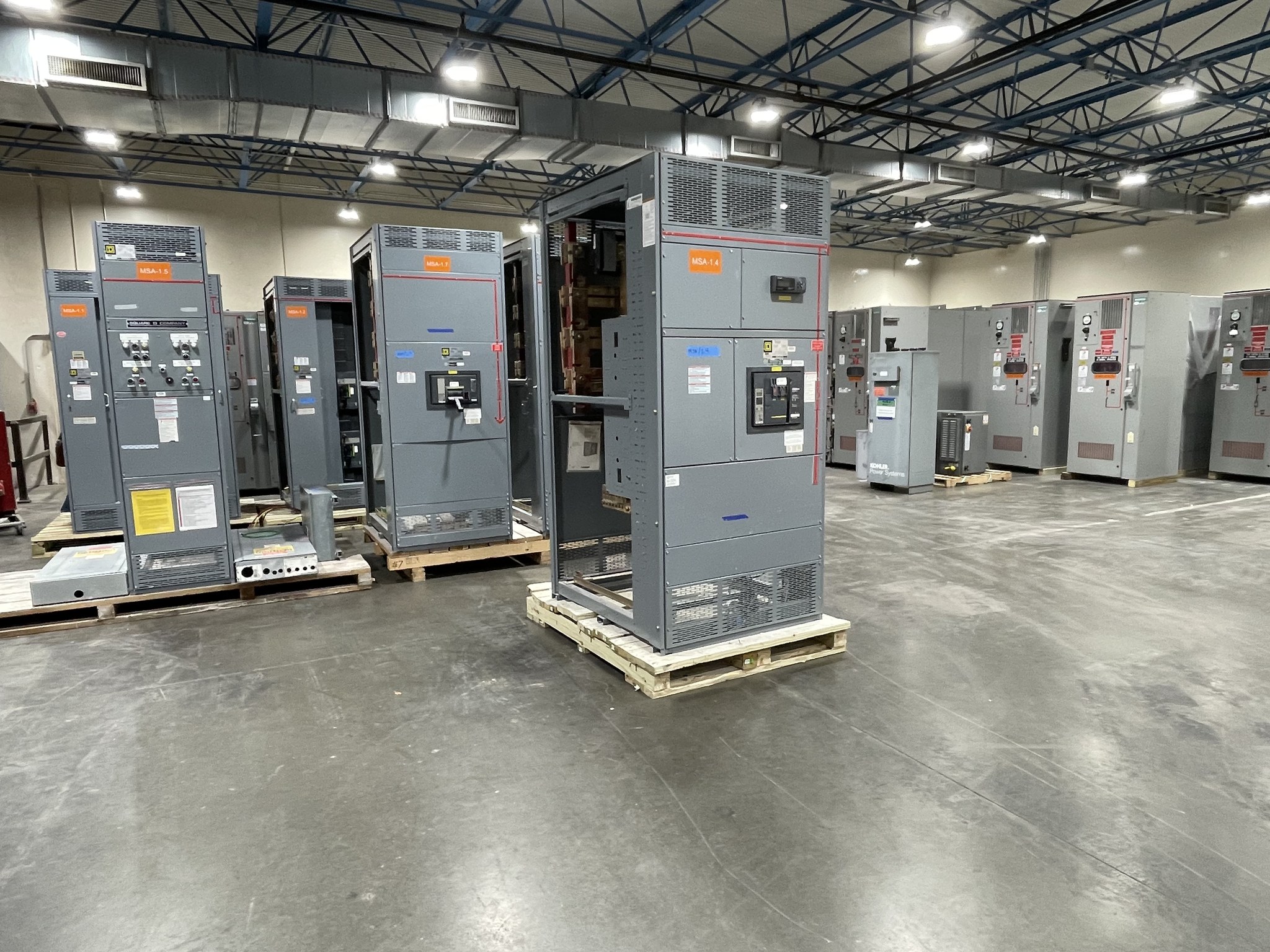
Treat 5,000 Amps as One Identifier, Not the Whole Description
Start by distinguishing the breaker’s ampere rating from its voltage rating. The 5,000-amp figure describes current capacity in its documented context; it does not establish the voltage class, interrupting rating, or application. A page title, handwritten note, or seller’s shorthand is not a verified rating. Use existing nameplate information or equipment records where available, and identify anything uncertain as unconfirmed.
A hypothetical inventory might describe a breaker as “5,000 A, low voltage,” while its paperwork lists additional ratings and conditions that materially clarify the unit. Share what the documents actually say rather than filling gaps by inference. If a label is difficult to read, a safely accessible exterior photograph may help; do not open an enclosure, approach energized apparatus, or operate equipment to obtain more information.
Frame and Mounting Configuration Shape the Identification
A buyer will want to know the breaker’s frame designation and whether it is drawout, fixed-mounted, or another configuration documented for that equipment. Record the manufacturer and model or catalog identifier from existing paperwork or safely visible exterior markings. These details help distinguish a 5,000-amp unit from another breaker that shares a broad rating description but differs in construction or fit.
For a drawout breaker, note whether a cell, cradle, or other associated component is included, if that is already known. For a fixed unit, describe the mounting arrangement only from records or visible exterior information. Do not remove parts to inspect interfaces. A hypothetical listing that says “breaker only” is more useful when it also makes clear whether related components are absent, included, or simply not yet confirmed.
Describe the Trip Unit and Test History Without Performing New Tests
Trip-unit information can help explain how the breaker is equipped beyond its frame and current rating. If existing records or safely accessible labels identify the trip-unit model, functions, or settings, include those details as documented. Avoid guessing from the breaker’s appearance, and do not change settings or operate the unit. A buyer can review the information alongside the breaker’s other identifiers.
Available test history is useful context, not a requirement for making contact. If reports exist, note their dates, scope, and the equipment identification they cover; do not present an old report as proof of present condition. No seller testing is required. For example, a hypothetical breaker with a past report and a later period in storage should be described with both facts, rather than characterized as recently tested or ready for service.
Give a Candid Account of Condition, Completeness, and Ownership
Describe what is known about storage, prior service, visible exterior condition, and missing or associated components. If the breaker came from a decommissioned data center or shut-down power plant, that origin may help explain the project context, but it does not by itself establish condition or suitability. Identify uncertainties plainly. Do not open the equipment or touch conductors to investigate; existing records and safely accessible exterior information are the appropriate starting points.
Confirm that you are authorized to discuss the equipment and arrange its sale, especially when it is part of a larger facility closure or surplus inventory. If a breaker is still installed, say so; do not imply that it is disconnected or de-energized unless that status has been established and documented. A specific offer and any purchase details remain subject to review of the equipment information and circumstances.
Coordinate Review and Removal Around the Site, Not Seller Labor
When you contact the Illinois buyer, provide the breaker’s documented identifiers, trip-unit information, available records, location, and a brief description of access constraints. Mention whether the unit is installed or already removed, whether related components are included, and any known site rules or scheduling limits. This helps the buyer assess the opportunity and discuss the next steps; it is not a promise that every breaker will receive an offer.
The company buys used, surplus, and decommissioned electrical equipment, including breakers across voltage classes. Its terms include cash offers, payment upfront, no seller testing requirement, and covered freight. For accepted equipment, it handles the removal coordination, including qualified electrical work as appropriate, crane or rigging needs, loading, freight, and hauling. You are not expected to dismantle, rig, test, or move the breaker; payment is made upfront, not after pickup.
Common questions
What should I send if the breaker is labeled 5,000 amps but I cannot confirm its voltage?
Share the safely accessible nameplate information and any existing equipment records, marking uncertain details as unconfirmed. The ampere figure does not establish voltage, and the buyer can review the documented information with you.
Do I need to arrange a test or remove a drawout breaker from its cell?
No seller testing is required, and you should not remove components for inspection. Describe what is known and what appears to be included; removal and handling arrangements are coordinated by the buyer if the equipment is accepted.
Can I discuss a breaker that is still installed at a decommissioning site?
Yes. Explain that it remains installed and share known access or project constraints without implying it is disconnected. Qualified professionals handle electrical work as appropriate, with removal and freight coordinated if a purchase is agreed.