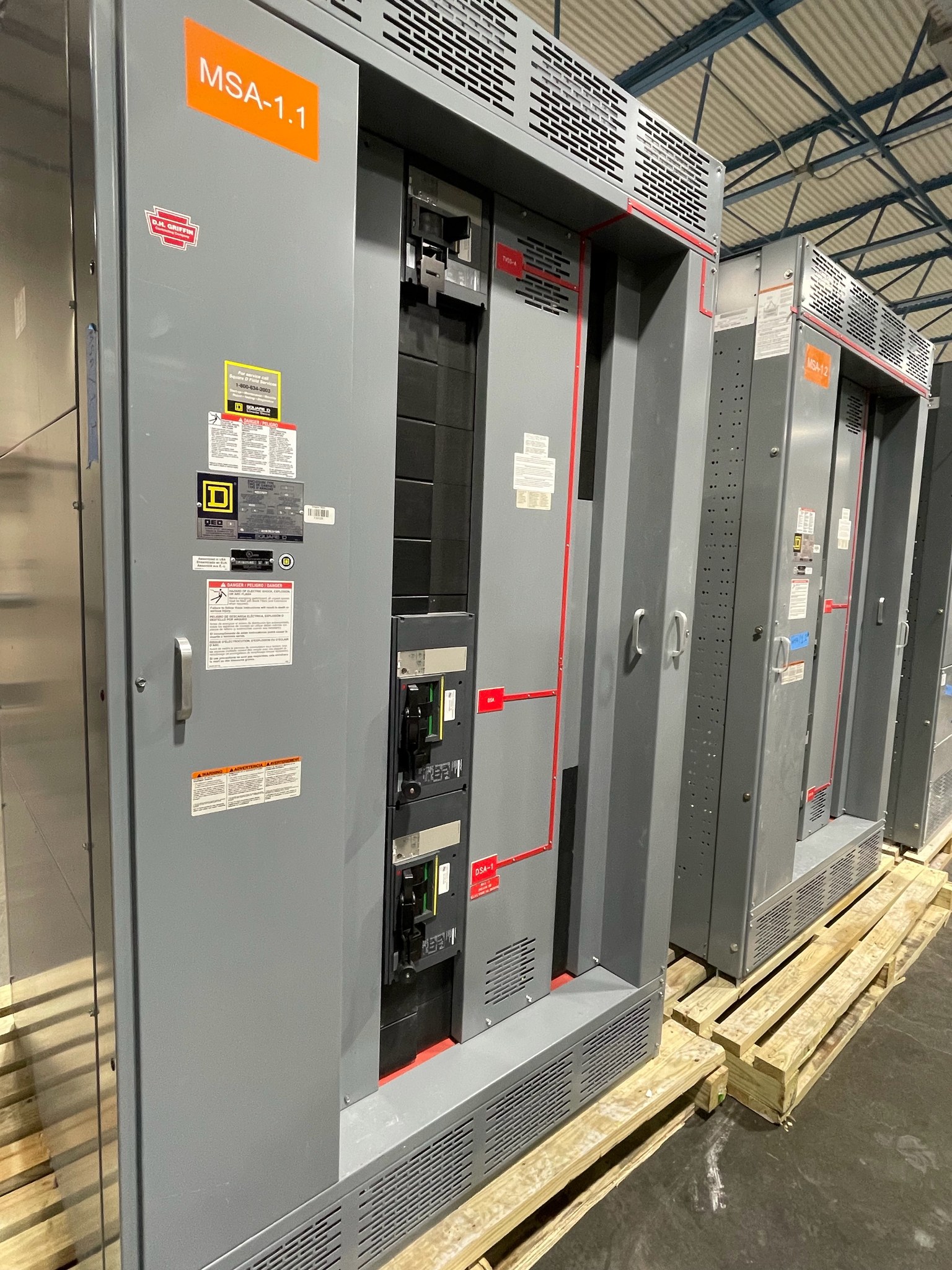
Read 120/208V as a system designation, not a bus rating
In a common 120/208-volt, three-phase, four-wire wye arrangement, 120 volts is the nominal voltage from a phase conductor to neutral, and 208 volts is the nominal voltage between phases. The designation describes the system the panelboard is intended to serve. It does not tell you the panel’s ampere rating, and the panel’s ampere rating does not establish its voltage. Record each item separately from existing, safely accessible nameplate information.
A hypothetical label might identify a panelboard as 120/208V, three-phase, four-wire, with a 225-amp main. Those are distinct pieces of information: voltage and phase describe the electrical configuration, while 225 amps describes a current rating. Do not infer the rating from the enclosure size or breaker handle appearance. If the label is missing or unreadable, report that uncertainty rather than guessing; the buyer can review what documentation and exterior details are available.
Capture the bus rating and main-device arrangement independently
The bus rating is a central identification detail, but it may not match the rating of the main breaker or the largest branch breaker. Existing labels or drawings may separately show bus amperage, main rating, and the panelboard’s catalog or type designation. Share what is actually documented, including whether the main device is present, absent, or not identifiable from safely accessible information. Never open an enclosure to obtain a number.
If paperwork lists a 400-amp bus and a 300-amp main, preserve both figures in your description rather than reducing them to a single rating. A buyer reviewing used or surplus panelboards can use those distinctions alongside voltage, manufacturer, and configuration. Manufacturer names help identify equipment; they do not imply a partnership or guarantee that a particular model will be accepted. Any offer and item-specific disposition remain subject to review.
Describe the circuit directory as evidence, not a complete inventory
A directory can help establish how a panel was configured, but labels may be outdated, incomplete, or handwritten. From a safe position, note whether a directory is present and legible, and whether it appears to identify circuits, spaces, or loads. Do not operate breakers or open the panel to verify entries. Existing schedules, one-line drawings, or asset records can add context without requiring anyone to inspect internal parts.
For example, a hypothetical directory might list lighting, receptacles, and mechanical loads while leaving several spaces blank. That information is useful as a description, not proof of present condition or remaining capacity. If the directory is missing, say so plainly. A clear photo of an existing exterior label or directory, taken without approaching energized apparatus or removing covers, may help the initial review; written notes are also useful.
Note neutral bars and the four-wire configuration carefully
A 120/208V three-phase wye panel commonly serves both line-to-neutral and line-to-line loads, so neutral conductors are relevant to its intended configuration. The equipment may have a neutral bar, but a seller should describe only what is visible without opening the enclosure or touching conductors. Do not assume that a neutral bar is present, correctly configured, or suitable for a particular installation solely from the voltage designation.
If an existing drawing or nameplate identifies a four-wire system, relay that wording. If exterior information indicates a neutral-bar arrangement, describe it as an observation and distinguish it from verified internal condition. Neutral-bar details, bus rating, and the circuit directory are separate clues; together they help characterize the panelboard, but none replaces a professional evaluation. No seller testing is required for an initial discussion with the buyer.
Coordinate a site review and removal without handling the panelboard
When contacting the Illinois buyer, share the panel’s available identification, approximate quantity, ownership or authorization status, location within the facility, and any known access constraints. Mention whether it is part of a larger decommissioning or surplus lot, and whether other equipment such as switchgear, switchboards, MCCs, breakers, or unit substations is also available. The buyer reviews the details and discusses a specific offer; there is no promise that every item will be accepted.
If equipment proceeds, the stated terms are cash offers, payment upfront, no seller testing required, and freight covered. The buyer handles crane work, rigging, disconnects, loading, freight, and hauling, coordinating qualified professionals for electrical work as appropriate. Sellers should not dismantle, rig, move, test, or approach energized apparatus. Discuss site access, scheduling, and any review needs directly; arrangements depend on the equipment and site details.
Common questions
Does a 120/208V label tell me the panelboard’s ampere rating?
No. It describes the nominal three-phase wye voltage configuration. The bus and main-device ampere ratings are separate details; report them only from existing documentation or safely accessible labels, without opening the enclosure.
Should I open the panel to confirm whether it has a neutral bar?
No. Do not open the enclosure or touch conductors. Share existing drawings, records, or safely accessible exterior information, and identify anything uncertain. The buyer can review those details during the item-specific discussion.
What information helps when the circuit directory is incomplete?
Say whether it is present, legible, and apparently incomplete, and provide any existing schedules or equipment records. Do not operate breakers to check entries; directory descriptions are useful context, not verified circuit condition.