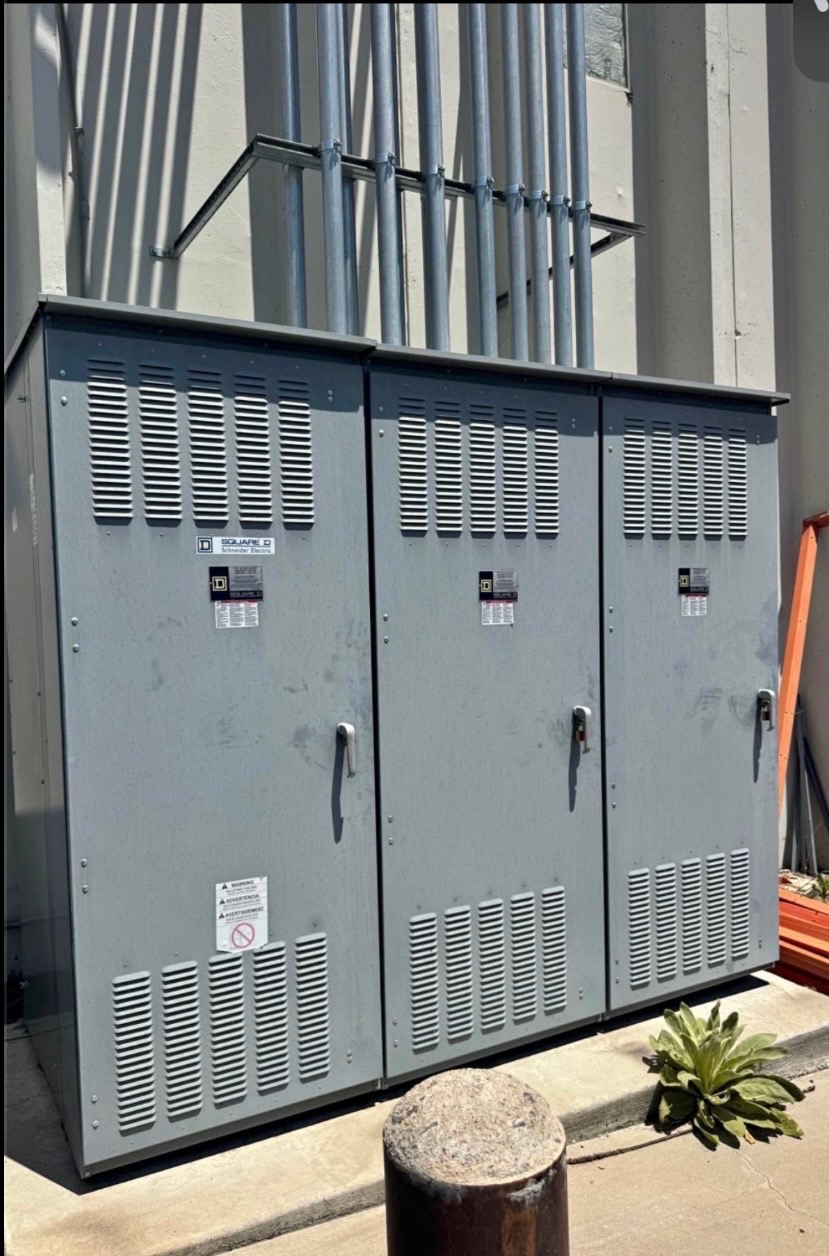
Define the lineup before describing its parts
An MCC is the offered assembly, not a collection of contactors or other loose motor-control parts. Start with the number and apparent order of vertical sections, whether there is an incoming section, and the motor starter compartments shown on an existing schedule. Note whether the lineup is still installed or has already been removed by professionals, and identify any sections known to be missing.
Compare the proposed sale boundary with the facility asset list. A lineup may have supplied several motors, but the motors, driven machinery and connected facility wiring are not automatically part of the offer. Identify which MCC sections, integral components and associated documents the owner can transfer, and disclose any uncertainty about shared equipment or third-party ownership before arranging a review.
Separate the voltage description from other ratings
The 2400V description identifies the intended voltage context, not the amperage of the main bus or each starter. Provide the manufacturer's name, model, serial number and voltage marking as recorded on the assembly nameplate or in existing documentation. If a drawing identifies a nominal system voltage while a nameplate states an equipment rating, report each with its source rather than treating them as interchangeable.
A bus current rating is expressed in amps and should be recorded separately from voltage. If available, include the main bus rating, frequency, and starter or fuse ratings with the exact units and the component each value describes. Do not infer a rating from the page topic, a neighboring label or motor size. Mark unclear or unavailable details as unknown so the buyer can assess them appropriately.
Use existing records to map the starter compartments
A useful compartment schedule links each position to its recorded motor duty, starter type and identification. Where existing documents show them, identify the starter contactors, fuses, protective devices and controls associated with each compartment. Share available one-line drawings, control schematics and manufacturer documents, while noting whether the paperwork reflects known field changes or is an older, unverified revision.
Explain known missing components, damaged enclosures, modifications and exposure to moisture or process dust. Existing maintenance records may help distinguish a documented repair from an assumption about condition, but they do not establish present operability. Contactors and fuses are described as parts of the complete MCC offered for review, not as a separate offer of standalone contactors or starters.
Plan access without handling the equipment
Use photographs already on file, or exterior views taken only from a safe, permitted location without approaching energized equipment. Sellers should not open or operate the MCC, touch conductors, test it, dismantle it or attempt to disconnect it. If a label or interior detail cannot be documented safely from existing records, leave it for qualified electrical professionals to inspect as appropriate.
Tell the buyer where the lineup is situated and describe known doorway dimensions, floor level, overhead restrictions and possible loading access. Share site rules and any known outage coordination or neighboring equipment that must remain in service. Qualified electrical professionals handle isolation, verification and electrical work as appropriate, including consideration of other sources and stored energy; the seller should not move or rig the lineup.
Move from review to an agreed removal scope
Submit the available inventory, ratings, condition history and access information for review. The buyer may make a cash offer subject to that review, so an incomplete record is a reason to identify gaps rather than guess. Confirm who has authority to sell the MCC and whether any internal approval or release of the equipment is needed before accepting an offer.
The buyer pays upfront and handles disconnects, crane work, rigging, loading, freight and hauling, with qualified electrical professionals performing electrical work as appropriate. All freight is covered. Before proceeding, agree on the lineup and components included, access arrangements and site coordination so the owner and buyer understand the removal scope without the seller performing the physical work.
Common questions
Can I offer only the starter contactors from a 2400V MCC?
This page concerns a complete MCC lineup, not standalone contactors or starters. Describe those devices as part of the assembly and identify known missing compartments or components so the buyer can evaluate the actual equipment offered.
What if I cannot find the MCC nameplate rating?
Send the drawings, schedules or photographs already available and explain which rating is missing or uncertain. Do not assume that 2400 volts means 2400 amps, and do not open or approach energized equipment to look for a label. Qualified personnel can address inspection as appropriate.
Must the owner test or prepare the MCC for pickup?
No seller testing is required, and the owner should not operate, dismantle, disconnect, rig or move the equipment. The buyer handles removal logistics and covers freight; qualified electrical professionals perform the electrical work as appropriate. Share existing site restrictions and coordinate access instead.