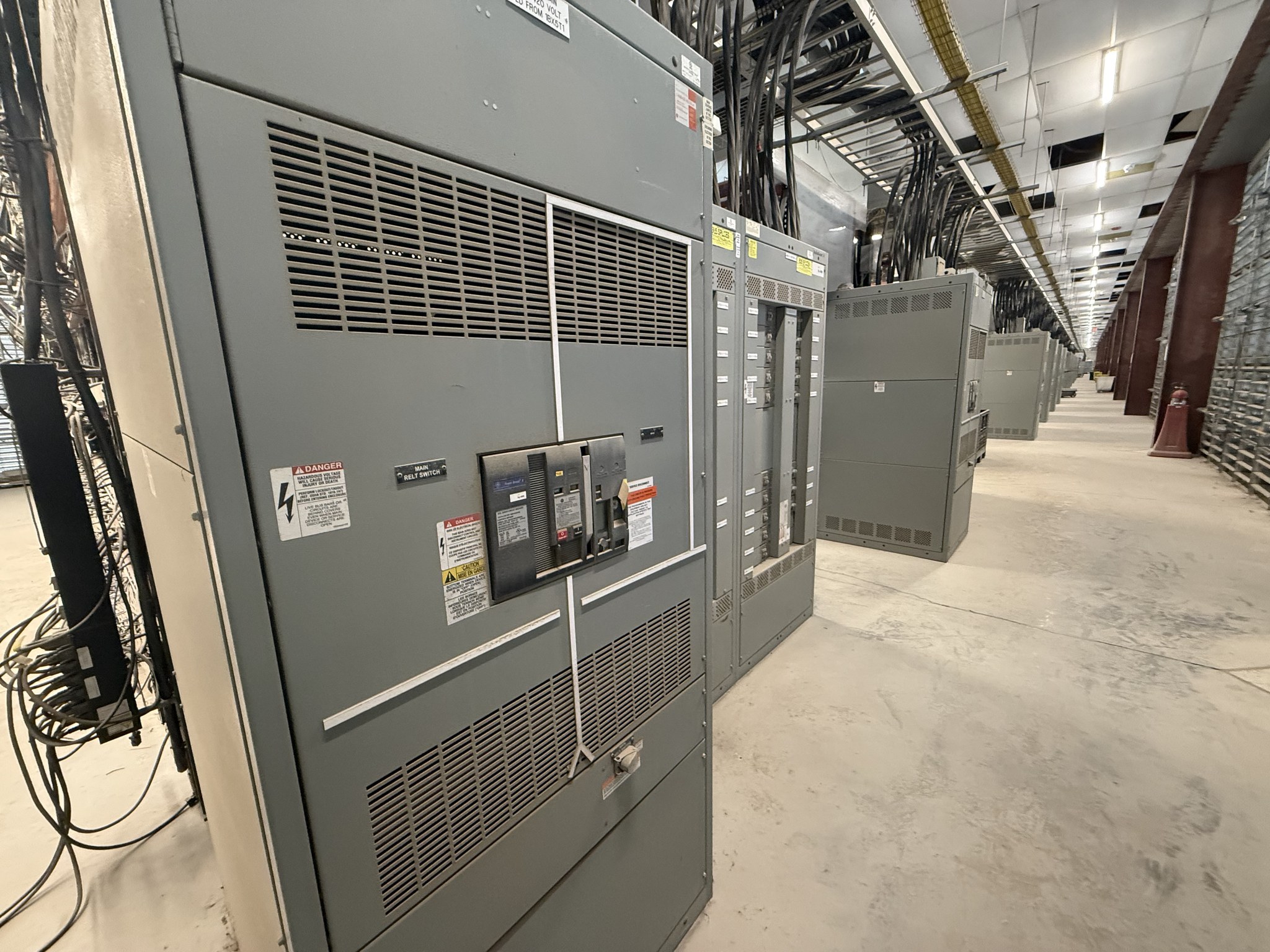
Treat the 5-kV class and system voltage as different facts
A 5-kV-class marking describes the switch’s equipment voltage class, not necessarily the operating voltage of the circuit it served. The actual system voltage must be established from reliable equipment records or project documentation; it should not be inferred from the class marking, a sales description, or a page title. Record both values only when the supporting information identifies them clearly, and mark an unknown system voltage as unknown.
For example, hypothetically, an inventory list might call a switch “5 kV,” while a one-line diagram identifies the connected system separately. Those are two different pieces of information, not interchangeable ratings. A buyer can review the available records and reconcile discrepancies during discussion. Do not open an enclosure or approach apparatus to find a label; use existing paperwork or exterior information that is already safely accessible.
Describe the load-interrupter arrangement, not just the product name
Record what the paperwork says about the switch arrangement: for example, the number of poles or phases, whether it is a single switch or part of a lineup, and any documented incoming, outgoing, or feeder positions. Note whether the fused switch is presented as a complete assembly or as one section of a larger installation. These details help distinguish similar-looking equipment without treating appearance as proof of electrical suitability.
Include manufacturer and model identifiers when visible in existing records or safely accessible from the exterior, along with any documented serial or catalog number. A manufacturer name identifies the equipment; it does not imply an affiliation or establish condition. If drawings and inventory descriptions differ, share both and explain which source each came from. A buyer can then assess what is being offered rather than relying on an ambiguous label.
Capture fuse details as a separate review item
Fuses warrant their own inventory notes. Transcribe the fuse manufacturer, type or catalog designation, quantity, and any printed ampere or voltage information shown in existing records or safely accessible exterior material. Keep each figure attached to the rating it actually describes: amperes and volts are distinct measurements, and neither can be derived from the other. Do not assume a fuse is present, included, or matched to the switch unless records support that statement.
If fuse information is incomplete, say so rather than filling gaps by comparison with a similar unit. For instance, hypothetically, a seller may know that a switch is fused but lack a record of the fuse type or whether all positions are populated. That uncertainty is useful to disclose early. No seller testing is required, and no one should remove a cover, handle a fuse, or operate equipment to improve the description.
Give a candid account of condition, ownership, and completeness
A practical description distinguishes documented facts from observations and unknowns. Note the known source, such as a decommissioned data center or shut-down power plant, the approximate removal or storage history if documented, and whether drawings, nameplates, or maintenance records are available. Describe visible exterior damage only from a safe position. Do not state that equipment is de-energized, tested, complete, or ready for service unless appropriate records establish that fact.
Clarify what is included in the proposed sale: the switch assembly, documented accessories, spare fuses, control components, or related sections, as applicable. List missing items or uncertainty rather than assuming standard parts are present. Ownership authority matters too; identify the entity authorized to sell and whether internal approval, asset documentation, or a decommissioning schedule affects the transaction. The buyer reviews the specific equipment and information before making an offer.
Coordinate review and removal without taking on electrical work
A useful first message can include the Illinois site location at an appropriate level, equipment quantity, available exterior photos taken without approaching energized apparatus, and copies of relevant records. Add dimensions or access details only when already documented or safely obtainable. Mention whether the switch remains in a lineup, whether a crane or rigging access may be needed, and any known loading restrictions. These facts help the buyer evaluate logistics alongside the equipment description.
The Illinois buyer purchases used, surplus, and decommissioned electrical equipment, including fused load-interrupter switches across voltage classes. It reviews the details and may make a cash offer for the specific equipment. Payment is upfront, before pickup; the seller is not asked to test the switch. The buyer covers freight and handles applicable disconnects, crane, rigging, loading, and hauling with qualified professionals as appropriate, so the seller’s role is to provide information, coordinate site access, and get paid—not dismantle or move the equipment.
Common questions
Does a 5-kV-class marking prove the switch operated on a 5-kV system?
No. It identifies an equipment class, not necessarily the connected system voltage. Use documented system information separately, and flag it as unknown if available records do not establish it.
What fuse information should I send if I cannot safely inspect the switch?
Share existing records or safely accessible exterior markings for fuse type, manufacturer, quantity, and stated ratings. If a detail is unavailable, say so; opening or handling equipment is not required.
Do I have to disconnect or load the fused switch before pickup?
No. The buyer handles applicable disconnects, rigging, loading, and freight, using qualified professionals as appropriate. Coordinate access and site requirements, but do not dismantle or move the equipment yourself.