Confirm single-phase service rather than relying on the voltage line
Start with the equipment’s existing nameplate, drawings, schedules, or other records already available to you. Look for an explicit phase or system designation, such as single-phase or 1Ø, and compare it with the stated voltage. A 120/240 V marking alone does not establish phase; similarly labeled three-phase equipment can be described in ways that make a brief listing ambiguous.
Keep voltage and amperage as separate facts in your notes. Voltage identifies the electrical potential or system rating; amperage describes current capacity. Do not derive one from the other, or treat a breaker rating as proof of the panel’s rating. If documents conflict or the phase is unclear, report the discrepancy rather than guessing or opening equipment to investigate.
Record circuit count and panel configuration in useful terms
Count the circuit positions you can identify from an existing schedule or safely accessible exterior view, and say whether your count means spaces, installed breakers, or listed circuits. Those are not always interchangeable: a panel may have unused spaces, tandem breakers, blanks, or a schedule that no longer matches its installed components. A precise description helps a buyer understand what is actually being offered.
Note whether the panel is a standalone distribution panel or part of a larger assembly, and identify visible associated items such as a main breaker, disconnect, or separate enclosure only when documentation supports that description. For example, a hypothetical seller might report “single-phase confirmed on drawings; 24 spaces, 18 breakers shown; main-breaker configuration unclear.” That is more useful than calling it simply a 24-circuit panel.
Describe enclosure condition without disturbing the equipment
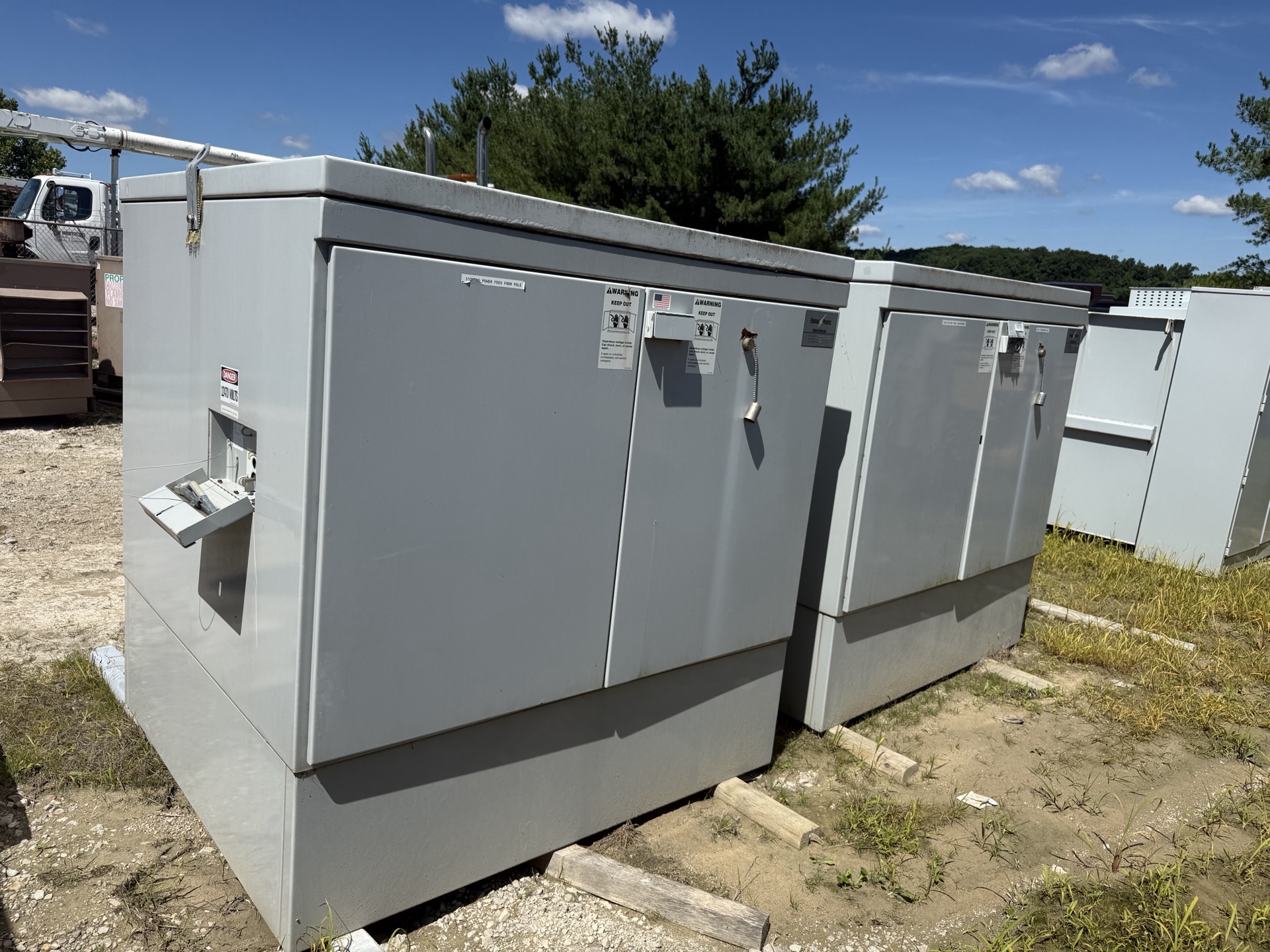
Report visible exterior condition from a safe position: dents, corrosion, missing covers, damaged hinges, paint condition, or legible and illegible labels. Mention whether the door and enclosure appear complete, but do not open the panel, touch conductors, operate devices, test, or measure anything. Do not approach apparatus that may be energized; rely on existing paperwork and safely accessible exterior information.
Distinguish observation from conclusion. “Rust visible along the lower exterior edge” is a useful observation; “safe to energize” or “internally sound” is not a conclusion to make without appropriate evaluation. If a panel is stored separately, describe whether loose doors, trim, breakers, or paperwork are included, and whether their relationship to the panel is documented.
Establish ownership, scope, and site access before removal planning
Confirm that you have authority to sell the panel and any included components. For equipment from a shutdown, renovation, or decommissioned facility, identify the owner or authorized representative and clarify whether the panel is being sold alone or with other electrical equipment. Existing asset lists, drawings, and photographs can help connect the equipment to the correct project without requiring new inspection or testing.
Describe the site and handling constraints that a removal plan would need to address: building access, loading area, stairs or narrow routes, overhead restrictions, scheduled access windows, and known crane or rigging needs. Do not dismantle, disconnect, or move the panel for the buyer. Qualified professionals handle electrical work as appropriate, while removal and transport arrangements are reviewed against the actual site and equipment.
Share a clear package for an Illinois buyer to review
A concise first message can include location in Illinois, manufacturer and model if readable, documented voltage and phase, separate amperage information if verified, circuit-space and installed-breaker counts, enclosure observations, and what accessories or records are included. Add exterior photographs only when they can be taken safely. A hypothetical note might flag that a panel label says 120/240 V while an old schedule identifies three-phase service; that conflict should be surfaced, not resolved by assumption.
The buyer reviews the description and removal circumstances before making a specific offer; not every item or package can be promised acceptance. For equipment it agrees to buy, the company offers cash, pays upfront rather than after pickup, requires no seller testing, and covers freight. It also handles crane, rigging, disconnects, loading, freight, and hauling, coordinating the work with the site so the seller’s role is to provide accurate information and receive payment.
Common questions
Does a 120/240 V label prove the panel is single-phase?
No. Voltage wording alone does not verify phase. Check existing nameplate information, drawings, or schedules for an explicit system designation. If records disagree or omit phase, report the uncertainty rather than inferring it.
How should I report circuit count when spaces and breakers differ?
Give separate counts when available: panel spaces, installed breakers, and schedule-listed circuits. Note unused positions or discrepancies. Do not open the enclosure or remove components to improve the count.
Do I need to disconnect or arrange freight for a panel the buyer purchases?
No. For equipment accepted under a specific offer, the buyer covers freight and handles disconnects, loading, and hauling, with qualified professionals doing electrical work as appropriate. Payment is upfront, not after pickup.