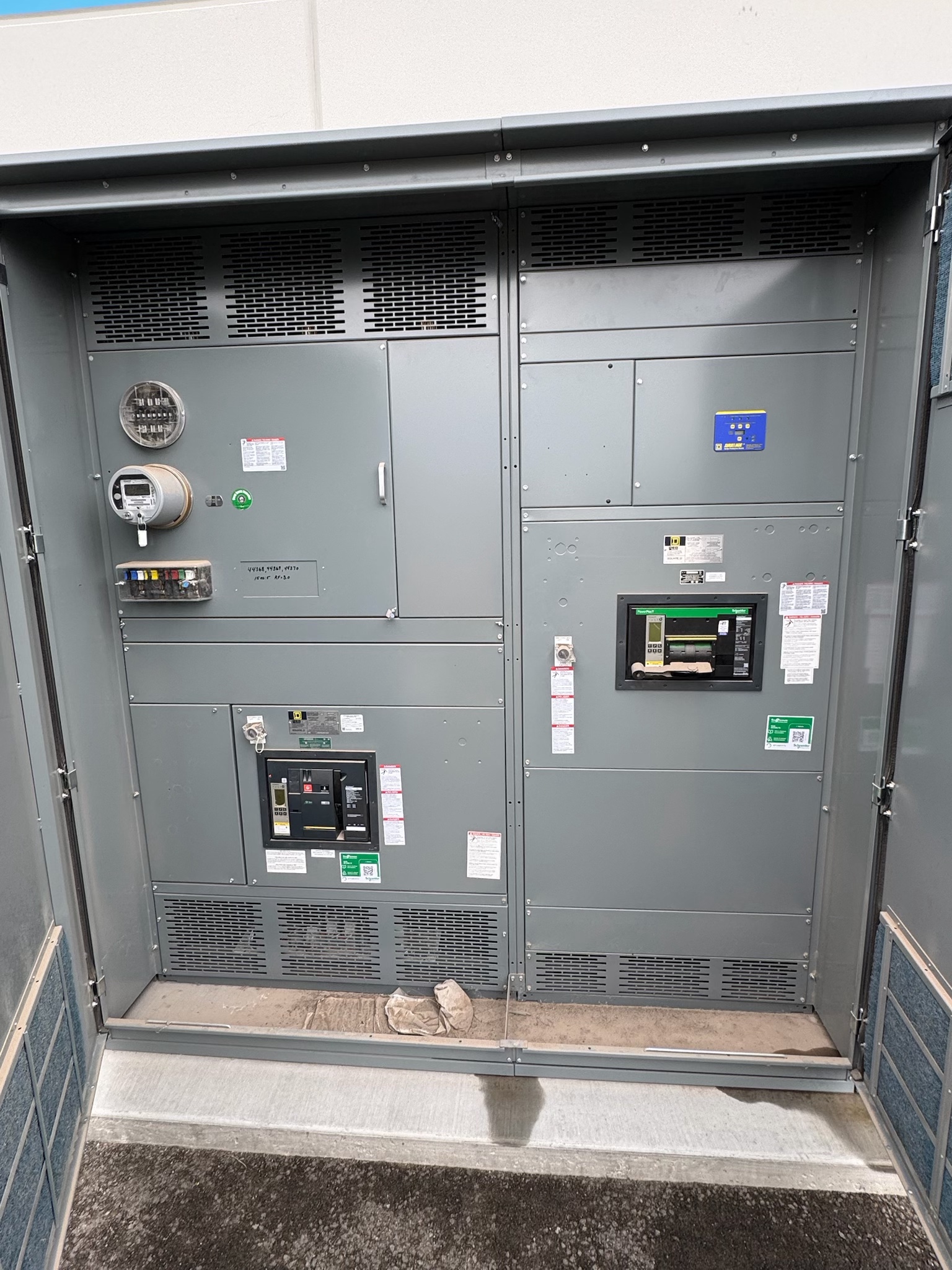
Treat 4,000 amps as one part of the equipment description
A 4,000-amp designation describes an ampere rating, not the switchboard’s voltage. Record the voltage only from reliable equipment documentation or safely accessible exterior information, and keep the two details distinct when describing the lineup. A page title, handwritten note, or seller’s shorthand can be useful context, but it is not verified equipment data. The buyer will review available information rather than infer a rating from the amperage.
For an initial description, note the manufacturer, approximate age if documented, lineup identification, and any legible nameplate information visible without opening an enclosure. Manufacturer names help identify equipment; they do not imply a manufacturer relationship. If records conflict or a label is incomplete, say so plainly. A hypothetical listing might identify a 4,000-amp main-tie-main lineup while leaving voltage pending documentation, rather than guessing.
Describe both source mains and the tie breaker separately
A main-tie-main arrangement generally has a main breaker for each source and a tie breaker connecting the two bus sections. For a useful review, describe the two mains and tie as distinct devices, including any documented frame or trip information and visible identification. Do not assume both mains have identical settings just because the overall lineup is called 4,000 amp; settings and device details require their own documentation.
If one main has a different trip unit, rating, or recorded setting from the other, preserve that distinction in your notes. If you do not know the setting, mark it unknown rather than estimating from the 4,000-amp description. A hypothetical lineup could have two source mains with different documented trip information and a separately identified tie breaker. That variation is material information, not a reason to rewrite the lineup as two matching mains.
Map shipping sections, not just the complete lineup
A switchboard assembled in service may be divided into several shipping sections, and those sections need not be equal in width, depth, or weight. If drawings, packing records, or existing layout documents show section boundaries, share them with the buyer. A simple sequence—source-main section, tie section, distribution sections—can help clarify how the lineup is arranged without requiring anyone to open equipment or take measurements.
Note whether the paperwork describes the 4,000-amp lineup as one complete assembly or identifies separate sections, and flag any known missing or removed section. Do not assume each shipping section carries the full lineup rating or that a section’s dimensions can be inferred from the overall ampere rating. If dimensions are unavailable, say that they are unavailable; the buyer can review the records and coordinate practical next steps.
Give an accurate condition and ownership picture
Useful condition information can come from existing maintenance records, project documents, or a straightforward account of why the equipment is surplus. Mention known storage exposure, documented repairs, missing components, or whether the board came from a decommissioned data center or shut-down power plant. Do not conduct tests or ask staff to operate, open, or inspect energized apparatus for a sale inquiry. Existing records are enough to begin a conversation.
Confirm that you are authorized to sell the equipment and identify any ownership or site-release steps still pending. If the switchboard is part of a larger decommissioning package, identify which lineup is being offered and whether the two mains, tie breaker, and associated shipping sections are included. Specific offers and included items remain subject to review; no description should be treated as an automatic acceptance of every component.
Coordinate site access and removal through the buyer
An Illinois buyer of used, surplus, and decommissioned electrical equipment can review the lineup details, available paperwork, site constraints, and access requirements with you. Share relevant information about loading access, scheduling rules, escorts, dock or floor restrictions, and any known crane or rigging considerations. Do not dismantle, rig, disconnect, or move the switchboard for the sale. Qualified professionals handle electrical work as appropriate, while removal logistics are coordinated with the site.
The company buys switchgear and related equipment in all voltage classes, including switchboards, and covers freight. Its terms include cash offers, payment upfront, and no seller testing requirement; payment is not deferred until pickup. It also handles crane, rigging, disconnects, loading, freight, and hauling, so the seller’s role is to provide accurate information and coordinate access—not to prepare or transport the equipment. Final details depend on review of the specific opportunity.
Common questions
Does a 4,000-amp label verify the voltage or matching settings on both mains?
No. Ampere rating does not establish voltage, and a lineup description does not prove that the two source mains have identical trip settings. Share available records and identify undocumented details as unknown.
What should I provide about the shipping sections if their dimensions are unavailable?
Send existing layout or shipping documents, if available, and describe the known section sequence and any missing sections. Do not estimate dimensions from the 4,000-amp rating or dismantle the board to gather information.
Do I need to disconnect, test, or load the switchboard before pickup?
No seller testing is required, and you should not dismantle, rig, disconnect, or move the equipment for the sale. The buyer coordinates removal and covers freight; payment is upfront, not after pickup.