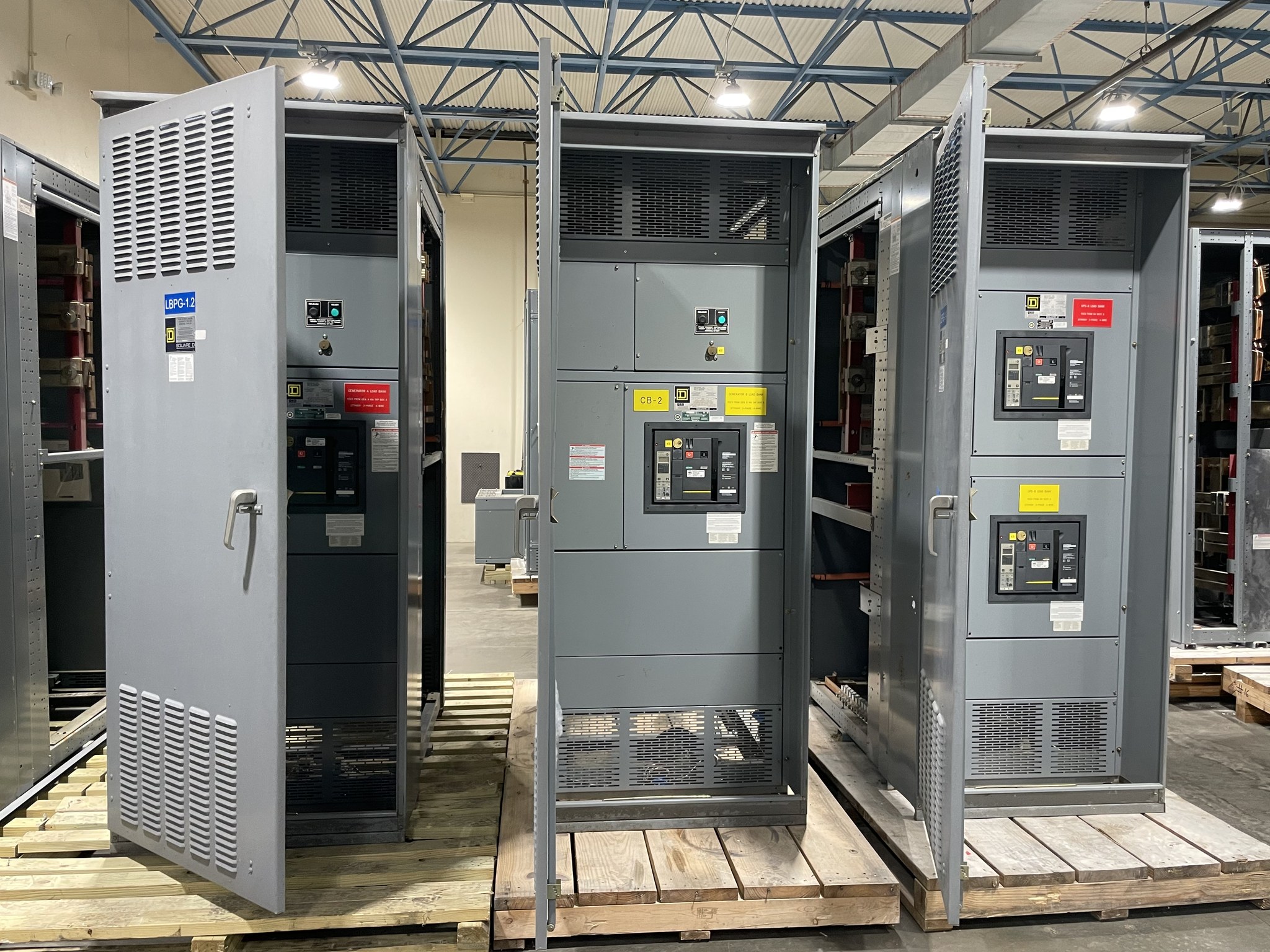
Separate the bus rating from breaker ratings
Start with the lineup’s nameplates and existing drawings, schedules, or equipment lists, if available. Record the bus ampere rating separately from the rating shown for each breaker. For example, a lineup described as 3,000 amp could contain a main breaker with a different ampere rating and feeder breakers with several ratings. That hypothetical arrangement is not unusual enough to justify assuming any value without documentation.
Keep voltage information in its own field. Voltage and amperes describe different characteristics, and one does not establish the other. A page title, seller’s shorthand, or informal label saying “3,000-amp switchgear” is a starting description, not verified equipment data. If records conflict or a rating is unreadable, note the discrepancy instead of trying to resolve it by opening an enclosure or examining energized equipment.
Make a breaker-by-breaker completeness record
Before removal planning begins, build a simple lineup inventory from existing records and information safely visible from outside. List each section in order, its apparent function or designation, and the breakers associated with it. Record breaker manufacturer and model where documented, plus its marked ampere rating if that information is already available without opening equipment. Mark unknowns plainly rather than filling gaps with estimates.
Completeness is more than counting breaker handles or cubicles. Note whether the main, tie, and feeder positions appear in the lineup documentation, and identify any positions recorded as spare, vacant, or fitted with a breaker. A hypothetical six-section lineup might have five breakers listed and one spare position; that distinction helps a buyer understand what is included without implying that every position should contain a breaker.
Describe what is included—and what is separate
Use a section-by-section schedule to distinguish gear that remains together from items already removed or being offered separately. Include documented accessories, drawout elements, trip units, control components, and connected bus sections only when you can identify them from records or safe exterior information. State whether the inventory covers the complete lineup or only selected sections, and flag any known gaps or substitutions.
If one breaker was removed for another purpose, say so directly and identify its former position if known. Likewise, avoid calling a lineup complete simply because its outer cabinets appear intact. A hypothetical offer might cover three connected sections while excluding a separately stored breaker; stating that boundary clearly is more useful than a broad description such as “complete 3,000-amp gear.”
Coordinate records and site access before pickup
Share the inventory alongside available nameplate information, drawings, and exterior photographs, without approaching energized apparatus or opening enclosures to obtain them. Do not operate, touch, test, or measure equipment for a sale inquiry. The company does not require seller testing. If electrical work or a change in equipment status is needed, qualified professionals should handle it as appropriate; do not assume the gear has been de-energized or disconnected.
For equipment at a decommissioned data center or shut-down power plant, explain the site’s access process, loading-area constraints, and any known scheduling or clearance requirements. Describe what remains connected or installed only to the extent known. The Illinois buyer handles disconnection, rigging, crane work, loading, freight, and hauling as appropriate, so the seller is not expected to dismantle or move the lineup.
Request a specific review and understand the buying terms
Send the lineup description, breaker schedule, ownership information, and known condition or completeness issues for review. The company buys used, surplus, and decommissioned switchgear and other electrical equipment across voltage classes, but an offer depends on the particular equipment and details reviewed; no listing or rating alone guarantees acceptance. Manufacturers named in records help identify equipment and do not imply a manufacturer relationship.
If the equipment is suitable for an offer, the company provides a cash offer for consideration. Payment is upfront, not after pickup, and the company covers freight under its stated buying terms. Discuss the proposed scope, access, and removal coordination before committing. The seller’s role is to provide accurate information and access arrangements—not to test, dismantle, rig, load, or haul the lineup.
Common questions
Does a 3,000-amp bus mean every breaker in the lineup is rated 3,000 amps?
No. Bus ampere rating and individual breaker ampere ratings are separate details. Use existing nameplates and records to list them independently, and mark any unknown rating rather than inferring it from the lineup description.
How should I document a lineup with vacant or missing breaker positions?
Map sections in order and label each documented position as occupied, spare, vacant, or unknown. Note removed breakers and whether they are included separately. That gives the buyer a clear completeness picture without claiming the lineup is whole.
Do I need to test or dismantle the switchgear before requesting an offer?
No seller testing is required, and the seller is not expected to dismantle, rig, load, or haul the equipment. Provide available records and safe exterior information; qualified professionals handle electrical work as appropriate.