Identify the Main Rating Without Confusing It with Feeder Breakers
Record 2,500 amps as the main switchboard rating only when supporting equipment documentation identifies it that way. A feeder breaker marked 600 amps, for example, describes that breaker’s ampere rating; it does not establish the bus rating or change the main rating. Voltage is a separate characteristic altogether. Do not derive voltage from amperage, or treat a page heading or seller’s shorthand as verified equipment data.
For an initial review, share existing nameplate information, equipment schedules, or project records that identify the main assembly. If documents differ, report the discrepancy rather than choosing one figure. A hypothetical lineup might have a documented 2,500-amp main section and feeders with several different ratings. Listing both levels separately gives the buyer a more useful picture without implying that every section or device has been independently verified.
Map the Lineup into Shipping Sections
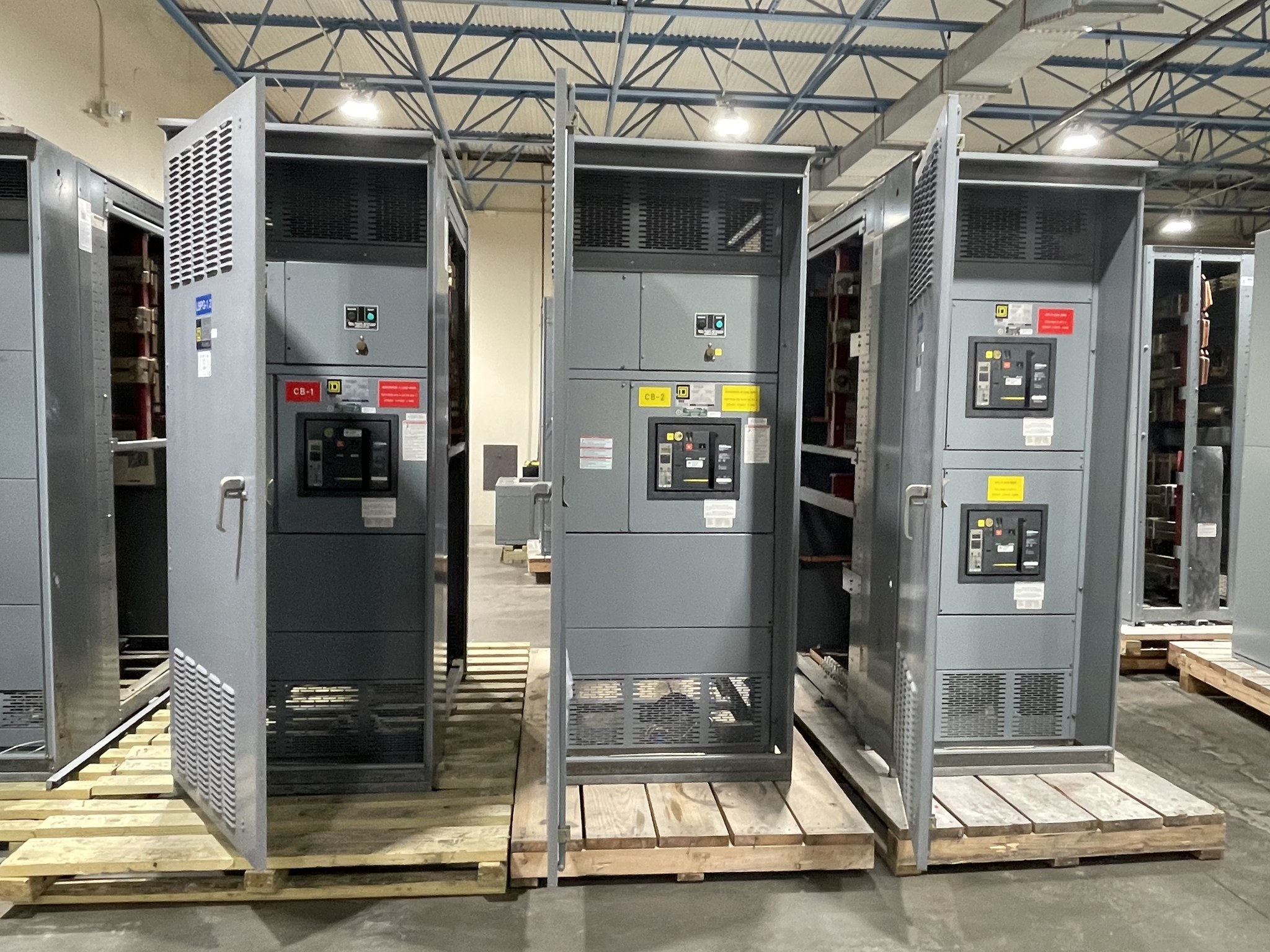
Describe how the switchboard is divided for transport: section identifiers, approximate dimensions if already documented or safely available, and how the sections relate in the lineup. Note which section contains the main device, which contain feeder devices, and whether there are separate metering or distribution sections. A simple lineup sketch or marked-up drawing can clarify configuration when labels alone are hard to interpret.
Do not assume the equipment can be moved as one piece, or that a visible seam identifies a transport break. The buyer can review the configuration and discuss handling requirements after receiving the details. For instance, a hypothetical board could comprise a main section and three distribution sections, with a later-added section at one end. State that arrangement as reported, and leave disconnection, rigging, loading, and hauling to the professionals coordinating the removal.
Disclose Modifications and Describe Condition Carefully
List known changes that affect identity or configuration: replaced breakers, added sections, altered bus arrangements, removed devices, revised control components, or field modifications documented in project records. Note when and why a change was made if that information is available. A buyer reviewing a 2,500-amp assembly needs to distinguish original lineup information from later additions instead of treating the entire board as one unchanged package.
Describe condition using what you already know, such as storage history, visible exterior damage, missing covers, or incomplete components, and distinguish observations from confirmed records. Do not open enclosures, operate equipment, touch conductors, test, measure, or approach energized apparatus to gather information. A hypothetical seller might report that one section has a damaged exterior door based on an existing inspection note; that is more useful than making an unsupported claim that the board is fully functional.
Send Available Drawings and Ownership Information
Useful records can include one-line diagrams, switchboard elevations, section schedules, bills of material, breaker schedules, and prior modification drawings. Send the versions you have, even if some are marked preliminary or superseded, and label their status. Drawings may help reconcile the main rating, feeder details, section count, and physical layout. Equipment markings naming a manufacturer can help identify the assembly, but do not imply an affiliation or establish condition by themselves.
Also clarify who owns the equipment and who is authorized to arrange its sale. If the switchboard is part of a decommissioned data center, shut-down power plant, or another site transition, identify any sale, removal, or access restrictions known to you. The Illinois buyer reviews the information and can discuss a specific offer and removal details; submission does not guarantee an offer for every item or configuration.
Coordinate Removal, Access, and Payment Before Pickup
Share practical site information that affects planning: location, access route, loading area, known crane or rigging constraints, site rules, and the contact who can coordinate access. Do not disconnect, dismantle, or move the switchboard for the sale. The buyer handles the removal plan, including qualified professionals for electrical work as appropriate, rigging, loading, freight, and hauling; the seller is not expected to perform those tasks.
The company buys used, surplus, and decommissioned electrical equipment in Illinois, including switchboards across voltage classes. Its terms include cash offers, payment upfront, no seller testing requirement, and covered freight. Discuss the proposed equipment, records, site conditions, and any conditions of a particular offer directly before scheduling work. Payment is made upfront, not after pickup, so the transaction terms should be clear before removal begins.
Common questions
Should I list feeder-breaker ratings as part of the 2,500-amp switchboard rating?
No. Identify the documented main rating separately, then list feeder-breaker ampere ratings individually where records show them. Keep voltage separate as well, and flag conflicting or incomplete paperwork rather than guessing.
What should I provide if the switchboard was modified or split into several sections?
Describe known modifications, identify each section and its role, and send available lineup drawings or schedules. Note what is documented versus reported from memory; do not dismantle equipment to confirm configuration.
Do I need to test or arrange removal before asking for an offer?
No seller testing is required, and the seller should not dismantle, rig, or move the board. Share existing records and site-access details for review; removal coordination and freight can be discussed for a specific offer.