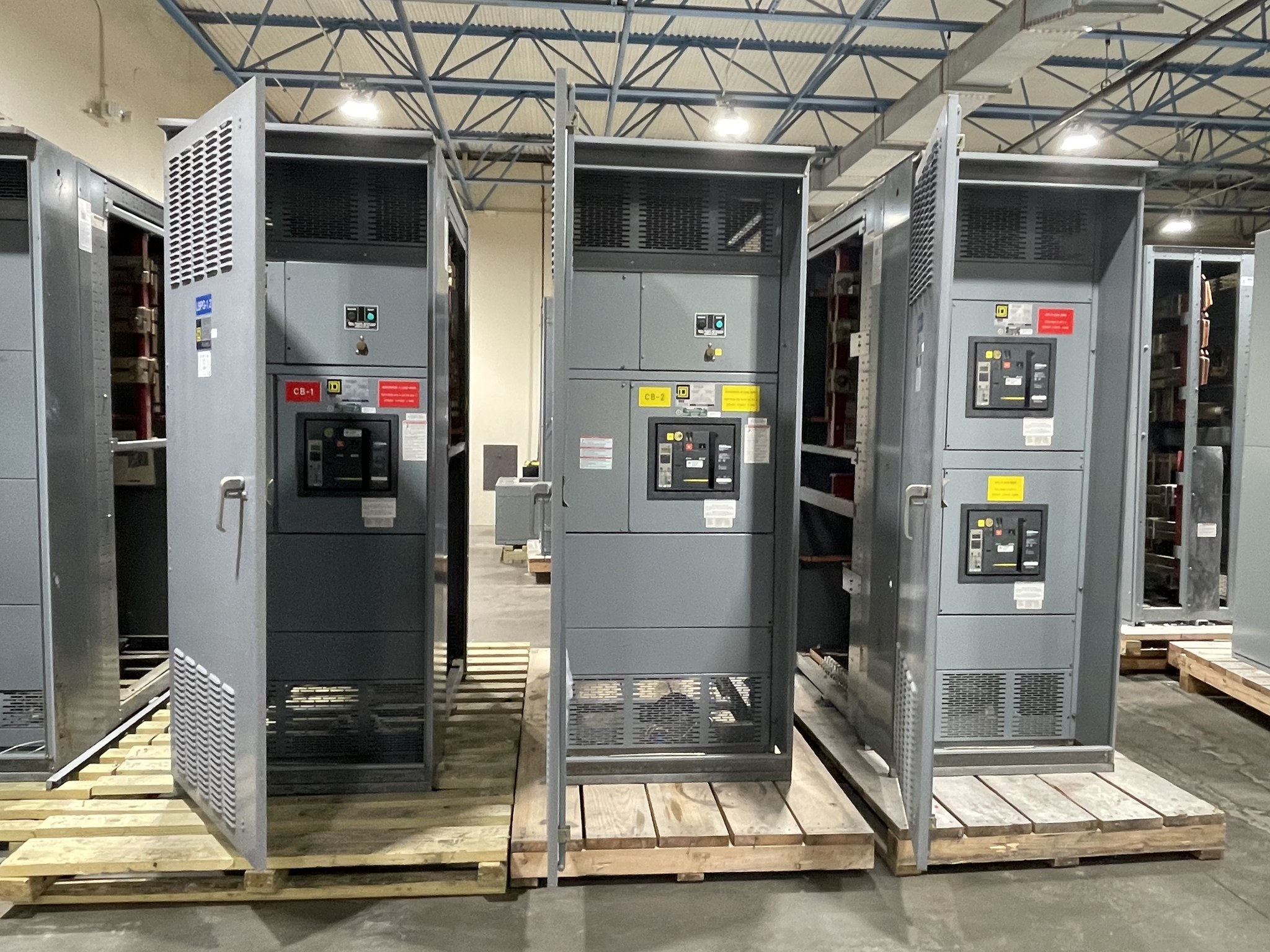
Describe used circuit breakers
Circuit breakers are protective devices used in many types of electrical equipment. Used or surplus breakers may be available individually, in lots, or as part of an installed assembly. Existing labels, inventory records, and safe exterior photographs can help identify what you have. Do not open equipment, remove a breaker, operate its handle, or access energized parts for a sale evaluation.
When the information is already available, share the manufacturer, model or catalog number, voltage and current ratings, quantity, and whether the breakers are loose or installed. Mention known damage, missing parts, or packaging. Breakers that look alike are not necessarily interchangeable, so avoid guessing at compatibility. Unknown ratings or incomplete records do not prevent you from describing the lot.
Sell breakers without testing
We consider used and surplus breakers across all voltage classes, including equipment offered with a larger switchgear or distribution lot. We provide cash offers and pay upfront. Sellers never need to energize, operate, trip, reset, or test breakers for our evaluation. Give us the information you already have, and identify any uncertainties so we can discuss the equipment accurately.
We handle crane work, rigging, disconnects, loading, freight, and hauling as appropriate for the project, including data center decommissioning and shut-down power plants. Qualified personnel perform electrical work under appropriate site procedures; the seller does not need to arrange it. Let us know whether the breakers are in storage or remain installed so we can plan the handling and access.
No Seller Testing Required
You do not need to energize, operate, or test switchgear or related equipment for us to consider buying it. We can begin with the information already available, including descriptions, records, and photos taken only where safe. If operating status is uncertain, state that it is unknown rather than trying to establish it through hands-on checks or an equipment demonstration.
Never touch or open energized equipment to answer a question or obtain a better image. Let us know if the gear is inaccessible, restricted, or still connected, and leave the physical work to us. We handle the disconnects and removal logistics, so the seller does not need to perform electrical work, arrange equipment handling, or demonstrate operation.
Plan Around Site Access
Access information helps us plan a removal without making assumptions about the property. Share the site address, the general location of the equipment, and any known entry procedures. It is also useful to identify the person who can coordinate access and explain whether other occupants, security requirements, or restricted areas affect the route to the equipment.
If there are known loading-zone limitations, narrow passages, overhead obstructions, or building rules, mention them when you contact us. Existing photos or drawings may help, but you do not need to enter restricted or unsafe areas to obtain them. We handle the crane, rigging, disconnects, loading, freight, and hauling and can plan those activities around the access information provided.
Describe Condition Without Guessing
Condition is useful context, but you do not have to diagnose equipment to describe it. Share observations already known from records or a safe, ordinary vantage point, such as whether gear has been stored, decommissioned, or exposed to the elements. If visible exterior damage or missing components are known, mention them rather than assuming what they mean for the equipment.
It is equally useful to say that a condition is unknown. Previous service history, age, completeness, and the reason equipment became surplus may be documented, but they are not always available. Send what you already have, and do not open equipment or investigate energized gear to fill in a blank. We can discuss the available information without asking you to test it.
Common questions
Do I need to test the equipment before requesting a quote?
No. Seller testing is not required. Send existing records or safely accessible exterior photos, and describe any unknowns. Never open, operate or touch electrical equipment merely to prepare information for an offer.
Who handles the removal and freight?
We handle all rigging and logistics, including crane, rigging, disconnects, loading, freight and hauling. Share known site access and timing details so the work can be coordinated. The seller does nothing but get paid.
What equipment and voltage classes do you buy?
We buy used, surplus and decommissioned switchgear and related electrical equipment across all voltage classes. The equipment and details of each proposed lot are discussed when you request an offer.
How do I contact the buyer?
Call (614) 715-3047, text nameplate photos to 614-715-3047, or email saleselectricalbuyers@gmail.com. You can also use the quote form on this page to provide the equipment type, location and available details.